
Bombardier beetle
Brachinus explodens
Description
How to identify
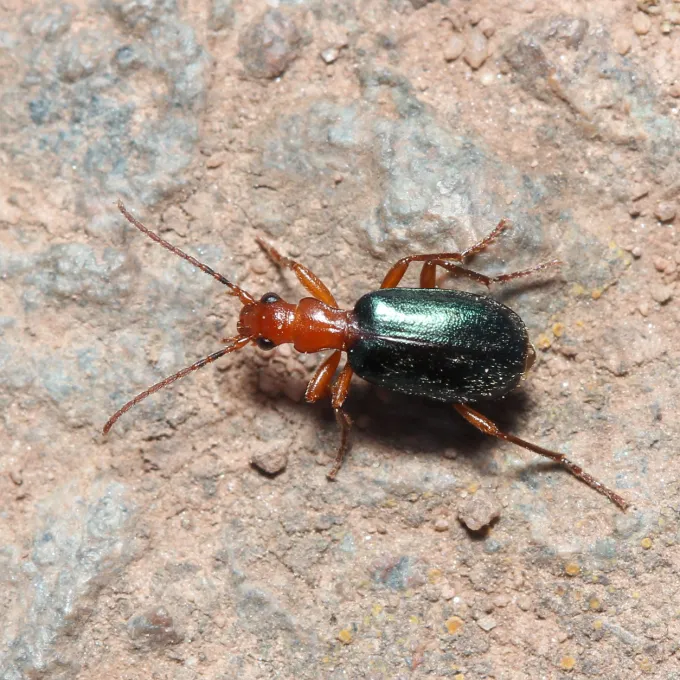
The bombardier beetle, Brachinus explodens, is a member of the ground beetle family (Carabidae) within the order Coleoptera. These beetles are typically 6 to 8 millimeters long and possess a distinctive appearance, characterized by a reddish-brown head and pronotum contrasted with dark blue or black elytra.
The species is famous for its unique defensive mechanism. It possesses specialized glands in its abdomen that release a mixture of chemicals which react to create a hot, irritating spray, accompanied by a loud audible "pop" when the beetle feels threatened.
The larvae of this species are specialized parasitoids. They develop within the pupae of other beetles, demonstrating a complex life cycle that requires a specific soil environment and the presence of host species to thrive.
Adult beetles are predominantly nocturnal. During the day, they remain hidden in cool, moist, and shaded areas, such as under stones, within leaf litter, or in soil crevices, which helps them maintain their physiological activity.
Crucially, from an agronomic perspective, the bombardier beetle is considered a beneficial insect. It acts as a predator rather than a plant pest, contributing to the regulation of other small insect populations within the garden ecosystem.
What it damages
This beetle does not cause damage to agricultural or horticultural crops. As a member of the ground beetle family, Brachinus explodens is an entomophagous insect that feeds on other small soil-dwelling invertebrates and larvae of various pests.
There are no recorded instances of this beetle damaging plant tissues, roots, leaves, or fruits. It does not carry plant pathogens and does not feed on vegetation, meaning it does not pose a threat to your harvest and requires no intervention.
Their presence in a field or garden is a positive indicator of a healthy, balanced agro-ecosystem. By consuming the eggs and larvae of potential pests, they provide a form of natural biological control that supports overall crop health.
Confusion regarding their status often arises when gardeners find them while harvesting or digging. This should be viewed as a sighting of an ally rather than a pest problem, as they are actively assisting in keeping the soil environment free of harmful organisms.
The economic value of these beetles lies in their contribution to sustainable farming practices. Using chemicals to eradicate them would be counterproductive, as it would destroy a natural predator that helps control populations of actual damaging insects.
When it appears
The beetles are active throughout the growing season, from late spring when soil temperatures rise, until the onset of the first autumn frosts. Peak activity is usually observed during the summer months.
The life cycle is completed over one season. Females lay their eggs near the habitats of their host species, ensuring the developing larvae have immediate access to food sources, which is critical for their survival.
During daylight hours, these insects avoid direct sunlight and dehydration by staying in damp, shaded environments. They are most commonly encountered near garden borders, under layers of mulch, or in areas with high organic matter.
As autumn approaches, the beetles begin seeking overwintering sites. They migrate into deeper soil layers, protected areas beneath perennial plants, or inside dense piles of plant debris where they can safely hibernate until the following spring.
Specific monitoring is rarely necessary as they do not constitute a pest threat. If one were to conduct a survey, visual observations in the evening or the use of pitfall traps would be the standard scientific approach.
Signs of infestation
There are no signs of damage associated with Brachinus explodens. You will not observe holes in foliage, chewed roots, wilting, or any other characteristic symptoms of pest infestation on your crops.
The only noticeable "sign" of their presence is a defensive response if the beetle is handled. If accidentally picked up, the beetle will release its hot, irritating spray, which may cause a slight stinging sensation on the skin; this is a harmless but startling reaction.
Beetles are typically discovered during soil tillage, weeding, or when clearing away old mulch. Their rapid, skittish behavior as they scramble for cover is the most common way they are noticed by gardeners.
The presence of these beetles serves as an indicator of good soil quality and ecosystem health. As they are predators, they contribute to the natural sanitation of the topsoil by reducing the number of other small insects in the root zone.
No special diagnostic tests are required. Viewing these beetles in your garden is an opportunity to recognize the work of natural predators that are helping to manage your crop environment without the need for manual interference.
Control measures
Since Brachinus explodens is a beneficial predator, no control measures should be implemented. Protecting and encouraging these insects is highly recommended for any sustainable garden or farm.
To conserve beneficial populations, the following practices are recommended:
- Minimize the use of broad-spectrum insecticides that harm non-target insects.
- Provide small refuges of undisturbed vegetation or natural litter.
- Adopt conservation tillage practices to preserve the soil structure and insect habitats.
- Integrate biological control strategies that support, rather than suppress, predatory species.
If large numbers of beetles are found in sensitive areas like greenhouses, they can simply be collected and relocated to the edge of the property, where they will continue their role as natural pest managers.
The indiscriminate use of chemical treatments is the greatest threat to these beneficial beetles. By understanding that they are allies, farmers can reduce unnecessary chemical expenses and promote a more diverse and resilient agricultural environment.
Taxonomy
- Latin name
- Brachinus explodens
- Order
- Coleoptera (beetles)
- Family
- Carabidae
- EPPO code
- BRHNEX
Discussion
No discussions yet — be the first.