
Bombardier beetle
Brachinus
Description
How to identify
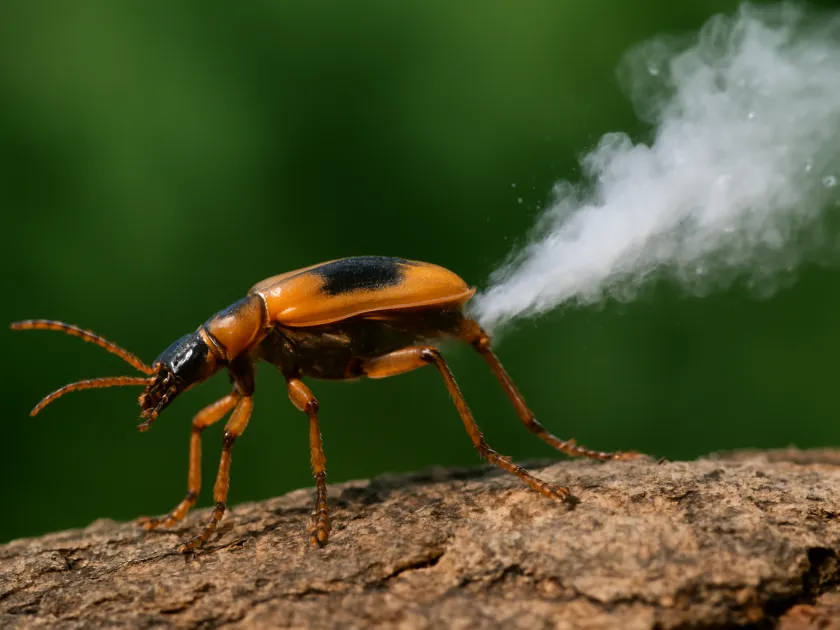
The bombardier beetle (genus Brachinus) belongs to the ground beetle family (Carabidae). These beetles are easily recognized by their dark, metallic-colored wing covers and vibrant reddish-brown heads and legs.
The most distinctive feature of these beetles is their chemical defense system. When threatened, they discharge a hot, noxious gas spray from their abdominal glands to deter potential predators.
Adult beetles are nocturnal predators that typically reside under logs, rocks, or within loose soil, where they actively hunt for other small invertebrates.
The larvae of the bombardier beetle are known to be ectoparasitoids, specifically targeting the pupae of other insects in their local environment.
Physically, they are well-adapted for life in the soil, possessing strong mandibles and rapid movement capabilities necessary for a predatory lifestyle.
What it damages
Bombardier beetles are strictly predatory and do not feed on plant tissues, meaning they cause no direct damage to crops, vegetables, or ornamental plants.
They do not consume foliage, stems, or roots, and they do not vector plant diseases, which effectively removes them from the category of agricultural pests.
In many agricultural settings, their presence is actually advantageous as they help suppress populations of genuine insect pests living in the soil.
There is no economic threshold for this species, and farmers should not categorize them as a threat to plant health or farm output.
Misidentifying them as pests can lead to unnecessary pesticide application, which ultimately harms the biodiversity of the agro-ecosystem.
Control measures
Since bombardier beetles are beneficial predators, there is no need for control measures to eradicate them from fields or gardens.
The best agricultural practice is to encourage the presence of such beetles to maintain a healthy predator-prey balance within the field.
Avoid broad-spectrum insecticide applications, as these chemicals often eliminate beneficial insects while allowing pest populations to rebound quickly.
Maintaining integrated pest management (IPM) strategies ensures that natural predators like the bombardier beetle can perform their role in the field.
- Avoid unnecessary pesticide use.
- Promote biodiversity in field margins.
- Monitor for true pests instead of predators.
Taxonomy
- Latin name
- Brachinus
- Order
- Coleoptera (beetles)
- Family
- Carabidae
- EPPO code
- BRHNSP
Discussion
No discussions yet — be the first.