
Blepharidopterus angulatus
Blepharidopterus angulatus
Description
How to identify
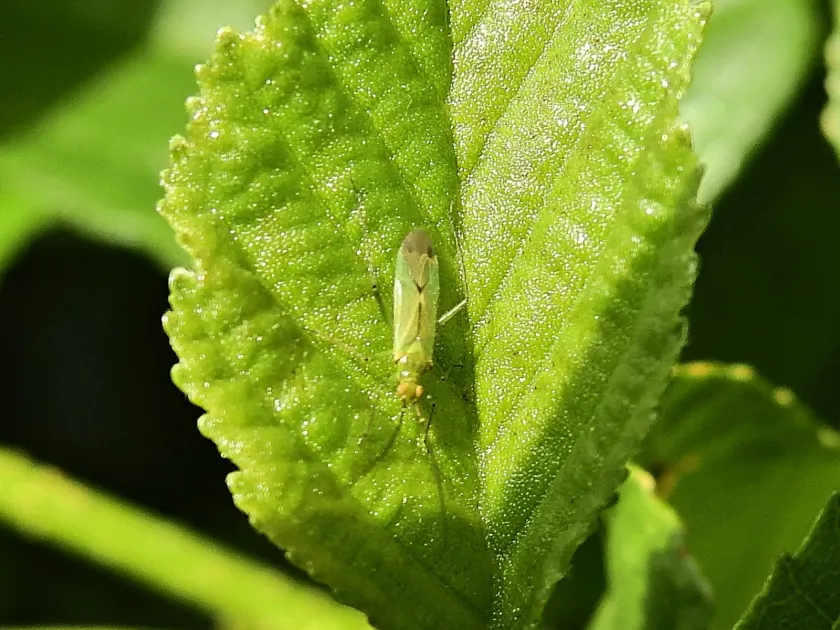
Blepharidopterus angulatus belongs to the Miridae family, commonly known as plant bugs or mirid bugs. Adults measure approximately 6 to 7 mm in length and possess a slender, green-to-yellowish body.
A key diagnostic feature of this species is the presence of distinct black or dark brown spots on the knees (femora-tibiae joints) of the hind legs, which helps in field identification.
The wings are translucent with a subtle greenish tint. They have prominent reddish-brown compound eyes, which are characteristic of this specific genus within the mirid family.
Nymphs appear similar to adults but are smaller, wingless, and exhibit a more vivid green coloration that serves as effective camouflage against the foliage of host trees.
These bugs are quite agile and often seek refuge on the underside of leaves, making them difficult to spot during standard field inspections unless populations are high.
What it damages
This pest primarily attacks pome fruit trees, such as apple and pear, but it is also found on various deciduous species, including lime (Tilia) and alder (Alnus).
While often functioning as a predator of other small pests like mites, it frequently feeds on plant sap when prey is scarce, leading to significant damage on tender leaves.
The most severe damage typically occurs in nurseries and young orchards, where sustained feeding can result in stunted growth and deformed foliage on developing shoots.
Feeding marks appear as tiny chlorotic spots or necrotic lesions on the leaf blade, caused by the bug's piercing-sucking mouthparts extracting plant cell contents.
Severe infestations can lead to premature leaf drop and potential damage to young fruitlets, which may subsequently become deformed or fall off the tree prematurely.
When it appears
The species overwinters in the egg stage, with eggs embedded deep within the bark of young twigs of host trees, providing protection from winter frosts.
Egg hatch usually coincides with the spring budburst, ensuring that emerging nymphs immediately have access to high-quality, succulent plant tissue for their initial development.
Adults typically emerge by mid-summer, usually during July, and remain active through August, engaging in mating and further feeding before the end of the season.
There is typically one generation per year, although hatching can be extended over several weeks depending on localized climate variations and spring temperature profiles.
Activity levels are highly dependent on solar warmth; during colder or cloudy days, the bugs tend to remain stationary and hidden within the dense canopy of the tree.
Signs of infestation
The earliest signs of infestation are small, pale spots or 'stippling' on the leaves, resulting from the bug's feeding activities on the leaf parenchyma.
Over time, these spots can enlarge, leading to leaf yellowing (chlorosis), curling, and in extreme cases, the necrosis of entire sections of the leaf tissue.
- Tiny, light-colored necrotic spots on leaves.
- Distortion and curling of terminal shoots.
- Presence of shed nymphal skins (exuviae) on leaf undersides.
- Reduced vigor and stunted annual shoot growth.
- Active presence of slender green bugs on branches.
Secondary infections, such as fungal pathogens, may colonize the damaged leaf areas, causing the spots to darken and develop distinct borders, further weakening the tree.
Control measures
Effective management begins with dormant pruning to remove twigs containing overwintering eggs, which significantly reduces the initial population pressure in the spring.
Encouraging natural predators, such as lacewings and spiders, is essential for long-term sustainable control, as these organisms can keep mirid populations below damage thresholds.
Chemical intervention should be reserved for periods of high infestation, targeting the nymphal stages when the insects are most susceptible to insecticide treatments.
When applying control measures, ensure thorough coverage of the leaf undersides, as this is where the majority of the nymphs reside and feed during the day.
Integrated pest management (IPM) practices, including regular monitoring and the use of soft-acting pesticides, help maintain fruit tree health while protecting beneficial insect populations.
Taxonomy
- Latin name
- Blepharidopterus angulatus
- Order
- Hemiptera (bugs, aphids, leafhoppers)
- Family
- Miridae
- EPPO code
- AETOAN
Discussion
No discussions yet — be the first.