
Blemus discus
Blemus discus
Description
How to identify
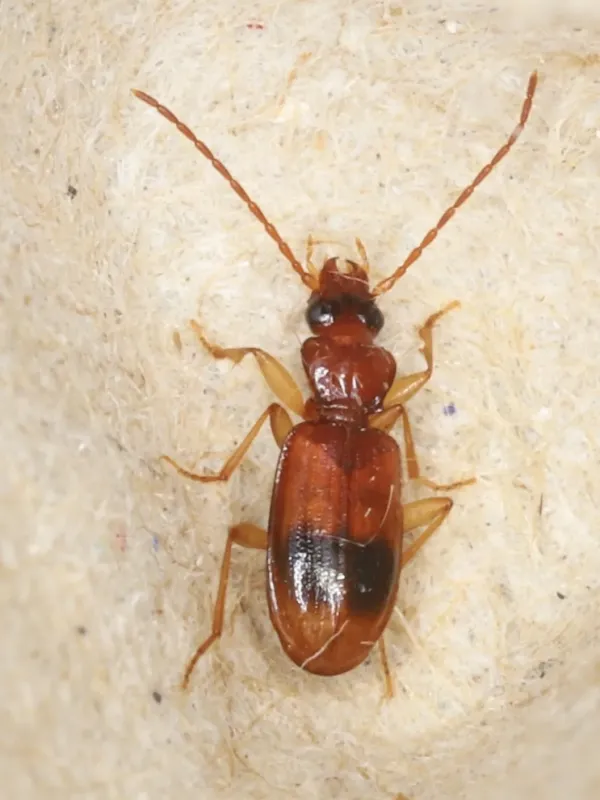
Blemus discus is a small species of ground beetle belonging to the family Carabidae. Adult beetles typically measure between 4 to 5 millimeters in length and feature a flattened body structure, which is an adaptation for navigating narrow soil crevices and dense vegetation.
The coloration of the beetle ranges from dark brown to black, often exhibiting a slight metallic luster. The pronotum is somewhat narrowed at the base, and the elytra possess fine punctation, which are key taxonomic features used for accurate species verification.
Larvae of this species are elongated and possess well-developed mandibles and three pairs of legs, typical for active soil-dwelling larvae. They remain cryptic throughout their life cycle, inhabiting the top layers of the soil where humidity is relatively constant.
These beetles are primarily nocturnal, showing peak activity after sunset. During the day, they remain hidden under soil aggregates, crop residues, or dense weeds, which makes visual scouting difficult during daylight hours.
Their survival and reproduction are highly dependent on soil moisture levels and structural integrity. In extremely dry conditions, they retreat deeper into the soil profile to avoid desiccation and enter a state of dormancy until favorable conditions return.
What it damages
This pest primarily impacts cereal crops, vegetable crops, and young seedlings during the initial phases of germination and establishment. Both adult beetles and larvae contribute to the damage by feeding on tender plant tissues.
During germination, the beetles can destroy the seed embryo, leading to poor crop stands and reduced plant density. Larvae often feed on the delicate primary roots, which weakens the plant and stunts its growth significantly.
Damaged plants often exhibit wilting, chlorosis, and eventually death, even in the absence of primary fungal pathogens. The root damage caused by the larvae creates entry points for various soil-borne infections, further aggravating the crop stress.
In fields managed with minimal tillage or no-till practices, the accumulation of crop residues provides an ideal habitat for Blemus discus, often leading to increased pest pressure compared to conventionally tilled fields.
Extensive damage may lead to significant yield losses, potentially requiring the replanting of sections of the field where the pest population density has surpassed the economic threshold.
When it appears
Activity of Blemus discus typically begins in early spring as soil temperatures rise and moisture content remains adequate for movement. Overwintered adults become active on the soil surface to feed and find mates.
Reproduction and egg-laying occur most intensely in late spring, which often coincides with the tillering phase of cereal crops. This period represents the highest risk window for seedling establishment.
Summer activity is often mitigated by high temperatures; during periods of heat, beetles migrate to deeper soil layers or areas with higher humidity, such as field margins or dense vegetation, awaiting better conditions.
A new generation of larvae emerges in autumn, feeding actively on the root systems of newly established winter crops as they prepare for the upcoming winter season.
The species survives the winter as both adults and larvae, sheltering within the soil profile, under plant litter, or in protected crevices that shield them from extreme frost and temperature fluctuations.
Signs of infestation
The primary symptom of infestation is the appearance of irregular gaps or patches in the field where seedlings are absent or show signs of severe decline despite favorable environmental conditions.
When inspecting the base of affected plants, one may observe small, circular entry holes in the soil surface, indicating the movement of the beetles towards the root zone.
Excavating the soil around symptomatic plants frequently reveals the presence of larvae or adult beetles, confirming the cause of the damage to the root system or the seed itself.
Plants affected by this pest show delayed growth and yellowing of the foliage, resulting from the inability of the damaged root system to adequately supply water and nutrients to the plant.
Visual monitoring with flashlights during the night can reveal the presence of adult beetles on the soil surface, providing a clear indication of a significant pest population in the area.
Control measures
Effective management focuses on integrated approaches, with primary emphasis on field sanitation and cultivation practices that disrupt the life cycle of the beetle.
Deep tillage or thorough soil cultivation prior to sowing is effective in disrupting the beetle's habitat, exposing both larvae and adults to environmental pressures and predatory insects.
The application of insecticidal seed treatments is considered the most reliable method for protecting seedlings against early-season root feeding, ensuring higher crop establishment rates.
Maintaining a balanced crop rotation that avoids planting susceptible cereal crops back-to-back can significantly reduce the build-up of Blemus discus populations in the field.
- Regular field scouting and soil pit inspections.
- Control of weeds that provide alternative food and shelter.
- Selection of optimal sowing dates to avoid peak emergence.
- Usage of targeted seed treatments for early-stage protection.
Taxonomy
- Latin name
- Blemus discus
- Order
- Coleoptera (beetles)
- Family
- Carabidae
- EPPO code
- BLMUDI
Discussion
No discussions yet — be the first.