
Bembidion tibiale
Bembidion tibiale
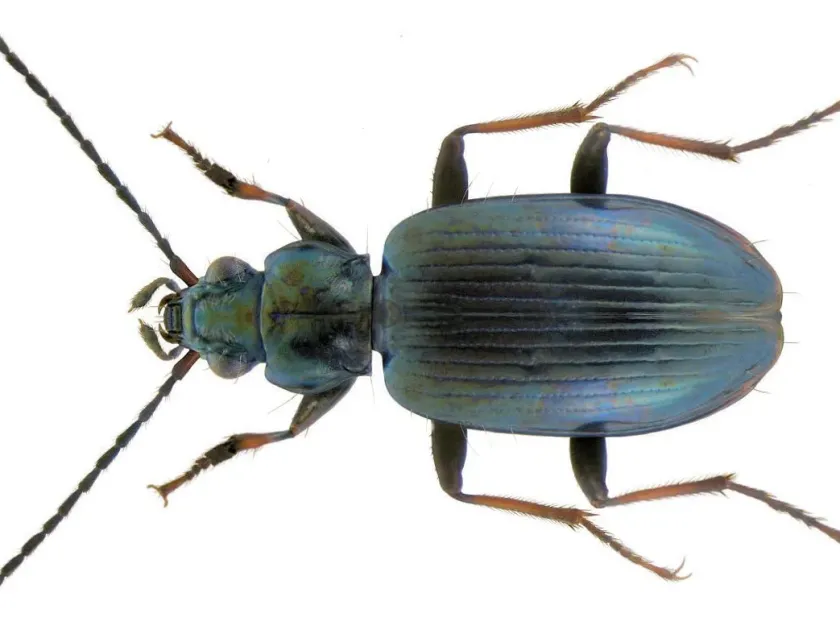
Description
How to identify
Bembidion tibiale is a species of ground beetle belonging to the Carabidae family, order Coleoptera. These beetles are relatively small, usually measuring between 4 to 5 millimeters in length.
The adult beetle has a characteristic streamlined shape typical of the genus, often exhibiting a dark color with a metallic sheen. The legs are generally yellowish-brown, which provides a useful diagnostic feature for visual identification.
They possess a wide head with robust mandibles, reflecting their evolutionary origin as predatory insects that feed on smaller invertebrates in the soil and leaf litter.
The larvae are typically soil-dwelling and are rarely seen on the surface, as they prefer the moist, dark microhabitats found beneath soil crumbs and organic debris.
While Bembidion species are largely beneficial as natural controllers of pest populations, certain environmental conditions can shift their behavior toward feeding on young crop tissues.
What it damages
Although primarily predatory, Bembidion tibiale can become a nuisance when its natural prey is scarce, causing damage to newly germinated crop seedlings.
The damage is most severe during the early emergence stage of crops such as cereals and certain vegetables, where the beetles graze on cotyledons and tender young leaves.
The injury caused to the growth point of the seedling can lead to the total loss of the plant, resulting in patchy emergence and reduced crop density across the field.
In cases of high infestation, the damage is concentrated on the edges of the fields, where beetles often migrate from surrounding wild grass areas or uncultivated zones.
This type of damage is often aggravated by dry spring conditions, forcing the beetles to extract moisture from the succulent tissues of young crop seedlings.
When it appears
The life cycle of the beetle is closely tied to soil temperature and moisture levels. Activity begins as soon as the soil warms up after the winter period.
Peak activity and reproductive phases usually occur in late spring and early summer, when the moisture content in the topsoil is optimal for larval survival and development.
Beetles overwinter as adults, finding shelter in the soil or under vegetation remnants, which allows them to emerge quickly when spring conditions are met.
As the season progresses, adult beetles remain active, but their potential to impact agricultural crops decreases as plants develop stronger, more fibrous tissues.
In irrigation-heavy agricultural systems, the potential for activity can be extended throughout the summer, though it usually remains a problem mainly during the seedling stage.
Signs of infestation
Visual identification of infestation involves spotting small, irregular nibbling patterns on the edges of cotyledons and young leaves of the emerging crop.
Inspecting the soil surface near damaged plants in the early morning or evening often reveals the presence of beetles, which are highly mobile and will scurry away when disturbed.
Thinning patches in the field where seedlings have withered or disappeared entirely are significant signs that suggest soil-dwelling pests are present.
Plants affected by these beetles often show signs of necrotic tissue at the base of the stem, caused by the localized feeding of the adult insects.
The presence of high numbers of ground beetles in standard pitfall traps used for entomological surveys serves as a warning of potential seedling damage for the season.
Control measures
Integrated pest management strategies are crucial for controlling Bembidion tibiale, focusing on disrupting the beetle's life cycle before planting begins.
Pre-planting tillage operations are effective in destroying overwintering sites and reducing the initial population size before the crop starts to emerge.
The use of insecticide-treated seed coatings is the most recommended preventative measure, as it protects the young roots and stems during the most vulnerable initial stages.
Maintaining clear field margins and controlling weeds effectively prevents the buildup of beetle populations in areas adjacent to the crops, limiting migration paths.
- Crop rotation to break life cycles.
- Thorough autumn tillage to disturb overwintering sites.
- Application of seed treatment insecticides.
- Edge-of-field insecticidal sprays if necessary.
- Effective weed management around fields.
Taxonomy
- Latin name
- Bembidion tibiale
- Order
- Coleoptera (beetles)
- Family
- Carabidae
- EPPO code
- BEMDTI
Discussion
No discussions yet — be the first.