
Four-spotted ground beetle
Bembidion tetracolum
Description
How to identify
The four-spotted ground beetle, known scientifically as Bembidion tetracolum, is a member of the Carabidae family, commonly found in temperate agricultural regions.
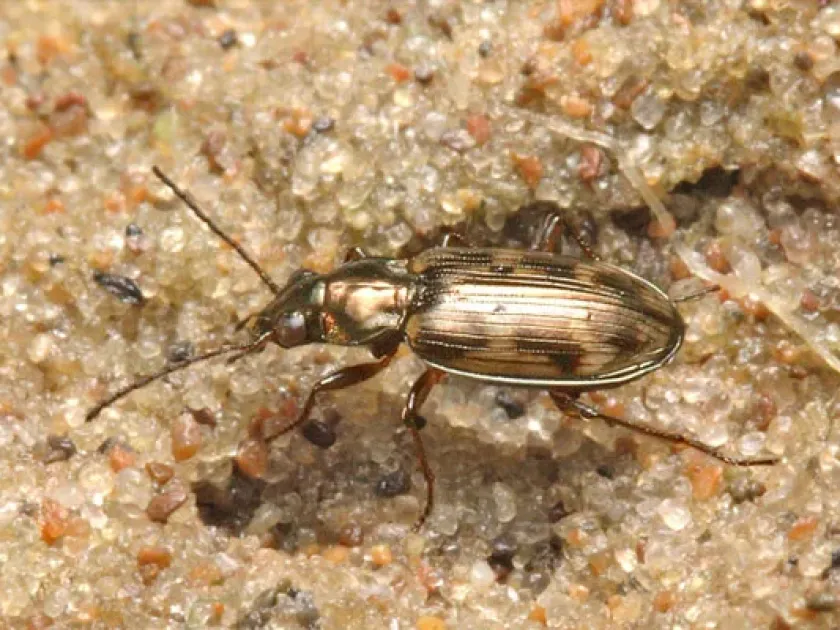
Adult beetles are small, typically ranging from 4 to 5 mm in length, characterized by a metallic sheen and four distinct yellow spots on their elytra.
They possess long, agile legs that allow for rapid movement across the soil surface, making them highly effective hunters in their natural environment.
The larval stage, which lives in the soil, is also predatory and has an elongated, segmented body designed for navigating through soil cracks and crevices.
While often considered beneficial, their preference for moist soil habitats means they frequently aggregate in areas where irrigation or high humidity is present.
What it damages
Although primarily predatory, Bembidion tetracolum can become a nuisance in agricultural settings when its natural prey populations are insufficient.
The beetles are known to feed on the tender shoots and cotyledons of emerging seedlings, particularly in grain and vegetable crops.
Such feeding behavior results in small, jagged holes in the leaves, which can severely weaken young plants during their most vulnerable growth stages.
In cases of high infestation, the loss of tissue on the stem or leaves can lead to stunted growth or the total collapse of the crop seedling.
The economic damage is most pronounced during dry spring seasons when these beetles are forced to look for alternative moisture and nutrient sources.
When it appears
The lifecycle of the beetle is closely tied to soil temperature; emergence typically occurs early in the spring as the topsoil begins to warm up.
Peak activity for the adults is observed from late May through June, which coincides with the germination and early vegetative growth of many crops.
These beetles are highly mobile and are capable of relocating to different parts of the field or neighboring areas if conditions become unfavorable.
As summer temperatures peak or drought conditions occur, the beetles may reduce their surface activity, seeking refuge deeper in the soil profile.
The overwintering phase involves adults seeking shelter in debris or soil depths to protect themselves from harsh winter frosts and environmental stressors.
Signs of infestation
Growers should monitor for irregular, small holes in the leaves of emerging seedlings as an early indicator of potential beetle feeding activity.
If suspicious damage is observed, checking the soil surface during the early morning or evening hours can reveal the presence of the active beetles.
Pitfall traps are a standard and highly effective tool for assessing the population density of ground beetles across different zones of a farm.
Increased occurrences of wilted or damaged seedlings at the edges of the field are often the first visible signs that the pest is localized in the area.
Persistent damage accompanied by the presence of small, fast-moving, metallic beetles on the soil confirms the need for closer management observation.
Control measures
Cultural control practices, such as effective crop rotation, are essential for preventing the buildup of Bembidion tetracolum populations over time.
Tillage practices that disrupt the soil environment can help reduce the number of overwintering sites, thereby decreasing the next season's population.
Seed treatments with systemic insecticides provide the most robust protection for young plants, effectively preventing early-season damage from small beetles.
Integrated Pest Management (IPM) strategies emphasize regular field scouting to ensure that interventions are only applied when economic thresholds are met.
- Maintaining field hygiene by removing crop residues that provide shelter for the beetles.
- Using row covers for high-value crops during the most susceptible early growth stages.
- Targeted insecticide applications, if necessary, based on rigorous monitoring data.
Taxonomy
- Latin name
- Bembidion tetracolum
- Order
- Coleoptera (beetles)
- Family
- Carabidae
- EPPO code
- BEMDRU
Discussion
No discussions yet — be the first.