
Bembidion pygmaeum
Bembidion pygmaeum
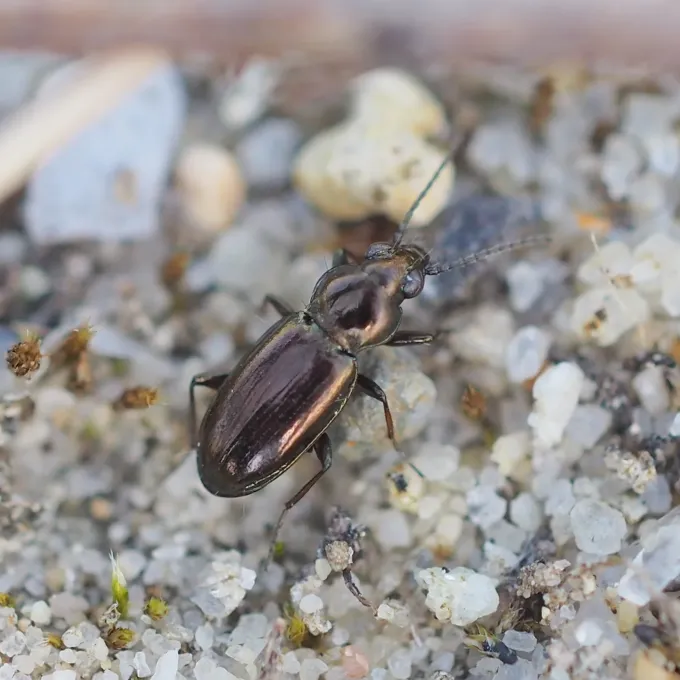
Description
How to identify
Bembidion pygmaeum is a small ground beetle belonging to the Carabidae family. Measuring approximately 3–4 mm in length, these beetles are widely distributed in agricultural environments.
The beetle typically features a metallic, bronze, or dark green luster. Its streamlined body is perfectly adapted for rapid movement across the soil surface and through narrow cracks in the earth.
Its mouthparts are highly developed, allowing the beetle to consume both seeds and young plant tissues. The beetle also possesses strong, agile legs that facilitate quick escapes when disturbed.
Larvae of this species are soil-dwelling and mobile, often feeding on organic matter or tender roots. They are relatively secretive and are rarely observed during routine field inspections.
The species prefers moist soil conditions, which helps them survive and thrive. They are often found in areas with high soil moisture, especially in fields with heavy residue.
What it damages
The primary damage caused by Bembidion pygmaeum occurs at the seedling stage of cereal crops. They pose a significant threat to wheat, barley, and other small grains during germination.
Beetles often feed on seeds before they emerge, leading to poor stand establishment. This results in patchy fields that may require significant replanting efforts.
Once seedlings emerge, the adults chew on the stems at the soil level. This localized damage causes the plants to lose turgor and collapse, often leading to total loss of the seedling.
Besides cereals, the pest can affect vegetable seedlings and sugar beet under favorable conditions. High populations of the beetle can cause significant economic losses by reducing crop density.
Plants that survive minor attacks often show stunted growth and increased susceptibility to other biotic and abiotic stressors, leading to lower final yields.
When it appears
Adult beetles overwinter in the soil, beneath crop residues, or in protected crevices. They emerge during the early spring as soon as temperatures rise.
Peak activity coincides with the emergence of spring crops. This period is critical, as the vulnerability of the seedlings is at its highest during the first few weeks of growth.
The reproduction phase occurs in spring, with eggs laid directly in the soil. The life cycle allows for rapid population growth when soil conditions are optimal.
Throughout the summer, adult activity continues, though the damage potential decreases as plant tissues harden and become less palatable to the beetles.
Autumn marks the transition toward overwintering. Beetles feed on late-season vegetation and weed remnants to accumulate energy reserves before entering dormancy.
Signs of infestation
The most common sign of infestation is thin or uneven plant stands. Upon closer inspection, you will see characteristic feeding marks at the base of the stems.
Tiny holes in the soil surface near the affected plants are often indicators of beetle activity. These holes serve as entry points and shelters for the insects.
Seedlings may appear wilted or show jagged, eaten edges on their leaves. In severe cases, the growing point of the plant may be completely severed.
Observation at dawn or dusk often reveals the presence of these small, metallic beetles running quickly across the soil surface in infested areas.
Yellowing of the central leaf followed by the sudden death of the entire seedling is a typical progression in fields heavily infested with this beetle.
Control measures
Effective management starts with cultural practices. Deep autumn tillage is highly effective in disrupting overwintering sites and reducing the initial spring population.
Seed treatment with systemic insecticides is the most recommended method for protecting seedlings during the critical germination phase.
Maintaining a clean field environment by controlling weeds helps eliminate alternative food sources and nesting habitats for the beetles.
Promoting rapid seedling growth through proper fertilization and seeding techniques can help the crop bypass the most vulnerable stage quickly.
- Monitor fields using soil baits or visual inspections.
- Rotate crops to break the beetle life cycle.
- Apply insecticides only when pest populations exceed economic thresholds.
- Ensure uniform seed depth for better crop emergence.
Taxonomy
- Latin name
- Bembidion pygmaeum
- Order
- Coleoptera (beetles)
- Family
- Carabidae
- EPPO code
- BEMDPY
Discussion
No discussions yet — be the first.