
Bembidion properans
Bembidion properans
Description
How to identify
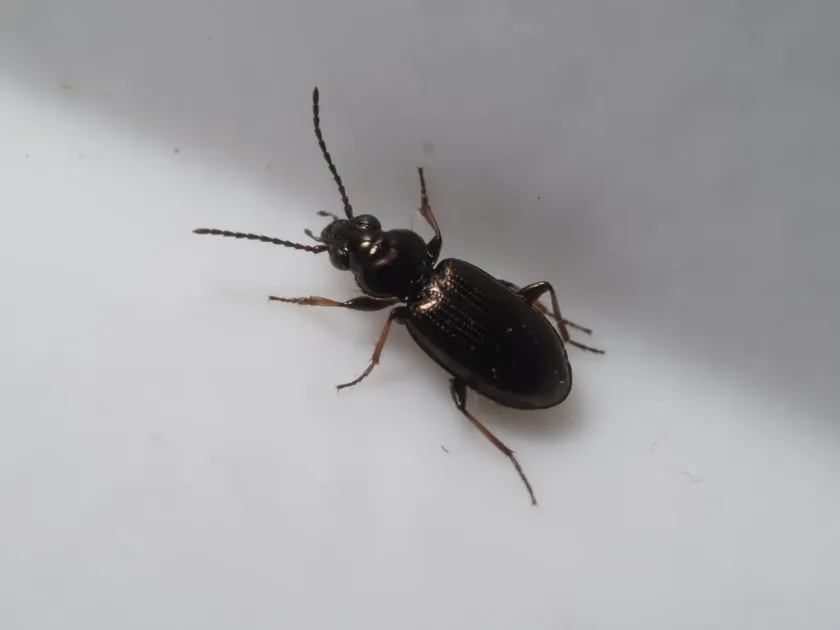
Bembidion properans is a species of ground beetle belonging to the family Carabidae, order Coleoptera. These small beetles typically measure between 3.5 and 4.5 millimeters in length.
The body is characterized by a metallic sheen, usually ranging from bronze to greenish-black. The elytra feature distinct punctate striae, which are a hallmark of the genus Bembidion.
The head is equipped with strong, well-developed mandibles. While primarily predatory, their morphology allows them to adapt to different feeding sources, including plant materials when necessary.
Larvae are elongated and mobile, living primarily within the upper soil layers. Detecting them requires specific soil sampling techniques, as they remain hidden during daylight hours.
Identification often requires careful inspection under magnification to distinguish Bembidion properans from other similar ground beetle species that occupy the same habitat.
What it damages
Although they are often considered beneficial as predators, Bembidion properans can become a pest when their natural prey density is low. In such cases, they turn to feeding on the stems and leaves of young seedlings.
Cereal crops, such as wheat and barley, are particularly vulnerable during their early emergence phase. The beetles consume the tender tissue of the shoot, leading to poor crop establishment and reduced plant density.
Vegetable crops can also suffer damage, particularly if planting coincides with a population peak of the beetle. Feeding damage on cotyledons can severely stunt development.
The damage is often localized, occurring in patches across the field. This behavior can mimic disease symptoms, making it essential to scout for the presence of the insects near the affected plants.
Environmental stress, such as moisture fluctuations in the soil, can increase the pest's interest in plant tissue, as they search for moisture during dry spells.
When it appears
The active life cycle of Bembidion properans begins in early spring as soil temperatures rise. Adult beetles emerge and become active, reaching peak populations in late spring and early summer.
The species undergoes complete metamorphosis. Females lay eggs in moist soil, and larvae develop through several stages, feeding on soil organisms or organic matter before pupating.
Adults primarily overwinter in the soil or under leaf litter, which provides protection against winter frost. This enables them to survive and rapidly emerge at the start of the next season.
A second generation may emerge later in the summer, depending on regional climatic conditions. This extended activity window requires ongoing monitoring throughout the growing season.
Temperature and soil moisture levels are the most critical factors driving the developmental speed and the overall size of the population in any given year.
Control measures
Effective control of Bembidion properans relies on a combination of cultural practices and targeted chemical interventions. Deep autumn plowing is highly effective at disrupting overwintering sites.
Crop rotation should be employed to reduce the buildup of beetle populations in specific fields. Avoid planting sensitive crops in fields where high beetle activity was recorded in the previous year.
Insecticide use should be reserved for scenarios where the economic threshold has been exceeded. Applying treatments during cooler evening hours can improve efficacy as this is when the beetles are most active on the surface.
Seed treatments are the preferred method for protecting young seedlings, providing a protective barrier during the most vulnerable early growth stages of the crop.
- Use of soil traps for regular population monitoring.
- Removal of weeds that provide shelter and alternative food sources.
- Promoting rapid germination through optimal seedbed preparation.
- Maintaining field hygiene to prevent moisture accumulation near young plants.
Taxonomy
- Latin name
- Bembidion properans
- Order
- Coleoptera (beetles)
- Family
- Carabidae
- EPPO code
- BEMDPR
Discussion
No discussions yet — be the first.