
Bembidion nigropiceum
Bembidion nigropiceum
Description
How to identify
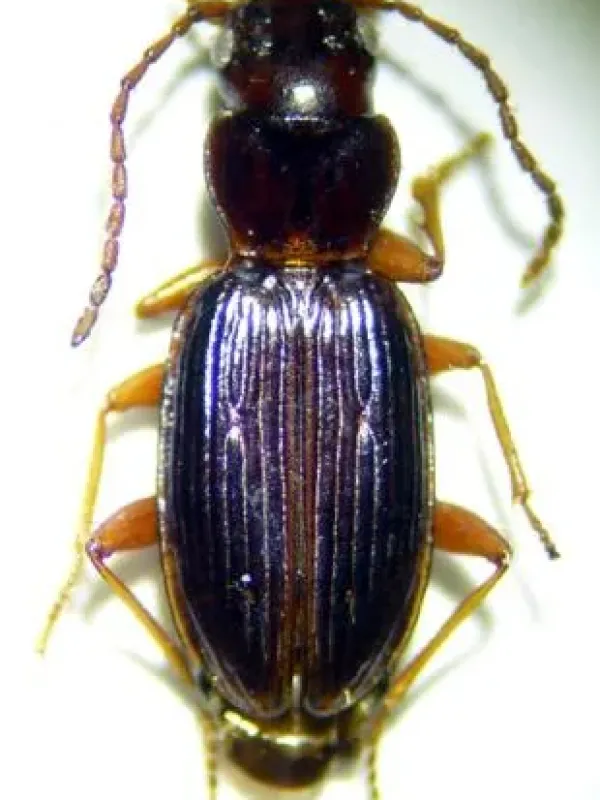
Bembidion nigropiceum belongs to the family Carabidae (ground beetles) within the order Coleoptera. It is a small beetle, typically measuring between 3 and 5 mm in length.
Its appearance is characterized by a dark brown or nearly black color with a distinctive metallic sheen. The surface of the elytra is smooth, often featuring fine, punctured grooves.
A key morphological feature is its well-developed mandibles, typical of predatory ground beetles; however, this species can exhibit phytophagous behavior under certain conditions.
The beetle's head is proportional to its body, with prominent eyes that provide a wide field of vision for foraging. The antennae are filiform, of medium length, and highly mobile.
The larvae have an elongated form, typically white or yellowish, with well-developed thoracic legs, allowing them to move actively through the soil layers.
What it damages
This pest poses a potential threat to a wide range of agricultural crops, including cereal grains and various vegetable crops.
The most significant damage occurs during the seed germination and seedling emergence stages, when the insects feed on the tender tissues of young plants.
Adults and larvae can damage the root system, leading to stunted growth, reduced plant vigor, and, in severe cases, the death of the seedlings.
Crops grown in high-soil-moisture environments are at greater risk, as this species prefers such habitats for its activity.
The feeding injuries caused by this pest create entry points for secondary fungal and bacterial infections, further compromising the health of the crop.
When it appears
The insect's activity is directly dependent on temperature and moisture levels, with peak activity typically observed during the spring and summer months.
Overwintering primarily occurs in the soil layer, beneath plant debris, or in soil cracks, where relatively stable conditions are maintained.
With the arrival of stable, warm temperatures, the beetles emerge from diapause and begin their period of active feeding and reproduction.
The life cycle includes several stages: egg, larva, pupa, and imago, with the duration of each stage varying based on regional weather patterns.
Mass emergence of the pest often coincides with the tillering phase of cereals, requiring close agronomic monitoring during this critical time.
Signs of infestation
The primary sign of the pest's presence is the thinning of crop stands and characteristic feeding damage on leaves and stems near the soil surface.
When inspecting the root systems of damaged plants, one often finds signs of nibbling caused by larvae residing in the soil horizon.
On the soil surface in areas where the pest congregates, specific small tunnels created by larvae in search of food may be observed.
During daylight hours, the beetles are difficult to detect as they are primarily nocturnal or crepuscular, leading a concealed lifestyle.
- Patchy loss of seedlings across the field.
- Evidence of damaged cotyledons and young leaves.
- Visible feeding marks on the root collar of young plants.
Control measures
Deep autumn plowing is an effective control measure, as it disrupts the insect's life cycle and exposes individuals to the surface, leading to natural mortality from freezing.
Strict adherence to crop rotation helps break the pest's food chain and significantly reduces its population in fields where outbreaks have previously occurred.
Applying insecticidal seed treatments before planting is the most reliable method for protecting young seedlings from early-season damage.
It is important to conduct regular field monitoring using soil traps to assess population density and make timely decisions regarding chemical applications.
The use of biological control agents, such as entomopathogenic fungi, can help reduce the beetle population without disrupting the ecological balance of the agroecosystem.
Taxonomy
- Latin name
- Bembidion nigropiceum
- Order
- Coleoptera (beetles)
- Family
- Carabidae
- EPPO code
- BEMDNI
Discussion
No discussions yet — be the first.