
Bembidion monticola
Bembidion monticola
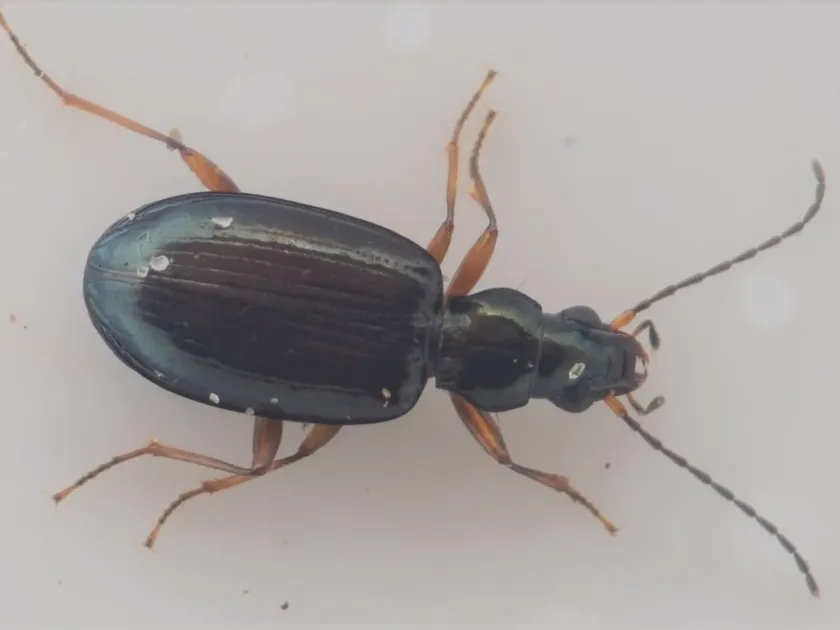
Description
How to identify
Bembidion monticola belongs to the ground beetle family (Carabidae) within the order Coleoptera. This small predatory beetle is commonly found in moist soil environments, particularly near water bodies and in fields with high soil moisture levels.
Physically, the beetle has an elongated body, typical for its genus, usually colored in dark or bronze tones with a metallic luster. Adult individuals are small, rarely exceeding 5-7 millimeters, which makes them difficult to spot in dense crop stands.
The larvae are also slender with well-developed mouthparts, adapted for moving actively through the upper layers of the soil while searching for prey among organic debris.
The biology of this species is closely tied to the hydrological regime of the soil, meaning that their population density is highest in low-lying areas or fields with poor drainage.
Although most ground beetles are beneficial natural predators, certain species of the genus Bembidion can occasionally exhibit phytophagous behavior during mass outbreaks, damaging tender crop seedlings.
What it damages
Bembidion monticola causes the most significant damage during the early stages of crop growth, feeding on seeds and young seedlings. Crops such as cereals and vegetables with soft stem tissues are at the highest risk.
Beetles pose the greatest threat during dry periods when their primary food sources, such as smaller invertebrates, become scarce, forcing the insects to feed on the succulent parts of agricultural plants.
The damage typically manifests as stems being severed at or near the soil surface, leading to wilting and the total loss of seedlings before they are established.
Larval damage often goes unnoticed because it occurs below the soil surface, where larvae feed on the roots, causing plant stuntedness and weakening the root system.
Severe infestations can significantly reduce plant density per hectare, ultimately leading to a substantial decrease in crop yield across the field.
When it appears
The activity of adult Bembidion monticola begins in early spring as soon as the soil temperatures rise sufficiently to trigger the emergence of the beetles from their overwintering sites.
The most critical period for crops is during seedling emergence, which often coincides with the peak population density of the first generation of adults.
During the summer months, beetles become less aggressive toward crops as they shift their diet back to soil-dwelling insects and available organic matter.
The insect's life cycle includes overwintering as an adult in the soil or under plant debris, which allows them to emerge quickly when favorable conditions return in the spring.
Monitoring population levels using soil traps at the start of field operations is recommended to assess the potential risk to germinating crops.
Signs of infestation
The first sign of infestation is the appearance of localized patches of dying seedlings, where plants look bitten or withered at the base.
Upon closer inspection of affected areas, particularly under soil clumps or plant residues, the beetles can be found, as they tend to become active when disturbed.
Adult feeding can sometimes be identified by irregular damage to the edges of young leaves, indicating that the beetles are grazing on the above-ground portions of the plants.
A reduction in stand density on moist sections of the field serves as an indirect but reliable indicator of the presence of this pest.
- severed seedlings;
- presence of beetles in the topsoil;
- localized seedling dieback;
- root damage caused by larvae.
Control measures
The most effective method of protection is proper soil tillage, which disrupts the overwintering sites of the pest and reduces population numbers before germination starts.
The use of modern insecticidal seed treatments provides effective protection for young seedlings during the most critical phases of their early development.
Crop rotation that avoids planting susceptible species in poorly drained or waterlogged areas is essential to minimize the risk of beetle damage.
During periods of mass infestation, the application of contact-stomach insecticides permitted for use in specific agrocenoses may be necessary to protect the crop.
Maintaining adequate field drainage prevents the formation of moist conditions that favor the reproduction of Bembidion monticola, which prefers high humidity.
Taxonomy
- Latin name
- Bembidion monticola
- Order
- Coleoptera (beetles)
- Family
- Carabidae
- EPPO code
- BEMDMO
Discussion
No discussions yet — be the first.