
Bembidion lampros
Bembidion lampros
Description
How to identify
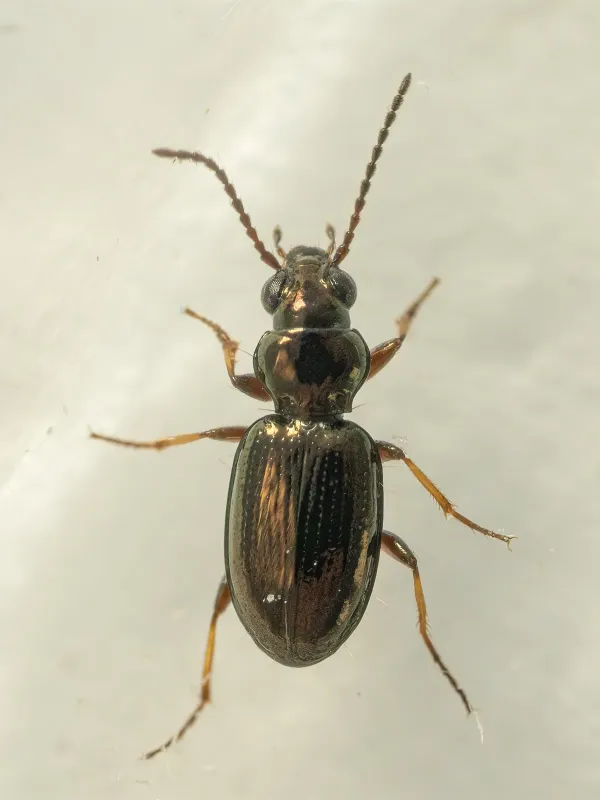
Bembidion lampros is a small beetle belonging to the Carabidae family, commonly known as ground beetles. Adults typically measure between 3 to 4 millimeters in length.
The beetle features a distinct metallic sheen, ranging in color from dark bronze to black. The wing covers (elytra) are marked with visible punctures, which serve as a diagnostic feature for identification.
The larvae are campodeiform in shape, meaning they are elongated, active, and possess well-developed legs and biting mouthparts, which they use to forage in the upper soil layers.
Adult beetles are capable of flight, allowing them to rapidly colonize agricultural fields, particularly in the spring when weather conditions become favorable for their activity.
They are primarily ground-dwelling insects, frequently found on open fields, gardens, and near hedge rows, where they utilize plant debris as shelter during inactive periods.
What it damages
Although typically considered beneficial predators, Bembidion lampros can act as a pest when natural prey is scarce, leading them to feed on crop tissue, specifically young seedlings.
The primary damage occurs during the germination phase of cereals. The beetles chew on emerging sprouts, which can lead to significant thinning of crop stands and yield reduction.
Young winter and spring cereals are particularly vulnerable. When the soil is dry and alternative food sources are unavailable, the beetles may aggressively feed on the tender stems of the crops.
Feeding damage at the early growth stages can kill the seedling entirely or stunt its further development, creating uneven patches in the field that are difficult to mitigate.
Beyond cereal crops, this beetle has been recorded causing damage to cruciferous vegetables and sugar beets, where it feeds on cotyledon leaves and early tissue.
When it appears
Adult beetles overwinter in the soil or under surface debris. Activity resumes in early spring once soil temperatures reach approximately 5–8 degrees Celsius.
The peak period of pest activity typically occurs from May through June, coinciding with the rapid development of spring crops and the hatching of new generations.
The life cycle encompasses stages of egg, larva, pupa, and adult. Development from egg to adult usually takes about 40 to 60 days depending on the thermal regime of the environment.
During the peak of summer, activity often decreases as the beetles retreat deeper into the soil to escape high temperatures and moisture loss.
A minor increase in activity can sometimes be observed in the autumn, though the impact on crops is usually minimal compared to the spring emergence period.
Signs of infestation
The most visible signs of an infestation include ragged or eaten edges on young leaves and damaged stems near the soil line, often leading to wilted seedlings.
Small exit holes or tracks on the soil surface, particularly near affected plants, are indicators of high beetle activity, especially after rain or at night.
An unexpected reduction in plant stand density without signs of fungal or bacterial root disease often suggests damage by soil-dwelling pests like the Bembidion species.
During night inspections, the presence of these beetles can be confirmed by using a flashlight to observe them moving actively across the soil surface around damaged crops.
Patchy germination and missing plants within rows are key field observations that point toward potential insect damage during the initial emergence phase.
Control measures
Effective management begins with proper crop rotation, which disrupts the life cycle of the beetle and prevents it from building up high population densities in the soil.
Thorough and timely soil cultivation is crucial, as it disturbs the overwintering sites and destroys a significant portion of the larvae and pupae residing in the upper layers.
The use of systemic insecticide seed treatments is the most effective way to protect seeds and emerging seedlings from beetle attacks during the most sensitive growth stages.
- Optimize planting dates to ensure rapid germination and crop growth.
- Control weed populations that act as alternate hosts or shelters.
- Implement proper fertilization to support vigorous seedling health.
If economic thresholds are exceeded, targeted application of foliar insecticides during evening hours can be employed to reduce adult beetle populations.
Taxonomy
- Latin name
- Bembidion lampros
- Order
- Coleoptera (beetles)
- Family
- Carabidae
- EPPO code
- BEMDLA
Discussion
No discussions yet — be the first.