
Bembidion guttula
Bembidion guttula
Description
How to identify
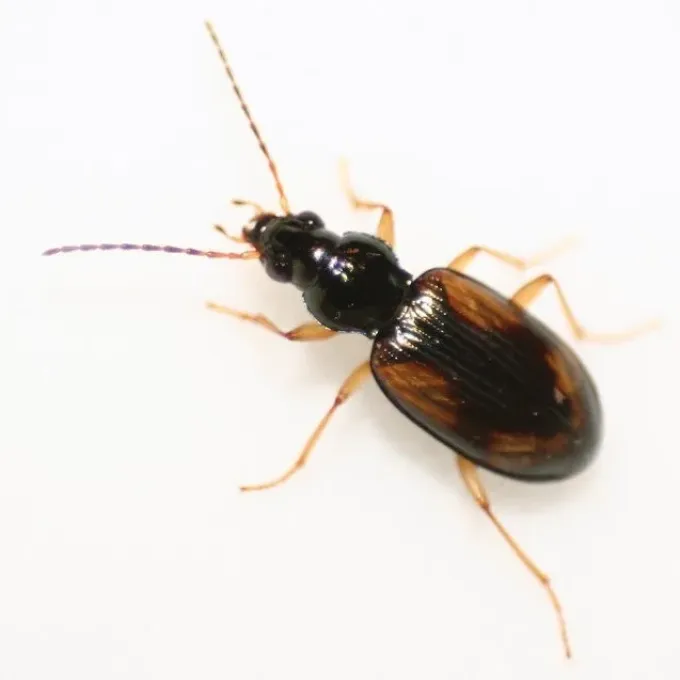
Bembidion guttula is a small species of ground beetle belonging to the family Carabidae and the order Coleoptera. Adult beetles typically reach a length of 3 to 5 mm.
Their body color is dark brown or black, often displaying a metallic or bronze sheen. The elytra are characterized by distinctive yellowish-white spots, which serve as their primary identification mark.
The beetle possesses a streamlined, slightly flattened body, which is highly adaptive for rapid movement across the soil surface and through dense vegetation.
Larvae are also mobile and feature an elongated body with well-developed mouthparts, adapted for living in moist, top-layer soil environments.
Agronomists often identify this pest by conducting soil sampling or using pitfall traps in the early morning hours, as these beetles are primarily active during lower light conditions.
What it damages
While many ground beetles are beneficial predators, Bembidion guttula can act as a minor pest that damages emerging agricultural crops under specific conditions.
They are frequently observed in fields of young cereals, brassicas, and various vegetable crops where the natural ecological balance has been disrupted.
The damage occurs primarily during the germination and seedling stages, as adults feed on tender cotyledons, stems, and leaves of young plants.
High population densities can lead to significant gaps in plant stands, hindering normal crop development and reducing overall yields if left unchecked.
Feeding wounds created by the beetles often serve as entry points for secondary fungal and bacterial pathogens, which further exacerbate the damage to young seedlings.
When it appears
The life cycle of Bembidion guttula is closely linked to soil temperature and moisture levels, typically beginning early in the spring season.
Adult beetles emerge from their overwintering sites as soon as the soil thaws and temperatures remain consistently above freezing for several consecutive days.
Peak activity occurs during the crop emergence period, making young seedlings the most susceptible to beetle feeding during the initial weeks of vegetation.
Depending on the climatic zone, the beetle may complete one or two generations per year, with activity cycles continuing until late summer or early autumn.
Overwintering occurs in the adult stage, where the beetles seek shelter deep within soil crevices, under leaf litter, or in crop residues to survive cold temperatures.
Signs of infestation
Visible signs of infestation include stunted plant growth and irregular, shallow bites or perforations on the edges of young leaves and stems.
Observing the soil surface near affected plants in the morning often reveals the presence of small, rapidly moving beetles that scatter when disturbed.
Wilting of individual young seedlings can be an indicator of subterranean damage to the plant's crown or stem base caused by the beetles.
Soil disturbance or small tracks on the surface around the plant base often suggest the presence of larval activity, especially in moist or irrigated fields.
Monitoring using specialized light traps or soil pitfall traps is recommended to track population shifts and determine the appropriate timing for intervention.
Control measures
Effective management begins with proper crop rotation, which disrupts the pest's habitat and reduces the reliance on localized food sources for consecutive seasons.
Standard agronomic practices such as thorough autumn tillage help destroy overwintering sites, significantly reducing the beetle population in the soil.
Weed control is essential, as diverse weeds provide both shelter and alternative food sources for adults before the primary crop seeds begin to germinate.
In cases of severe economic damage, the application of targeted insecticides may be necessary, provided they are authorized for the specific crop and pest.
Promoting vigorous plant growth through optimal soil fertility and managed irrigation helps crops survive early feeding pressure and minimize the impact of the pest.
Taxonomy
- Latin name
- Bembidion guttula
- Order
- Coleoptera (beetles)
- Family
- Carabidae
- EPPO code
- BEMDGU
Discussion
No discussions yet — be the first.