
Bembidion decorum
Bembidion decorum
Description
How to identify
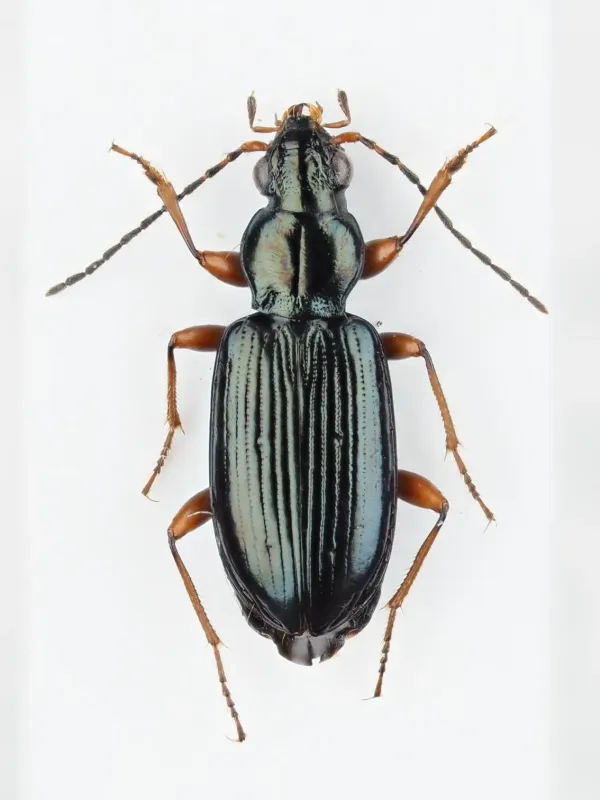
Bembidion decorum is a small beetle belonging to the ground beetle family (Carabidae), order Coleoptera. Adult beetles measure approximately 4-6 mm in length and are characterized by a metallic green or bronze coloration with distinctive yellowish spots on their elytra.
The larvae are typically camponodeiform, adapted for a soil-dwelling lifestyle. They possess well-developed mandibles, enabling them to feed efficiently within the soil profile where they reside during their early developmental stages.
This species is highly moisture-dependent, typically inhabiting the banks of water bodies, irrigated lands, and damp field areas. High soil humidity is the primary factor driving their population density and distribution.
The life cycle includes a complete metamorphosis, consisting of the egg, larva, pupa, and adult stages. Overwintering occurs in the adult stage, usually within the topsoil or under organic debris, with activity resuming in early spring.
While most carabids are considered beneficial predators, Bembidion decorum can display opportunistic feeding behavior, sometimes targeting the soft tissues of emerging crops when their usual prey is scarce.
What it damages
This pest primarily impacts cereal crops, sugar beets, and various vegetable varieties cultivated in fields with high moisture retention or poor drainage.
The damage is caused by both adults and larvae, which consume seeds, developing sprouts, and tender plant stems located just beneath or at the soil surface.
Significant economic loss often occurs during cool, wet springs when conditions are ideal for the development of larvae, leading to patches of thinned crop stands.
Young plants affected by these beetles show signs of stunted growth, loss of vigor, and often die before reaching the true leaf stage, necessitating localized replanting.
The opportunistic nature of this pest means that damage levels can fluctuate based on the availability of other food sources and local climatic conditions during the sowing season.
Signs of infestation
Early warning signs of infestation include visible holes in seeds and gnawed sprout tissues, often located at the base of the stem near the soil level.
During morning inspections, adults may be observed moving rapidly across the damp soil surface, particularly near crop rows where cover and moisture are abundant.
The use of Barber pitfall traps in the field is a standard method for monitoring the population density of ground beetles and assessing the potential risk to emerging crops.
Localized patches of wilted or dying seedlings in lower-lying or poorly drained sections of a field are strong indicators of potential ground beetle activity.
Consistent monitoring of plant health at the emergence stage is crucial to distinguish between abiotic factors, fungal pathogens, and physical damage caused by soil-dwelling insects.
Control measures
Effective management begins with robust crop rotation practices, which disrupt the beetle's life cycle and deplete the local population of suitable food sources.
Improving field drainage is a critical agronomic measure, as it reduces the high-moisture conditions that are essential for the survival and reproduction of Bembidion decorum.
Thorough mechanical tillage before sowing helps to disrupt the soil environment where larvae reside and exposes them to predators, significantly reducing their numbers.
The application of systemic insecticidal seed treatments provides a necessary layer of protection for seedlings during the most critical early growth stages.
Preserving habitats for natural predators, including birds and other insectivorous species, around field margins can provide long-term biological control of the population.
Taxonomy
- Latin name
- Bembidion decorum
- Order
- Coleoptera (beetles)
- Family
- Carabidae
- EPPO code
- BEMDDC
Discussion
No discussions yet — be the first.