
Two-spotted ground beetle
Bembidion biguttatum
Description
How to identify
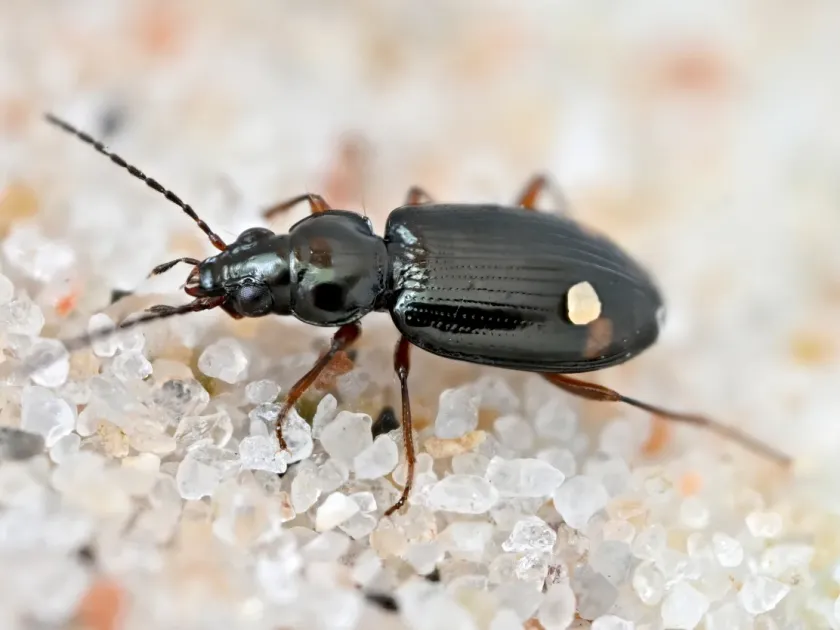
The two-spotted ground beetle (Bembidion biguttatum) is a small member of the Carabidae family, typically measuring between 3 and 4 mm in length. Its body is dark with a subtle metallic sheen, characterized by two distinct yellowish spots on the elytra, which serve as its primary identifying feature.
These beetles are highly mobile and exhibit rapid movement across the soil surface. Their larvae possess a typical campodeiform shape and develop within the top layers of moist soil, making them difficult to detect during standard field inspections.
While most ground beetles are beneficial predators, Bembidion species can occasionally turn phytophagous. When food sources are limited or the population density is unusually high, they may shift their diet to include the tender tissues of young plants.
Precise identification often requires magnification, as the specific structural details of the elytra and antennae are crucial for distinguishing this species from other look-alikes. Variations in color can occur based on environmental conditions and lighting, but the spot pattern remains constant.
The species shows a strong preference for damp environments, frequently colonizing the edges of water bodies, irrigated farmland, and greenhouses. Consistently moist soil conditions are optimal for both the larval development and adult activity of this beetle.
What it damages
In intensive agriculture, the two-spotted ground beetle can cause significant damage to the seedlings of various vegetable and field crops. The most critical period for damage is during the initial growth stages when plant tissues are succulent and highly susceptible to mechanical injury.
Adult beetles feed by chewing on the epidermis of cotyledons and young true leaves. This feeding activity results in stunted growth, leaf deformation, and, in cases of high population density, complete seedling mortality that may require crop reseeding.
Crops particularly vulnerable to this pest include rapeseed, sugar beet, and various leafy vegetables grown in protected soil environments. Seedlings struggling under unfavorable weather conditions are at the highest risk, as their slow growth extends the period of susceptibility.
Larval feeding on the hypocotyl or roots can further damage the plant, creating entry points for soil-borne fungal pathogens. This secondary infection significantly weakens the seedling's immune system, often leading to rapid collapse and death from damping-off diseases.
Due to the nocturnal habits of the beetles, the extent of the damage is often misdiagnosed. Growers frequently attribute the symptoms to other seedling pests, which can lead to the implementation of ineffective pest control strategies.
When it appears
Seasonal activity typically commences in early spring as the soil warms and temperatures allow the overwintered adults to emerge. They immediately begin feeding and seeking suitable locations for egg-laying to start the next generation.
Population peaks are generally observed during periods of high rainfall or in areas with consistent irrigation, as the species thrives in high-humidity conditions. Summer heat may temporarily suppress surface activity unless soil moisture is maintained through agricultural practices.
The life cycle encompasses egg, larval, pupal, and adult stages. Depending on the climate and environmental suitability, the species can complete one to two generations per growing season, allowing for a rapid buildup of the population in a single area.
Pupation occurs within small earthen cells in the soil. The emergence of the new adult generation usually happens in the second half of summer, following which they continue to feed actively before preparing for winter dormancy.
Overwintering occurs primarily in the adult stage within the top layers of soil or beneath plant debris. This survival strategy provides high tolerance to fluctuating temperatures during the colder months, ensuring the species persists in the habitat.
Signs of infestation
The primary symptom of infestation is the presence of irregular mechanical damage on the surface of cotyledons, which often appears as small, shallow pits. Over time, these feeding wounds can dry out or provide portals for opportunistic infections.
During morning inspections, active beetles can be observed running across the soil surface. They are highly elusive and quickly retreat into soil crevices or under clods when disturbed, making detection challenging without careful observation.
Uneven stand density that cannot be attributed to seed quality or drought is a strong indicator of soil pest activity. Wilted or chlorotic seedlings should be carefully inspected at the base to identify potential feeding damage by ground beetle larvae.
The presence of fine dark excrement on the leaf surface is a definitive sign of feeding activity. When detected, this warrants immediate monitoring and potential intervention to protect the crop from further injury.
- irregular pit-like feeding marks on cotyledons;
- seedling mortality due to root-zone or stem feeding;
- presence of minute black excrement on young foliage;
- unexpected thinning of plant stands in early spring.
Control measures
Effective management of the two-spotted ground beetle relies heavily on cultural practices designed to disrupt its lifecycle. Deep autumn plowing is a highly recommended measure, as it disturbs the overwintering sites and exposes larvae and adults to unfavorable conditions.
Crop rotation is essential, particularly for fields with a history of infestation. Additionally, maintaining a weed-free environment is critical, as weeds provide alternative food sources and shelter that allow beetle populations to persist throughout the season.
Chemical control measures should be initiated only when the economic threshold is reached. Applying insecticides with systemic or contact activity can be effective in reducing the adult population on young seedlings during the most vulnerable growth phase.
Optimizing irrigation management in greenhouses and high-moisture fields can help limit the suitability of the environment for the beetles. By avoiding excessive, constant soil saturation, growers can decrease the beetle's preference for the area.
Biological control alternatives, such as the use of entomopathogenic fungi or nematodes, are increasingly utilized in integrated pest management programs. These methods offer a sustainable way to target larvae in the soil while minimizing reliance on conventional pesticides.
Taxonomy
- Latin name
- Bembidion biguttatum
- Order
- Coleoptera (beetles)
- Family
- Carabidae
- EPPO code
- BEMDBI
Discussion
No discussions yet — be the first.