
Bembidion articulatum
Bembidion articulatum
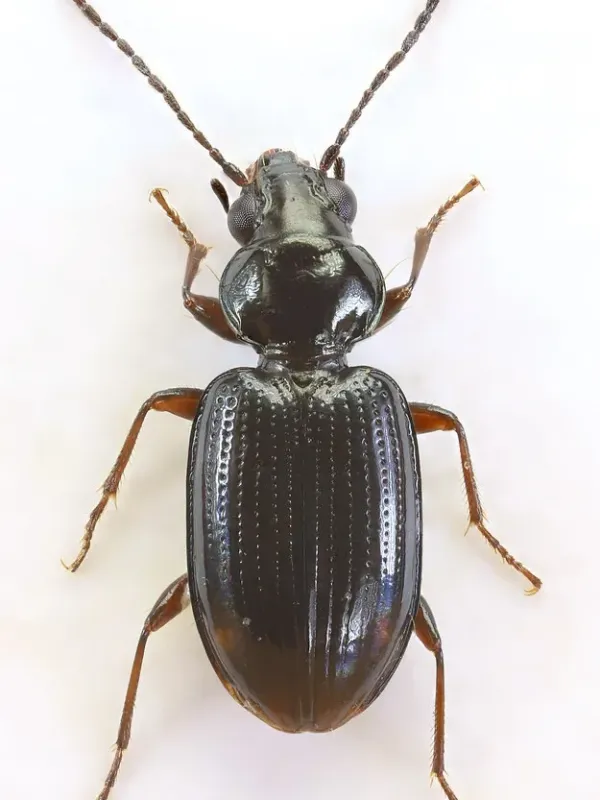
Description
How to identify
Bembidion articulatum belongs to the family Carabidae (ground beetles) and the order Coleoptera. It is a small beetle, typically measuring between 3 and 4 millimeters in length.
The insect is characterized by a metallic sheen on its elytra, which often feature dark or bronze hues with lighter spots. The head and pronotum are well-defined, and the body has a streamlined shape typical of active, predatory beetles.
Their visual organs are highly developed, allowing the adults to effectively locate food within soil debris. The antennae are filiform, medium-length, and mobile, assisting the beetle in navigating through plant residues.
A notable feature of this species is its high level of activity. These beetles rarely fly, preferring to move rapidly across the soil surface, which makes them difficult to detect during standard field inspections.
The larvae of these ground beetles are campodeiform in shape; they are quite mobile and reside primarily in the top layers of the soil, where they complete the main stages of their development.
What it damages
Although most ground beetles are predators, some species of the genus Bembidion can exhibit phytophagous behavior when natural prey is scarce, causing damage to crop seedlings.
Damage occurs primarily during the emergence period, when delicate plant tissues are most vulnerable to mechanical damage by the beetle's mouthparts.
The most commonly affected crops include small grain cereals like wheat and barley, as well as several types of vegetable crops during their early growth stages.
Mass infestations can lead to thinning of crops, as the beetles consume cotyledons, young leaves, and tender growth points, resulting in plant stuntedness or death.
The level of damage directly correlates with population density per unit area and soil moisture levels, which promote the activity of this species within the fields.
When it appears
The active life cycle of Bembidion articulatum begins in early spring, immediately after the upper soil layer warms up to positive temperatures.
The highest population density of adults is observed in late spring and early summer, coinciding with the peak growth period of most field crops.
The beetles typically overwinter as adults, burrowing into the soil or hiding under plant residues, which ensures high survival rates during the winter months.
One generation occurs throughout the season; however, the extended egg-laying period can result in the presence of larvae of various ages in the soil throughout the first half of summer.
As dry periods set in, surface activity of the beetles decreases, and they migrate to deeper, moister soil horizons to await favorable conditions for further activity.
Signs of infestation
The primary sign of the pest's presence is specific damage to young leaves, appearing as small holes or eaten edges along the leaf blade.
When inspecting seedlings in the early morning, one may notice the beetles themselves; when disturbed, they quickly burrow into the soil or hide under soil clods.
In areas with high concentrations of the pest, seedling mortality is often observed before emergence or shortly thereafter, which is sometimes misidentified as disease or weather-related damage.
Affected plants grow slowly and appear abnormal; severe infestations may result in the complete destruction of the growth point, leading to gaps in the rows.
Another indirect sign is the presence of numerous active small beetles on sticky traps set up to monitor other pests in the fields.
Control measures
The primary method for controlling Bembidion articulatum populations is strict crop rotation, as monoculture practices facilitate the build-up of the pest in the soil.
Deep autumn plowing is a crucial agrotechnical practice, as it disrupts the beetles' overwintering sites and exposes them to freezing temperatures, causing high mortality.
The use of insecticide seed treatments provides systemic protection for seedlings during the earliest and most vulnerable stages of plant development.
When pest populations exceed economic injury thresholds, spraying crops with contact-stomach insecticides during evening hours, when beetles are most active, can be an effective control measure.
- Timely removal of weeds eliminates food sources and shelters for the pest.
- Maintaining optimal soil fertility helps stressed plants recover quickly from damage.
- Monitoring populations through soil sampling aids in making informed decisions about necessary treatments.
Taxonomy
- Latin name
- Bembidion articulatum
- Order
- Coleoptera (beetles)
- Family
- Carabidae
- EPPO code
- BEMDAR
Discussion
No discussions yet — be the first.