
Bembidion beetles
Bembidion
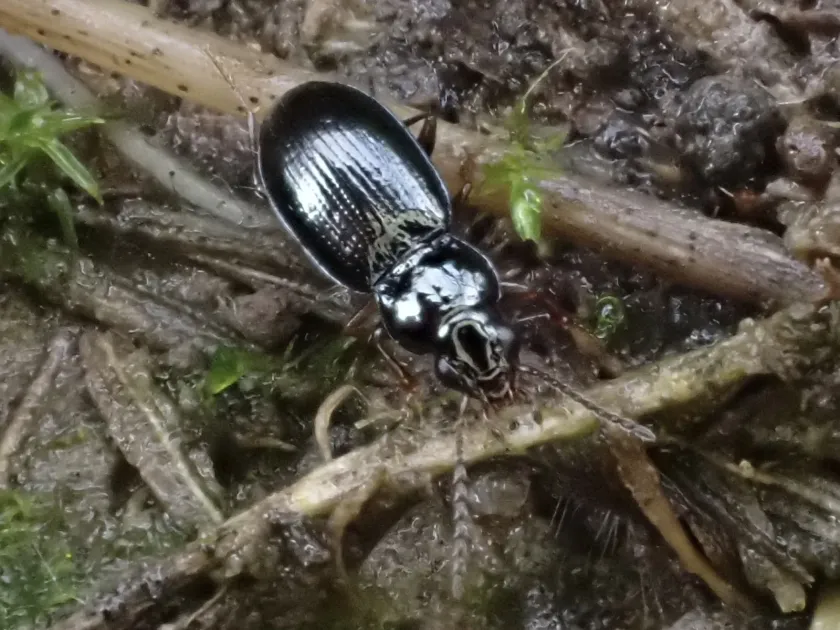
Description
How to identify
Bembidion is a genus of small ground beetles (family Carabidae, order Coleoptera) that are commonly found in agricultural landscapes worldwide.
These beetles are typically 3 to 7 mm long, possessing a somewhat oval body shape and often exhibiting a metallic or iridescent luster on their elytra.
They are highly active insects with well-developed mouthparts, adapted for both predatory behavior and, in some cases, feeding on plant tissues.
Identification at the species level is complex and often requires detailed examination under a microscope due to the similarity between different species within the genus.
Larvae are elongated, possess three pairs of thoracic legs, and are actively mobile, often residing in the upper soil layers or under debris.
What it damages
While many ground beetles are beneficial predators of other insects, certain Bembidion species can behave as occasional pests, particularly for young crops.
They are known to damage the seeds and seedlings of sugar beets, cereals, flax, and various vegetable crops during the early stages of growth.
The beetles feed on germinating seeds or gnaw at the hypocotyl, causing the seedlings to collapse or fail to emerge altogether.
Severe infestations can lead to significant crop loss, reduced plant density, and the necessity for reseeding affected areas of the field.
Furthermore, the physical damage to seedlings facilitates the entry of soil-borne fungi and bacteria, which can lead to subsequent rot and plant death.
When it appears
The activity cycle of Bembidion begins in early spring, as soon as soil temperatures reach levels that allow adult beetles to emerge from hibernation.
The period of maximum risk to crops coincides with the emergence phase, when the tender seedlings are most susceptible to beetle herbivory.
Adult beetles are the primary life stage causing damage, though larvae are also present in the soil and contribute to the overall impact on the field ecosystem.
Bembidion beetles overwinter as adults in the soil, under plant residues, or within cracks, allowing them to remain active immediately upon the arrival of spring.
Conditions of high humidity and moderate temperatures throughout the growing season favor the survival and population growth of these beetles.
Signs of infestation
The most prominent sign of infestation is the presence of sparse or patchy plant stands, often concentrated in wetter or poorly drained areas of the field.
Inspection of damaged seedlings reveals characteristic gnaw marks or missing tissue on the hypocotyl and cotyledons, clearly caused by beetle mouthparts.
When investigating, beetles can often be spotted on the soil surface near affected plants, especially during the early morning or evening hours.
The presence of empty seed husks or destroyed germinating seeds found in the soil row is a definitive indicator of feeding activity.
Using pitfall traps can help agronomists quantify beetle populations and monitor their movement in the field to determine if control measures are required.
Control measures
The most effective strategy involves the use of insecticide-treated seeds, which provide systemic protection to the seedling during its most vulnerable stage.
Optimizing planting dates to ensure rapid and uniform crop emergence helps seedlings quickly grow out of the susceptible phase.
Effective weed management is essential, as weeds provide cover and alternative food sources for the beetles, helping them maintain population levels.
Surface leveling and proper drainage prevent the formation of damp microhabitats that Bembidion beetles prefer for colonization.
In cases of high pest pressure, applying registered insecticides during the evening hours can effectively reduce the population of active beetles on the field surface.
Taxonomy
- Latin name
- Bembidion
- Order
- Coleoptera (beetles)
- Family
- Carabidae
- EPPO code
- BEMDSP
Discussion
No discussions yet — be the first.