
Barbitistes yersini
Barbitistes yersini
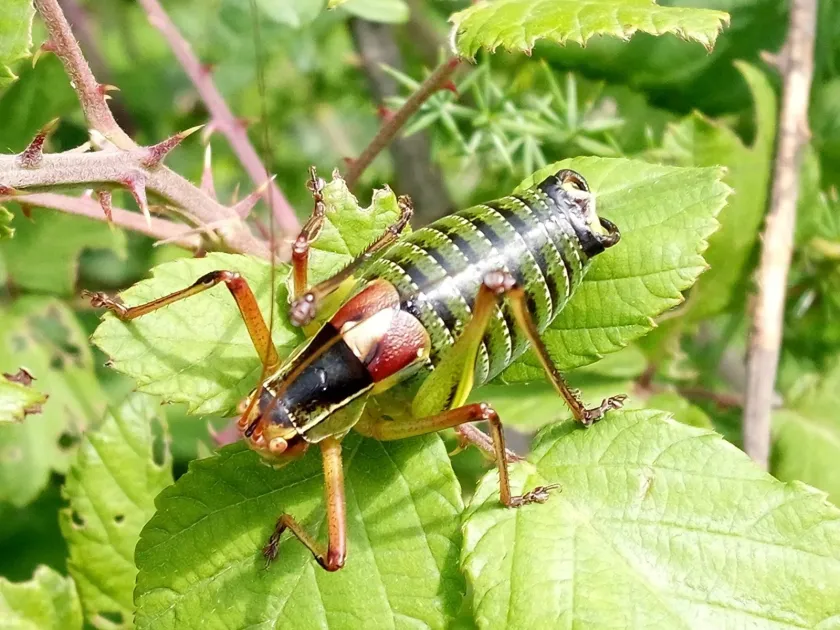
Description
How to identify
Barbitistes yersini is a species of bush-cricket belonging to the Tettigoniidae family. These insects are characterized by their elongated, jumping hind legs and typical orthopteran body structure.
The species is distinguished by the specific shape of the female ovipositor, which is curved upwards like a sickle. Their green coloration provides excellent camouflage within green foliage.
Males possess specialized stridulatory organs on their tegmina, producing distinct songs during the dusk and evening hours to attract mates.
Nymphs resemble smaller, wingless versions of adults and undergo several molting stages before reaching sexual maturity in early summer.
They prefer living in shrubs and trees, rarely venturing into open fields, relying on woody stems and branches for protection and feeding.
What it damages
Barbitistes yersini is a polyphagous insect that targets various woody plants, causing significant economic damage to orchards and vineyards during its active feeding phase.
The primary hosts include grapevines, apple trees, pear trees, and various stone fruit crops, where both adults and nymphs cause damage by feeding on tender plant parts.
By chewing on young shoots, buds, and fruit blossoms, these pests inhibit the development of the plant and cause deformations in the resulting harvest.
Severe infestations can lead to extensive defoliation, where the leaves are eaten down to the veins, significantly stressing the tree or vine and weakening its immune response.
- Grapevine buds and young shoots
- Fruit tree blossoms and buds
- Foliage of ornamental shrubs
- Developing fruits of pome and stone fruits
When it appears
The life cycle of Barbitistes yersini lasts one year. The overwintering stage consists of eggs laid by females into plant tissue, typically within bark cracks or stems.
Egg hatching usually occurs in the spring, coinciding with the initial budding and leaf expansion of host plants, providing immediate food for the newly emerged nymphs.
Nymphal development proceeds through several instars, with the insects becoming increasingly active and damaging as they grow towards the summer months.
Adults emerge during June or July, engaging in mating and egg-laying processes that ensure the continuation of the species for the following season.
As autumn approaches, the adult population gradually declines as they complete their biological cycle and die off after oviposition.
Signs of infestation
The most noticeable sign of a Barbitistes yersini infestation is the presence of irregular, notched feeding patterns along the edges of leaves.
Early-season damage is indicated by destroyed buds that fail to bloom, resulting in reduced fruit set in affected apple, pear, or vine plants.
Hearing the rhythmic, high-pitched stridulation of males in the garden during late spring and summer is a clear indicator of a significant presence.
Observation of excrement pellets beneath the canopy or on leaves can confirm the location and severity of the pest feeding activity.
Distorted or scarred fruit surfaces can also be an indicator of feeding damage that occurred during the earlier stages of fruit development.
Control measures
Effective management begins with good horticultural practices, such as pruning and destroying old or infested wood where eggs may have been deposited.
Biological control, including the protection and encouragement of natural predators like birds and parasitic wasps, is essential for maintaining ecological balance.
In cases of high infestation, targeted insecticide applications during the early nymphal stages can significantly reduce population density and damage.
It is crucial to follow integrated pest management principles, rotating chemical treatments to prevent the development of resistance in the pest population.
Routine scouting and monitoring of orchards and vineyards during the spring are vital for detecting early-season activity and applying control measures timely.
Taxonomy
- Latin name
- Barbitistes yersini
- Order
- Orthoptera (locusts)
- Family
- Phaneropteridae
- EPPO code
- BARTYE
Discussion
No discussions yet — be the first.