
Badister bullatus
Badister bullatus
Description
How to identify
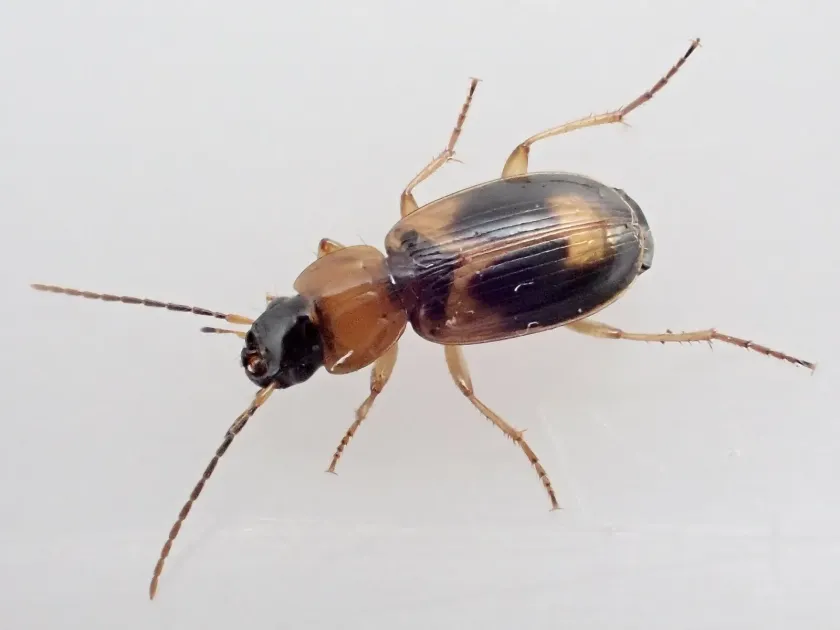
Badister bullatus is a species of ground beetle belonging to the family Carabidae within the order Coleoptera. This small insect typically reaches a length of 5 to 7 mm and is characterized by its distinct, convex wing cases (elytra).
The beetle usually exhibits a reddish-brown coloration on the head and pronotum, often accompanied by dark, well-defined markings on the elytra. Its appearance is fairly typical for the genus Badister, with specialized mouthparts for feeding.
The larvae are campodeiform, meaning they are elongated and active, adapted for crawling through soil and leaf litter. They reside primarily in the top layers of the soil, moving through cracks and crevices to remain in moist environments.
Adult beetles are nocturnal, spending the daylight hours concealed under soil clumps, organic debris, or in field margins. This cryptic behavior allows them to avoid desiccation and natural predators during the heat of the day.
The life cycle involves overwintering as adults in the soil or protected habitats. As spring temperatures rise, the beetles emerge to resume activity, seeking food sources and suitable sites for reproduction.
What it damages
While many ground beetles are beneficial predators, Badister bullatus can behave as a pest when environmental conditions cause a shortage of natural prey. In such cases, they turn to agricultural crops for nourishment.
Cereal crops, such as winter wheat and barley, are particularly vulnerable during the germination and seedling stages. The beetles feed on the seeds and the soft, emerging sprouts, potentially reducing plant stand density.
Damage occurs when beetles gnaw at the seeds, destroying the embryo and preventing the plant from emerging successfully. This loss of germinated seeds can lead to uneven crop distribution and reduced potential yield.
Feeding injuries create wounds on the young plants, which serve as entry points for various soil-borne pathogens. This secondary infection further stunts the growth of young seedlings and may lead to plant mortality.
High beetle populations combined with drought conditions significantly increase the risk of damage, as the insects aggressively seek the moisture contained within the plant tissues.
Control measures
Managing Badister bullatus effectively requires a holistic approach, focusing on preventive cultural practices that minimize the beetle population in the field during the off-season.
Deep plowing and proper tillage after harvest are crucial for disturbing the overwintering sites of the beetles. By turning over the soil, farmers expose the insects to predators and environmental stress, reducing their numbers.
Crop rotation serves as a powerful deterrent, preventing the buildup of large beetle populations that often occurs when the same crop is grown consecutively in the same field.
Seed treatment using systemic insecticides is highly recommended for protecting germinating crops. This provides an effective barrier against beetle feeding and ensures the seeds can establish a healthy root system.
Monitoring fields during the early stages of crop development is essential. If thresholds are exceeded, targeted applications of insecticides in the evening—when the beetles are most active—can provide necessary protection.
Taxonomy
- Latin name
- Badister bullatus
- Order
- Coleoptera (beetles)
- Family
- Carabidae
- EPPO code
- BADIBI
Discussion
No discussions yet — be the first.