
Baccha elongata
Baccha elongata
Description
How to identify
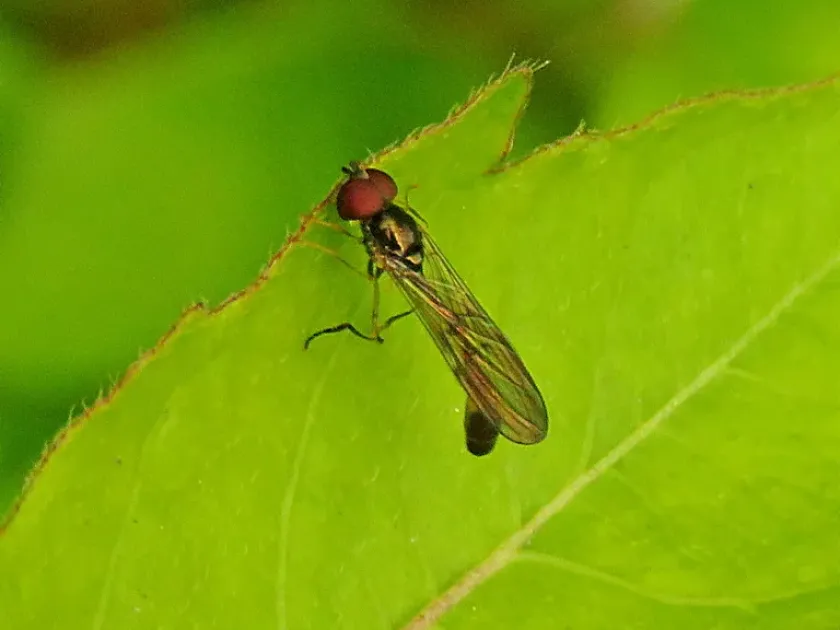
Baccha elongata is a species of hoverfly belonging to the Syrphidae family, characterized by a remarkably thin and elongated abdomen that distinguishes it from other common flies.
The adult insect typically displays a dark brown or black body with distinctive yellow or orange markings on the sides of the abdominal segments, making it easily recognizable.
The larvae are legless, often translucent or pale green, allowing them to remain camouflaged while moving across foliage to hunt aphids.
As part of the Syrphidae family, this insect plays a dual role: adults act as essential pollinators, while larvae function as aggressive predators of soft-bodied insects.
The taxonomic classification emphasizes its role in ecosystems, where it serves as a critical natural regulator of aphid populations in diverse agricultural environments.
What it damages
This species does not damage cultivated plants; rather, it provides significant agricultural value by feeding on aphid colonies that infest various crops.
Crops prone to aphid infestation, such as fruit trees, vegetables, and ornamental plants, benefit greatly from the presence of Baccha elongata larvae.
The perceived damage sometimes associated with this insect is typically the work of the aphids themselves, which cause leaf curling, stunted growth, and disease transmission.
Because the larvae hunt and consume large quantities of aphids, they are considered beneficial biocontrol agents rather than agricultural pests.
Farmers should identify these larvae correctly to avoid unintentional destruction, as they are essential allies in maintaining plant health through natural biological processes.
When it appears
Adults of Baccha elongata typically emerge in late spring when temperatures are sufficient for active flight and mating, often observed near flower beds.
The peak activity of larvae occurs during the height of the summer, coinciding with the massive reproduction cycles of aphids on young, succulent plant tissue.
As autumn approaches, the population begins to decline as individuals transition into the pupal stage to survive the winter dormant period in protected habitats.
The number of generations per season is determined by the local climate, with warmer regions supporting multiple cycles and cooler zones favoring a more limited duration.
Environmental moisture is a key factor in the success of the larval stage, as high humidity and moderate temperatures provide optimal conditions for aphid development and predatory activity.
Signs of infestation
The presence of Baccha elongata is confirmed by spotting translucent, slug-like larvae crawling among aphid clusters on the undersides of leaves.
Adult hoverflies can be seen hovering near garden flowers, where they feed on nectar and pollen to gain the energy required for mating and egg-laying.
The small, hardened puparia attached to leaf surfaces or stems are clear indicators that the insect is completing its life cycle in the immediate area.
A noticeable decrease in the size of aphid colonies without the application of chemical pesticides is a strong sign of effective biological control by predators.
Using a hand lens to inspect plants will reveal the unique hunting behavior of the larvae, characterized by their precise movements while feeding on their prey.
Control measures
No control measures are needed for Baccha elongata, as it is a beneficial species that contributes to the ecological balance of the agricultural system.
To encourage their presence, farmers should plant nectar-rich flowers nearby, providing a consistent food source for the adult hoverflies throughout the season.
The use of broad-spectrum insecticides should be strictly minimized to prevent the unintended killing of these helpful predators that naturally limit pest outbreaks.
Integrated Pest Management (IPM) strategies favor the protection of natural enemies, which often provides more sustainable results than relying on heavy chemical intervention.
Maintaining a diverse garden environment ensures that natural predators like the hoverfly remain active, effectively reducing the need for intensive pest control efforts.
Taxonomy
- Latin name
- Baccha elongata
- Order
- Diptera (flies)
- Family
- Syrphidae
- EPPO code
- BCCHEL
Discussion
No discussions yet — be the first.