
Austropeplus annulipes
Austropeplus annulipes
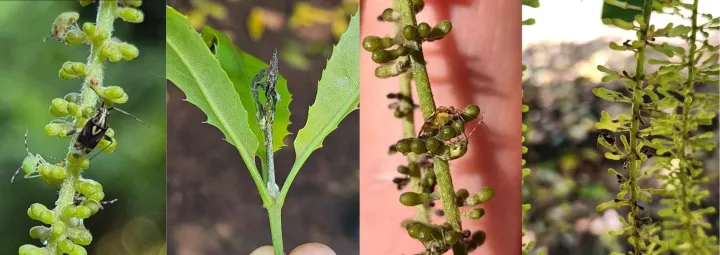
Description
How to identify
Austropeplus annulipes is a species of beetle belonging to the family Cucujidae (flat bark beetles). This insect is recognized for its flattened, elongated body shape, which allows it to thrive in narrow crevices and tight storage environments.
The adult beetle typically exhibits a dark brown or reddish-brown coloration. A key identification feature, as the name suggests, is the presence of distinctive light-colored bands on its legs, which can be observed under magnification.
The larvae are highly mobile and possess chitinized bodies, allowing them to navigate efficiently through grain piles and debris. They undergo several larval stages, increasing in size and feeding intensity throughout their lifecycle.
This species is highly adapted to indoor environments like grain elevators, mills, and warehouses, where it finds stable temperatures and abundant food supplies. It prefers dark, undisturbed areas, which often masks its presence from initial visual inspections.
Monitoring for this pest requires specific expertise, as it is easily overlooked due to its small size and tendency to hide within the internal structures of the storage facilities or deep within the grain mass.
What it damages
The primary economic impact of Austropeplus annulipes is the degradation of stored agricultural commodities, particularly cereals and seeds. Both adults and larvae feed on the grain, focusing on the embryo and starch, which significantly reduces viability.
Infestation by this beetle often leads to the secondary contamination of grain with molds and bacteria. The waste products generated by the insects increase the moisture content in the storage environment, facilitating the growth of harmful microorganisms.
Stored products damaged by A. annulipes lose their commercial value due to the presence of frass, larvae skins, and structural damage to the kernels. This renders the grain unsuitable for further processing in food and feed industries.
In cases of heavy infestation, the grain mass can heat up, leading to caking and spoilage, which significantly accelerates the rate of loss. This phenomenon is often a result of aggregated biological activity within the grain silo.
Because the larvae often develop inside the seed coats or deep within the bulk product, early-stage damage is frequently invisible to the naked eye, leading to substantial losses by the time the infestation is identified.
Control measures
Effective management begins with stringent sanitation protocols. Cleaning storage facilities, removing residual dust, and eliminating infested debris are the most critical steps in preventing the colonization of Austropeplus annulipes.
Managing the storage environment is essential. Controlling the moisture content of the grain and utilizing active cooling systems can inhibit the development and reproduction cycles of the beetle, effectively neutralizing potential infestations.
Chemical control, particularly through the use of authorized fumigants, is recommended for established infestations in silos and warehouses. Fumigation remains the most reliable method to penetrate deep into the grain mass and reach all life stages.
Implementing a robust monitoring system using adhesive traps or pheromone lures is highly advised. Early detection of adult beetles allows for localized management, preventing the infestation from spreading to larger grain volumes.
Preventive treatment of empty storage structures before the introduction of new harvests is a standard agricultural practice that significantly mitigates the risk of carry-over infestations in future seasons.
Taxonomy
- Latin name
- Austropeplus annulipes
- Order
- Hemiptera (bugs, aphids, leafhoppers)
- Family
- Miridae
- EPPO code
- AUPEAN
Discussion
No discussions yet — be the first.