
Whirligig beetle
Aulanogyrus striatus
Description
How to identify
The whirligig beetle (Aulanogyrus striatus) belongs to the family Gyrinidae and is well-known for its distinctive swimming behavior on the water surface.
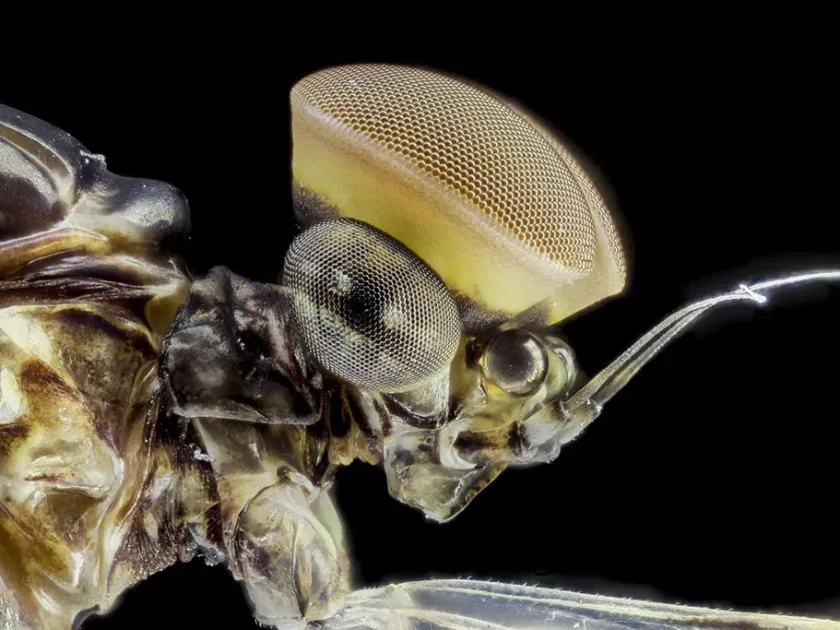
These insects are uniquely adapted with split eyes, which provide dual-vision capabilities to monitor both the water surface and the air simultaneously.
Adult beetles have a streamlined, oval-shaped body with a shiny, metallic appearance that helps them move rapidly in circles when disturbed.
Their larvae are aquatic predators that utilize lateral gills for respiration, enabling them to thrive in various freshwater environments like ponds and canals.
The life cycle involves egg-laying on submerged aquatic vegetation, where larvae undergo their development before moving to the banks to pupate.
What it damages
The whirligig beetle does not cause direct damage to agricultural crops as it does not feed on plant tissues or foliage in the traditional sense.
Economic impact is primarily realized through the contamination and obstruction of irrigation systems, especially in intensive vegetable farming.
Large populations of these beetles can clog irrigation filters and nozzles, leading to decreased system efficiency and increased maintenance costs.
Water quality degradation due to excessive insect activity can negatively influence the chemical balance needed for sensitive hydroponic or irrigation setups.
Their predatory nature can disrupt the local ecosystem in irrigation ponds, potentially reducing populations of beneficial insects that control other pests.
When it appears
Adult beetles emerge in early spring as water temperatures rise, starting their feeding and reproductive activities after the winter dormancy period.
The breeding season peaks during the summer months, leading to multiple generations in regions with warmer climates and stable water supplies.
By late summer and early autumn, the population density often peaks, making the beetles highly visible on the surface of stagnant water bodies.
As temperatures drop in late autumn, the beetles retreat to the muddy bottom of water bodies to hibernate safely through the winter.
The speed of their developmental cycle is directly correlated with the ambient water temperature and the availability of prey organisms.
Signs of infestation
The most obvious sign of an infestation is the frantic, circular swimming pattern of adult beetles on the surface of irrigation ponds or slow-moving water.
Frequent clogging of irrigation filter meshes with organic debris and insect body parts is a common indicator of a significant infestation.
Observations of small, slender, and active larvae near the edges of aquatic vegetation confirm that the beetle is breeding within the local irrigation source.
An unusual oily sheen or organic residue on the water surface in reservoirs can sometimes be attributed to high concentrations of whirligig activity.
Reduced pressure in the irrigation lines, despite clean primary intakes, often points to the accumulation of insect residues within the secondary filtration system.
Control measures
Managing the habitat is key; clearing irrigation canals of excess submerged and floating vegetation reduces suitable egg-laying sites.
Installing high-quality mesh filters at the water intake points is the most effective mechanical way to prevent the beetles from entering irrigation lines.
Encouraging natural predators such as fish and certain amphibious species can help keep the whirligig beetle population at a manageable level.
Avoid broad-spectrum chemical insecticides, as they can harm non-target beneficial aquatic organisms and degrade the water quality for plant uptake.
- Regular maintenance and dredging of irrigation reservoirs.
- Systematic flushing of irrigation lines to remove organic buildup.
- Physical barriers to prevent insect migration into smaller water tanks.
Taxonomy
- Latin name
- Aulanogyrus striatus
- Order
- Coleoptera (beetles)
- Family
- Gyrinidae
- EPPO code
- AUGYST
Discussion
No discussions yet — be the first.