
Apple capsid
Atractotomus mali
Description
How to identify
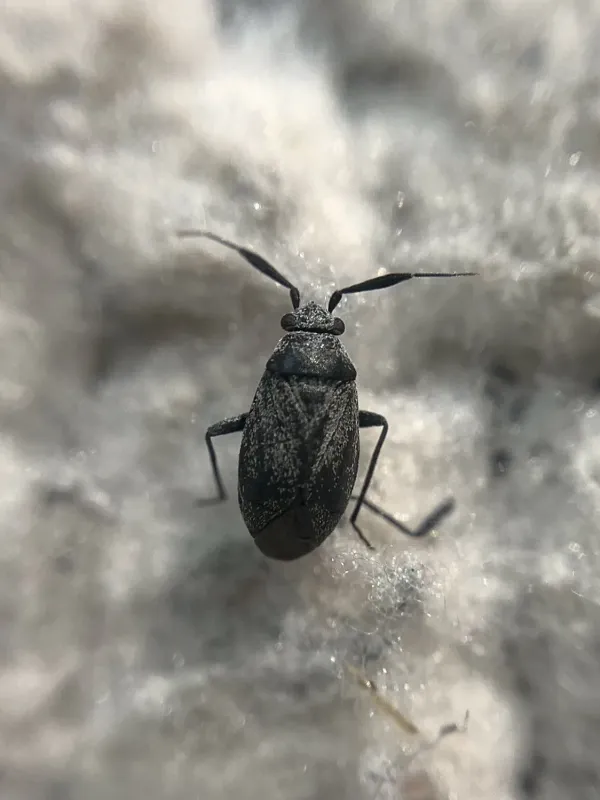
The apple capsid (Atractotomus mali) belongs to the family Miridae within the order Hemiptera. These are small bugs measuring only 3–4 mm in length. The adults vary from dark brown to almost black, with their bodies covered in dense, fine hairs, giving them a distinct matte appearance.
The pest overwinters in the egg stage. Eggs are laid by females into the bark of young apple shoots and other fruit crops. The eggs are elongated and whitish, partially embedded within the woody tissue, making them extremely difficult to detect during winter pruning inspections.
Nymphs of the apple capsid resemble the adults but are smaller and lack fully developed wings. They are typically greenish-yellow or reddish, which provides excellent camouflage against the developing buds and young leaves where they primarily feed.
Development proceeds via incomplete metamorphosis. Upon hatching, the nymphs begin feeding on plant sap, progressing through five instars. The total life cycle of a single generation lasts approximately 40–50 days, depending on the prevailing temperature conditions.
Adult bugs possess functional wings and are capable of moving between trees. Within orchards, they lead a secretive lifestyle, often hiding on the undersides of leaves or within the cracks of bark, making them hard to spot without specific monitoring techniques.
What it damages
This pest primarily attacks pome fruits, with apple trees being the main host. To a lesser extent, it may also infest pears, hawthorn, and other Rosaceae species, which serve as alternative reservoirs for feeding and reproduction.
The most significant damage occurs in early spring when nymphs pierce the opening buds to feed on sap. This causes stunted growth and can lead to the necrosis of young bud scales, thereby reducing the tree's potential crop yield.
As the season progresses, the capsids move to the foliage. Feeding sites on the leaves lead to deformation, characterized by small, pale spots that eventually die and drop out, resulting in a tattered, shot-hole appearance that diminishes the tree's photosynthetic capacity.
When populations are high, the nymphs also attack young fruitlets. Affected fruit often stops developing properly, becomes misshapen, and develops a characteristic russeted or corky skin texture. Many of these damaged fruits will drop prematurely.
In addition to physical tissue damage, apple capsids can act as vectors for various plant pathogens, including certain viral and fungal diseases, further weakening the tree's physiological status and increasing its vulnerability to environmental stress.
When it appears
Nymph hatching from overwintered eggs typically begins in early spring during the green tip stage of bud development. This is a critical time when the plants are most susceptible to initial infestations by the pest.
Mass feeding of the nymphs coincides with the bud burst and flowering stages of apple trees. During this time, the insects are highly active, as they require significant nutritional resources to facilitate rapid growth and maturation into adults.
Adults typically emerge towards the end of the flowering period. The peak of adult activity occurs in early summer, when mating takes place and females prepare to deposit eggs into the bark of the current season's shoots for the following year.
The summer generation of adults survives until mid-to-late July. During this period, their population density in the canopy gradually declines as individuals complete their reproductive cycle and expire after egg-laying.
There is only one generation per year. Therefore, while the damage is confined to the first half of the growing season, early diagnosis and targeted spring management are essential to prevent significant harvest losses.
Signs of infestation
The first sign of infestation is the appearance of tiny, oozing sap droplets on opening buds, resulting from the piercing-sucking activity of the nymphs. In dry weather, these droplets may harden, leaving small dark spots on the surface of the bud scales.
Young leaves often exhibit numerous small, yellowish, or whitish mottled spots. When held against the light, these feeding sites appear translucent, and the leaves may show signs of slight wrinkling or deformity.
In severe infestations, leaf curling and premature yellowing can be observed. One can often spot the presence of tiny black fecal spots left by the bugs, which serves as a reliable indicator of an established colony within the canopy.
To detect the bugs, perform branch beating (jarring) early in the morning over a white cloth. If capsids are present, the small, agile insects will fall onto the cloth and attempt to escape or fly away, confirming the need for intervention.
The scarring on developing fruit is a diagnostic sign of late-stage infestation. Look for small warts or corky patches on the fruit skin; these blemishes result from the bugs' feeding during the fruitlet stage and lead to significant cosmetic degradation.
Control measures
Agrotechnical practices include the removal of loose or old bark from tree trunks and main branches where eggs might be deposited. Sanitary pruning and the removal of heavily infested shoots can help reduce the overwintering population.
Biological control relies on preserving natural enemies. In orchards that avoid broad-spectrum insecticides, predatory mites, lacewings, and ladybirds can effectively suppress capsid numbers, often keeping them below economic injury levels.
Chemical control should be timed to coincide with the most vulnerable stages of the pest. Applying contact insecticides at the pink bud stage is highly effective, as it targets the nymphs before they can cause significant fruit damage.
- Use pyrethroids to quickly reduce adult populations.
- Employ systemic insecticides if population density exceeds thresholds.
- Strictly observe pre-harvest intervals for all applied chemicals.
- Rotate different modes of action to prevent the development of pesticide resistance.
Monitoring with pheromone or sticky traps helps determine the exact timing of mass hatching. This allows for precision application, protecting beneficial pollinators that are active during the flowering period of the orchard.
Taxonomy
- Latin name
- Atractotomus mali
- Order
- Hemiptera (bugs, aphids, leafhoppers)
- Family
- Miridae
- EPPO code
- ATRAMA
Discussion
No discussions yet — be the first.