
Small white
Ascia
Description
How to identify
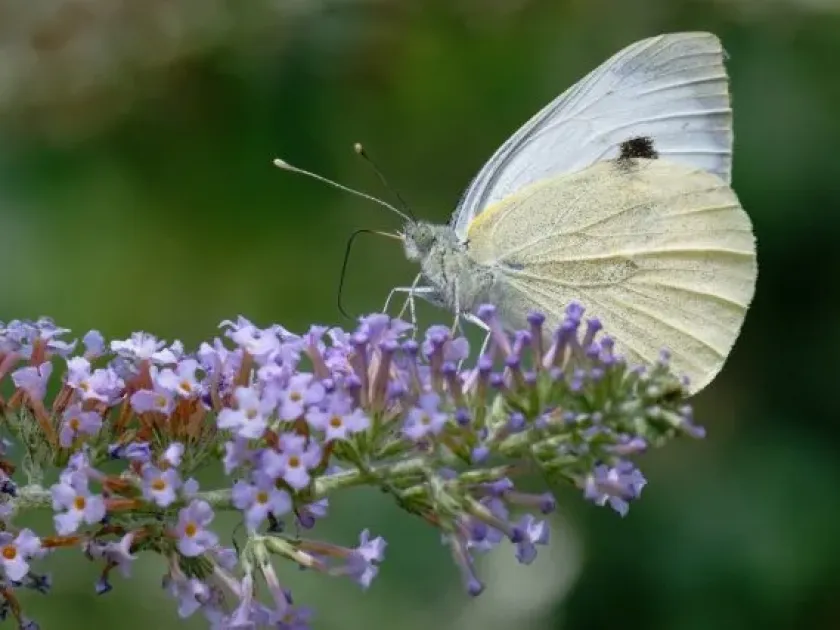
The Small white (Pieris rapae), also known as the small cabbage white, is a butterfly of the Pieridae family. Adult butterflies have white wings with distinctive black tips on the forewings and one or two black spots.
The larvae, known as cabbage worms, are velvety green with a faint yellow stripe along the back. Their cryptic coloration allows them to blend seamlessly with the foliage of their host plants, making them difficult to spot.
The life cycle undergoes complete metamorphosis, consisting of four stages: egg, larva (caterpillar), pupa, and adult. In temperate climates, the pest can produce multiple generations per year, often overlapping throughout the season.
The species typically overwinters as a chrysalis (pupa) attached to sheltered surfaces such as fence posts, walls, or plant debris. As temperatures rise in spring, the adults emerge to begin the cycle again.
Females lay eggs singly, usually on the underside of leaves. Unlike other cabbage pests, they distribute their eggs across various plants, which facilitates the rapid spread of the population across a field.
What it damages
The Small white primarily infests crops within the Brassicaceae family. This includes all varieties of cabbage, broccoli, cauliflower, radishes, turnips, and mustard, as well as oilseed rape crops.
Larvae consume the leaves of the host plant, starting with small windows of tissue. As they mature, they move toward the center of the plant, often boring into the heart of the cabbage head, causing significant physical damage.
Severe infestations lead to a total loss of leaf surface, which stunts the plant's growth and severely limits yield. When the central bud is damaged, the plant may fail to form a marketable head entirely.
Beyond direct consumption, the accumulation of frass (caterpillar excrement) within the vegetable head promotes the development of secondary fungal and bacterial rots, rendering the crop inedible.
In large-scale agricultural settings, such as rapeseed production, the pest can cause extensive economic loss by damaging both foliage and the developing pods, significantly impacting oil yield.
Signs of infestation
The most immediate sign of an infestation is the presence of white butterflies fluttering erratically over the garden, signaling the commencement of egg-laying activity in the vicinity.
Small, pale, cone-shaped eggs attached to the undersides of leaves indicate an active population. Gardeners should inspect the lower leaves closely, as these are the preferred sites for oviposition.
Ragged, irregular holes in the leaves are the primary symptoms of larval feeding. As the larvae grow, the damage transitions from small, scattered pits to large sections of missing leaf tissue.
Dark, granular frass found on the leaves or trapped within the crevices of a cabbage head is a definitive indicator of the pest's presence and confirms that the larvae are currently active.
Visible yellowing or wilting of the leaf edges, often accompanied by bite marks, suggests that the larvae have compromised the plant's vascular integrity, weakening the overall structure.
Control measures
Cultural control methods include maintaining a clean garden by removing weeds in the mustard family, which serve as alternative hosts, and practicing deep fall tillage to destroy overwintering pupae.
Hand-picking eggs and larvae is highly effective for small gardens. Early morning or late evening inspections allow for the physical removal of the pests before they cause significant damage.
Biological control, such as the use of Bacillus thuringiensis (Bt), is a standard industry practice. This bacterium is highly specific to lepidopteran larvae and does not harm beneficial insects or pollinators.
In cases of heavy infestation, chemical insecticides may be necessary. It is crucial to choose selective products and follow strict pre-harvest intervals to ensure consumer safety and protect non-target species.
- Utilizing fine-mesh row covers to prevent egg-laying by adult butterflies.
- Encouraging natural predators such as parasitic wasps and predatory beetles.
- Rotating crops to break the cycle of pest colonization in the vegetable plot.
Taxonomy
- Latin name
- Ascia
- Order
- Lepidoptera (butterflies)
- Family
- Pieridae
- EPPO code
- ASCISP
Discussion
No discussions yet — be the first.