
Asaphidion flavipes
Asaphidion flavipes
Description
How to identify
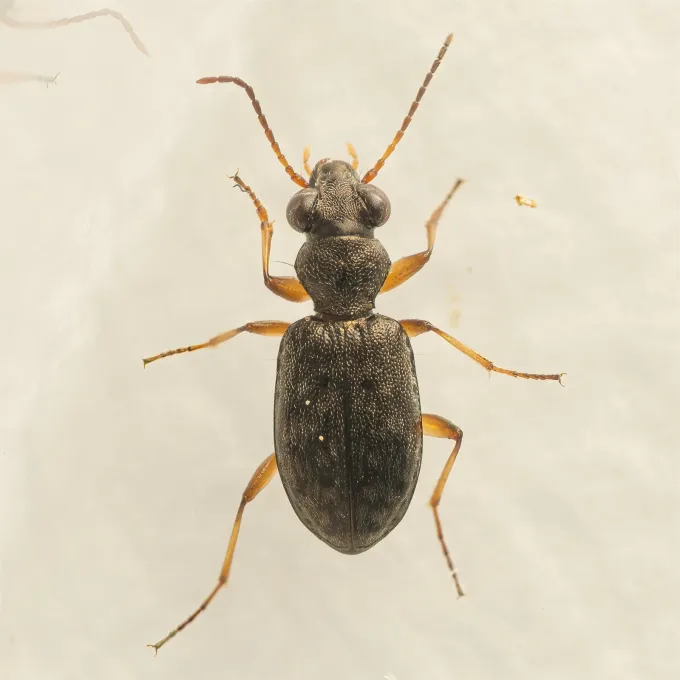
Asaphidion flavipes is a small beetle belonging to the Carabidae family, commonly known as ground beetles, within the order Coleoptera.
These insects are characterized by their small size, typically measuring between 4 to 5 millimeters in length, making them difficult to detect.
The body exhibits a distinct metallic green or bronze luster, while the elytra (wing covers) are densely covered with microscopic hairs, giving them a dull appearance.
A primary identifying feature of this species is its yellowish legs, which distinguish it from many other darker ground beetle relatives found in fields.
They possess relatively large, prominent eyes, which assist them in actively hunting for prey across open and well-lit soil surfaces during the daytime.
What it damages
While many ground beetles are beneficial predators, Asaphidion flavipes can become a significant pest when populations are high in agricultural areas.
They primarily damage young seedlings of cereal crops, sugar beets, and various vegetables during the crucial early stages of plant growth.
The damage usually occurs when beetles feed on the tender cotyledons or stems, often leading to the wilting or death of the young plant.
These beetles prefer loose, well-structured, and warm soils, which are ideal for their mobility and feeding activities in the spring.
High levels of infestation can result in significant field patchiness, often requiring farmers to perform reseeding on the affected areas.
When it appears
The activity of Asaphidion flavipes is closely tied to seasonal temperature changes, starting immediately after the soil warms up in the spring.
Adults overwinter in the soil or under surface debris, emerging once the ambient temperatures are sufficient for their biological activity.
Mass emergence typically coincides with the sprouting phase of major agricultural crops in April and May, creating a high risk of seedling damage.
During the spring period, the beetles are highly motivated to feed, making them particularly dangerous to newly emerged crops that lack vigor.
As summer progresses, their direct impact on crops typically decreases as alternative food sources become available and plants mature.
Signs of infestation
The most common sign of infestation is the presence of irregular, ragged-edged holes or missing tissue on the leaves of young seedlings.
Field observation often reveals patches where seedlings are thinned out or entirely destroyed due to concentrated feeding by the beetles.
Visual inspection of the soil surface in the morning can reveal the presence of these beetles, which scurry away quickly when disturbed.
Lack of other pests in the vicinity while damage to stems and leaves is present often points to activity by ground beetles of this specific type.
- Ragged leaf edges on young sprouts
- Severed stems near the soil line
- Patchy appearance of crop stands
- Decreased plant density immediately after emergence
Control measures
Effective management of Asaphidion flavipes involves a combination of mechanical, cultural, and chemical pest control strategies.
Thorough soil preparation and tillage practices are essential to disrupt the overwintering sites and reduce the beetle population before planting.
Optimizing planting dates to ensure rapid seedling growth helps crops bypass the most vulnerable stage when beetles are most active.
When economic thresholds are exceeded, the application of appropriate insecticides as seed treatments or foliage sprays is necessary for protection.
Maintaining clean fields free from weeds is also a critical cultural measure, as weeds serve as alternative habitats and food sources for these insects.
Taxonomy
- Latin name
- Asaphidion flavipes
- Order
- Coleoptera (beetles)
- Family
- Carabidae
- EPPO code
- ASPNFL
Discussion
No discussions yet — be the first.