

Pest · Lepidoptera (butterflies) · affects Fodder beet, Grapevine, Apple
Grape leaf skeletonizer
Artona funeralis
Description
How to identify
The Grape leaf skeletonizer (Artona funeralis) is a moth belonging to the Zygaenidae family. The adult moth is characterized by dark, nearly black wings with a distinct metallic sheen, typically spanning 20–25 mm.
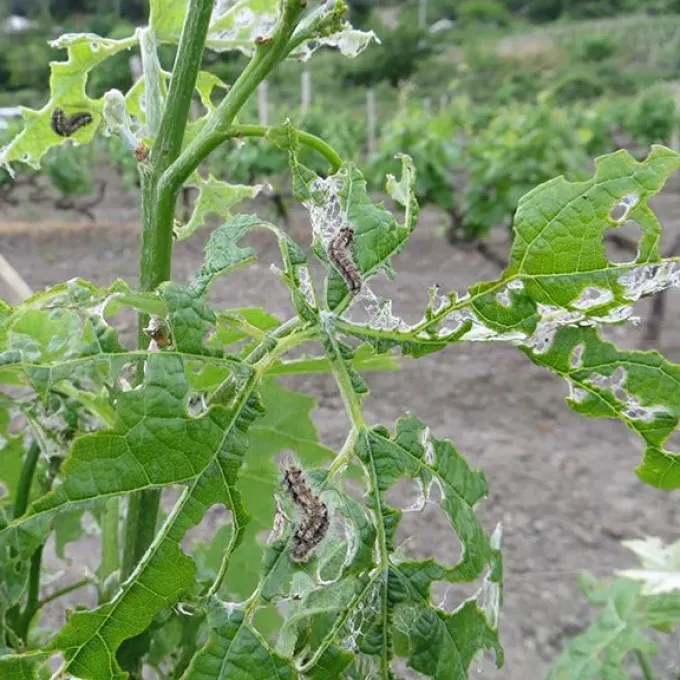
The larvae are small, yellowish-green caterpillars with dark longitudinal stripes. Their bodies are covered in fine setae, which serves as a protective mechanism and a distinguishing feature of this species.
Pupation occurs within a firm, cream-colored, spindle-shaped cocoon, which the larva secures to the vine's bark or the underside of leaves to protect the developing insect.
The life cycle encompasses a complete metamorphosis, moving through egg, larva, pupa, and adult stages. Depending on local climatic conditions, one or more generations may occur annually.
They overwinter as larvae in cocoons tucked into bark crevices or organic debris, allowing them to remain protected until the onset of the next growing season.
What it damages
The primary host for this pest is the grapevine (Vitis vinifera), where larvae cause significant damage by feeding on the leaves, impacting the vine's ability to photosynthesize effectively.
Larval feeding typically begins with skeletonization, where the tissue between the leaf veins is consumed, leaving only the structural framework of the leaf intact.
As the caterpillars grow, they may consume entire leaf blades, leading to premature defoliation of the grapevines, which significantly weakens the plants and reduces fruit quality.
Stressed vines exhibit lower sugar accumulation in the berries and reduced wood hardening, making the entire vineyard more susceptible to environmental stress and subsequent pests.
High infestation levels in neglected vineyards can result in substantial yield losses, affecting both the immediate harvest and the long-term health of the vine stocks.
When it appears
Emergence of the larvae coincides with the spring bud break and the initial growth of leaves on the grapevines, marking the start of the primary feeding phase.
Pupation usually concludes in late spring or early summer, followed by the flight period of the adults, which is often spread out over several weeks due to developmental variations.
In regions with long, warm summers, a second generation may occur, extending the damage potential throughout the mid-to-late summer months as grapes mature.
Environmental temperatures directly dictate the rate of development, with warmer conditions leading to faster population growth and more frequent reproductive cycles.
As autumn approaches, the final generation of larvae prepares for diapause, seeking secure overwintering sites on the woody parts of the vine to survive the winter period.
Signs of infestation
Early identification involves noticing small, window-like holes in the leaves, which are tell-tale signs of young larvae feeding on the lower leaf surface.
As the infestation progresses, entire sections of leaves will appear skeletonized, turning brown or becoming translucent, indicating severe leaf tissue loss.
The presence of cocoons on the trunks, cordon arms, or old wood of the vine is a definitive sign of an established population and the need for immediate action.
Adult moths are diurnal and can be seen fluttering near the vine canopy or visiting nearby flowering weeds, indicating active reproduction within the vineyard.
- Skeletonized leaf patches and window-like feeding damage.
- Presence of larvae on the undersides of grape leaves.
- Silky, spindle-shaped cocoons tucked into bark crevices.
Control measures
Cultural control, such as removing and destroying old, loose bark from vine trunks, effectively eliminates many overwintering sites and reduces the population base.
Maintaining a weed-free vineyard environment deprives the larvae of alternate food sources and hiding spots, which helps manage the pest population naturally.
Biological control agents, particularly microbial insecticides based on Bacillus thuringiensis, are highly effective against young larvae while preserving beneficial insect populations.
Chemical applications should be reserved for threshold-exceeding infestations, utilizing targeted insecticides during the most vulnerable early larval stages.
Integrated Pest Management (IPM) practices, including the use of pheromone traps to monitor adult flight, allow for precise timing of interventions and minimal reliance on broad-spectrum chemicals.
Content graph
Connections · Grape leaf skeletonizer
Most often together:
Marketplace
Products · 2

Dursaban 480
Доу АгроСайенсіс, Кінг’з-Лінн, Великобританія
Insecticides
0
0
·
51
No offers
—
Details
Biology
Taxonomy
- Latin name
- Artona funeralis
- Order
- Lepidoptera (butterflies)
- Family
- Zygaenidae
- EPPO code
- ARTOFU
Community
Discussion
No discussions yet — be the first.