
Grape leaf skeletonizer (Artona martini)
Artona martini
Description
How to identify
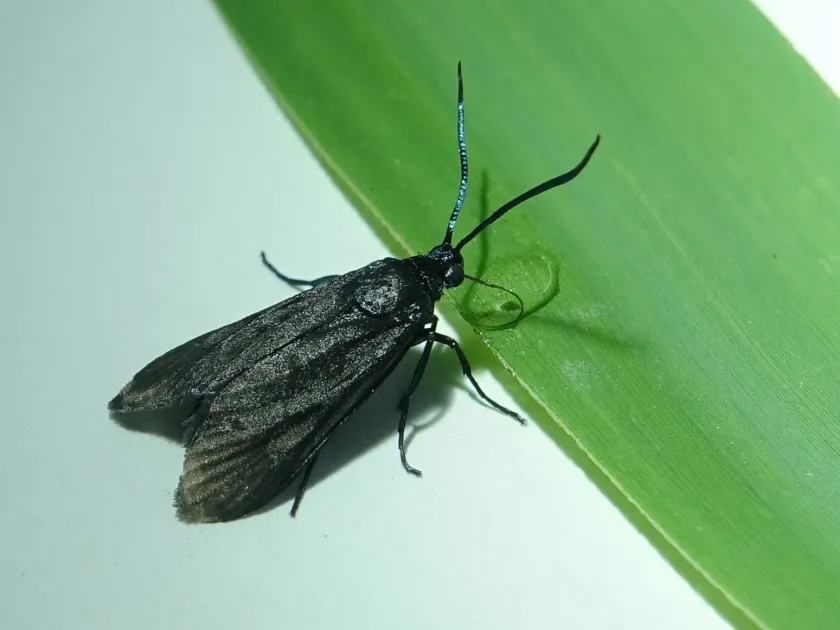
Artona martini is a moth species belonging to the family Zygaenidae (burnet moths). These insects are known for their distinctively dark, often metallic-colored bodies.
Adult moths typically have a wingspan of approximately 20–25 mm. Their robust build and dark color make them easily distinguishable from other common vineyard pests.
The larvae, or caterpillars, are the most recognizable stage for growers, often featuring light-colored bodies adorned with rows of dark spots and fine hairs.
As a holometabolous insect, the life cycle includes eggs, larvae, pupae, and adults. Each stage is adapted to survive specific conditions within the vineyard ecosystem.
Identification often relies on observing the larval damage patterns or using pheromone traps to detect the presence of adult moths during their flight season.
What it damages
The primary host for Artona martini is the domesticated grapevine (Vitis vinifera). The larvae feed extensively on the leaf tissue, leaving the larger veins untouched.
By consuming the parenchyma tissue, the larvae disrupt the plant's photosynthesis. This leads to reduced vigor in the vine and can negatively impact fruit sugar accumulation.
In cases of severe infestation, the foliage becomes heavily skeletonized, appearing as a delicate, brown web. This damage leads to premature leaf drop and heat stress.
Weakened vines are less capable of accumulating starch reserves for winter, making them highly susceptible to frost damage and decreased productivity in the following year.
While the fruit itself is rarely directly attacked, the loss of leaf area significantly compromises the overall quality and ripening process of the grape clusters.
When it appears
Adult moths emerge in late spring, with their activity correlated to the rising temperatures and the phenology of the host grapevine's leaf development.
The peak feeding period for larvae usually occurs in early to mid-summer. This coincides with the rapid expansion of vine foliage, providing ample food for the developing population.
The number of generations per year can vary depending on the local climate. In many regions, there are one or two distinct generations that require monitoring.
Overwintering occurs in the pupal stage. The insects form dense, protective cocoons hidden within bark crevices, trellis supports, or debris beneath the vine canopy.
Monitoring for the first signs of larval emergence is critical, as early intervention can prevent the population from reaching economically damaging levels.
Signs of infestation
The most diagnostic sign is the appearance of 'windowing' on the leaves, where the soft tissue is consumed while the vein structure remains intact.
Larvae are social feeders during their early instars and can often be found in groups on the underside of the leaves, making them easier to locate during inspections.
The presence of fine silken webbing and excrement pellets on the leaves and leaf axils are clear indicators of a resident larval population on the grapevine.
Skeletonized leaves that eventually turn necrotic and fall off are the hallmark symptom of an unchecked infestation that has caused significant canopy loss.
Searching for cocoons during winter pruning can provide growers with insight into the potential infestation risk for the upcoming growing season.
Control measures
Effective management requires an integrated approach that combines cultural, biological, and chemical control strategies to keep populations below threshold levels.
Cultural practices, such as removing and destroying old bark or debris where pupae overwinter, are highly effective in reducing the overall pest population.
Chemical applications are most effective when applied at the onset of larval hatching. Systemic insecticides can provide prolonged protection during critical growth phases.
- Utilizing biological control agents like Bacillus thuringiensis for environmentally friendly management.
- Monitoring with pheromone traps to time insecticide applications accurately.
- Removing severely infested leaves early in the season to prevent further spread.
Always adhere to label instructions and pre-harvest intervals when using chemical pesticides to ensure the safety and quality of the final grape crop.
Taxonomy
- Latin name
- Artona martini
- Order
- Lepidoptera (butterflies)
- Family
- Zygaenidae
- EPPO code
- ARTOMA
Discussion
No discussions yet — be the first.