
Aglaope
Aglaope
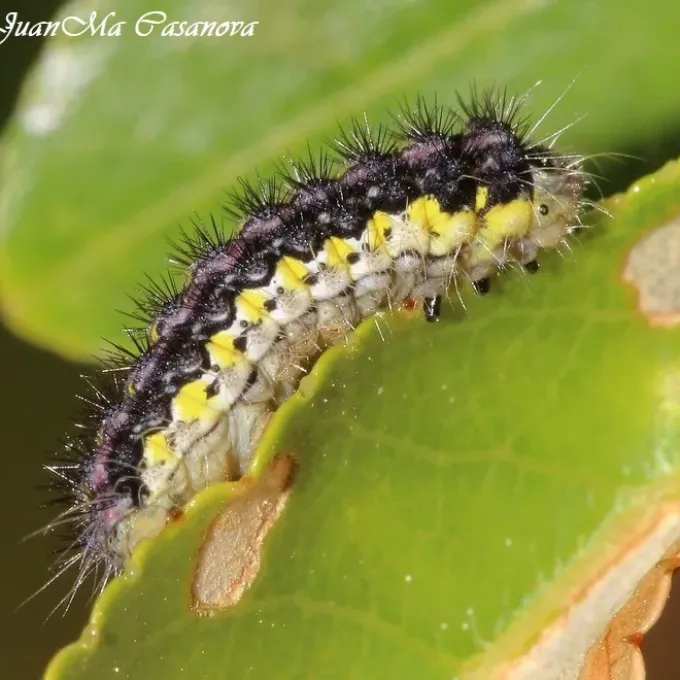
Description
How to identify
Aglaope is a genus belonging to the Zygaenidae family, which is part of the order Lepidoptera. These insects are small moths often characterized by a cryptic appearance that blends into tree bark or foliage.
The adult moths usually possess dark, often greyish or blackish wings with a relatively small wingspan, typical for the family.
The larvae, or caterpillars of Aglaope, typically exhibit defensive features, such as bristly structures, which serve as a mechanism to deter potential predators in their environment.
The life cycle involves complete metamorphosis, consisting of four distinct stages: egg, larva, pupa, and adult, allowing them to adapt well to various woodland and orchard habitats.
Taxonomically, they are categorized as part of the diverse group of day-flying and night-flying moths, known for their interesting biological and ecological behaviors.
What it damages
Aglaope caterpillars are phytophagous and tend to feed on the foliage of various deciduous trees and shrubs, showing a preference for specific host plants.
They are known to target plants from the Rosaceae family, which includes many economically significant fruit-bearing trees and ornamental shrubs.
Feeding larvae cause direct damage by consuming leaf tissue, which reduces the plant's photosynthetic capacity and can lead to stunted growth in young trees.
In addition to foliage, larvae may sometimes consume buds, potentially impacting the yield and health of fruit trees if an infestation is particularly severe.
General damage leads to the overall weakening of the host tree, making it more susceptible to secondary environmental stresses, drought, and fungal pathogens.
When it appears
The emergence of larvae from their overwintering sites typically coincides with the bud break in spring, which is a critical time for the growth of the new season's foliage.
Caterpillars are most active during the late spring months, feeding intensively to store the energy required for the subsequent pupation stage.
Adult moths are generally observed flying during the summer months, during which mating occurs and females lay eggs on suitable host plants.
The developmental rate of the larvae is heavily dependent on spring temperatures, with warmer weather leading to faster maturation and potential population spikes.
They overwinter in the larval stage, residing inside dense, protective cocoons attached to tree branches, where they remain dormant until the following spring season.
Signs of infestation
The primary symptom of an Aglaope presence is foliage damage, manifesting as irregular holes or skeletonized leaves where the tissue between veins has been consumed.
On the tree trunk or branches, one may observe small, firm, and often light-colored cocoons where the pupae reside during their transformation phase.
Frass (larval waste) appearing on leaves below the feeding area is a common indicator that caterpillars are active and currently feeding in the upper canopy.
Visible damage to tree buds in early spring, often combined with the presence of larvae, suggests an early start to the infestation cycle.
In the event of high caterpillar density, trees may show noticeable thinning of the canopy, giving them a sparse or damaged appearance compared to unaffected trees.
Control measures
Mechanical removal is a highly effective control measure; inspecting branches and manually removing cocoons during the winter dormant period can significantly reduce the population.
Biological control using formulations containing Bacillus thuringiensis is recommended, as it targets caterpillars specifically while being safe for beneficial insects.
Chemical intervention should be considered only when pest levels exceed the economic threshold, using appropriate insecticides applied to the foliage.
Maintaining strong tree vigor through proper pruning, balanced fertilization, and adequate irrigation helps plants withstand and recover from light infestations.
Encouraging natural predators such as insectivorous birds and parasitic wasps within the garden can provide long-term, sustainable control over Aglaope populations.
Taxonomy
- Latin name
- Aglaope
- Order
- Lepidoptera (butterflies)
- Family
- Zygaenidae
- EPPO code
- AGLPSP
Discussion
No discussions yet — be the first.