
Anthracus consputus
Anthracus consputus
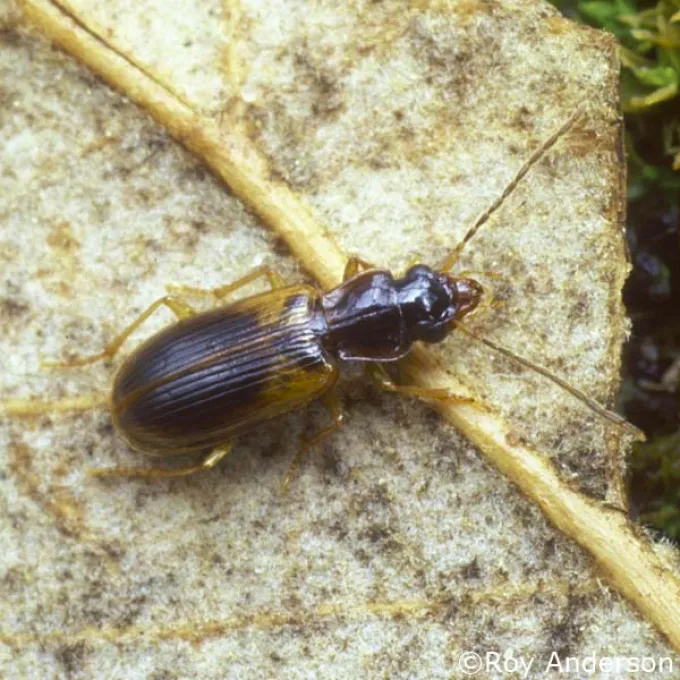
Description
How to identify
Anthracus consputus is a species of ground beetle (Carabidae) belonging to the order Coleoptera. Adult beetles are characterized by an elongated body shape typical of the genus and a dark color, sometimes displaying a metallic sheen.
Physically, the adult beetle is relatively small, generally ranging from 5 to 7 mm in length. They possess a well-developed head and mandibulate mouthparts, allowing them to feed effectively on both plant tissues and other organic matter.
The imagines (adults) are highly mobile and possess well-developed wings, enabling them to migrate over significant distances in search of suitable feeding grounds or breeding sites.
The larvae are campodeiform, equipped with three pairs of thoracic legs and developed jaws, allowing them to move actively through the soil horizons and plant debris.
Species identification often requires microscopic examination, as they share significant morphological similarities with other closely related species of ground beetles inhabiting similar ecosystems.
What it damages
The primary crops affected by this pest include small grain cereals such as wheat and barley, especially during the early stages of germination and seedling development.
Adult beetles can cause damage by feeding on young shoots, gnawing at the leaves or stems, which weakens the plant during its critical early development stage and may reduce overall yield.
The larvae, residing in the topsoil, may damage root systems or the underground portions of the stalks, which can lead to wilting and even the death of young seedlings.
High infestation levels are frequently associated with fields that have high amounts of crop residue, which provide excellent shelter and a consistent food supply for the population.
The economic impact of Anthracus consputus varies significantly based on environmental conditions, particularly soil moisture levels, which directly influence larval survival and activity.
When it appears
The insect's life cycle typically commences in early spring, as rising soil temperatures prompt the overwintered adults to emerge from their dormancy and begin active feeding.
The peak activity period usually coincides with the tillering and stem elongation phases of winter and spring cereals, making these periods the most vulnerable for crop protection efforts.
During the summer months, higher temperatures may lead to reduced surface activity, with the beetles concentrating in the root zone or beneath plant debris to remain in a cooler microclimate.
Autumn marks the transition toward overwintering, during which the beetles migrate to sheltered environments such as field margins, woodlots, or deep under plant residues.
The duration of the life cycle stages for Anthracus consputus is heavily dependent on local climatic conditions, with moisture levels being a critical factor for the success of larval development.
Signs of infestation
One of the primary signs of infestation is the presence of small, irregular notches on the edges of leaves in young seedlings, which are most visible during early morning hours.
Patchy areas of seedling death or yellowing within a field can indicate localized larval damage to root systems, hindering the plant's ability to take up nutrients and water.
Field inspections may reveal the beetles themselves active on the soil surface, or the presence of larvae found during soil sampling beneath the symptomatic plants.
Affected plants often display reduced turgor and slowed growth compared to neighboring healthy plants, which can create visible patches of uneven stands across the field.
If no obvious signs of disease are present upon investigation of seedling mortality, it often serves as a strong indicator that soil-dwelling pests like ground beetles are responsible.
Control measures
The primary control strategy involves good agricultural practices, specifically the thorough incorporation of crop residues and timely soil tillage to disrupt the insect's life cycle.
Effective crop rotation is essential to prevent the accumulation of this pest, as it forces the population to migrate away from fields where host crops are no longer present.
When infestation levels exceed the economic threshold during the early vegetative stage, the application of registered insecticides is recommended for effective crop protection.
- Use of insecticidal seed treatments to provide protection for emerging seedlings.
- Strict control of volunteer crops and weeds that serve as reservoirs for the beetles.
- Deployment of soil traps to monitor population dynamics and timing for potential interventions.
Optimizing planting dates to ensure crops grow rapidly past the most vulnerable developmental phases is a key component of an integrated pest management strategy.
Taxonomy
- Latin name
- Anthracus consputus
- Order
- Coleoptera (beetles)
- Family
- Carabidae
- EPPO code
- ATUHCO
Discussion
No discussions yet — be the first.