
Anthracus
Anthracus
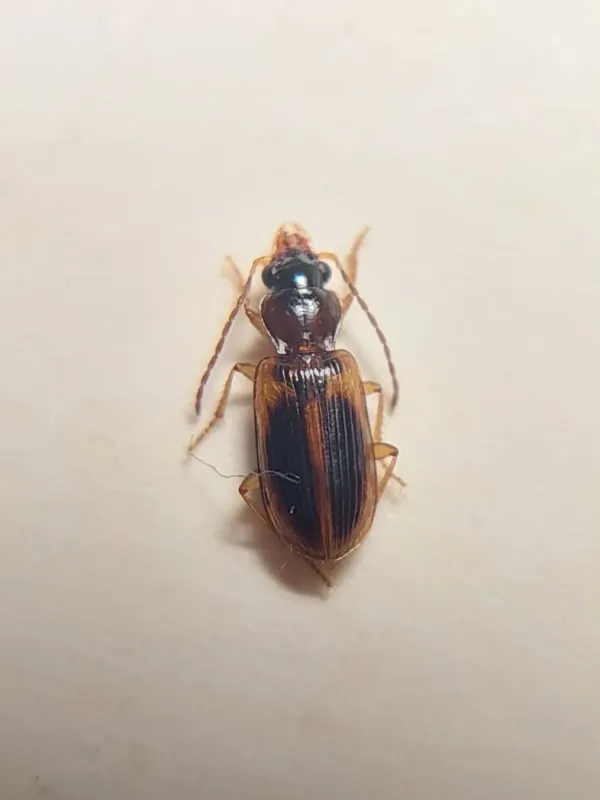
Description
How to identify
Anthracus is a genus of ground beetles (Carabidae) belonging to the order Coleoptera. These are small beetles, usually measuring 5–7 millimeters in length, characterized by the typical flattened body shape and well-developed mandibles found in their family.
The coloration of adult beetles ranges from dark brown to almost black, often featuring a metallic sheen or lighter spots on the elytra. They have proportionally large heads with long, filiform antennae, which assist them in navigating through dense vegetation.
Larvae lead a concealed life, possessing slender, elongated bodies adapted for movement within soil cracks or under plant debris. They are typically lightly pigmented with well-developed thoracic legs, allowing for active movement in search of food.
Specific identification of the genus Anthracus requires microscopic examination to analyze genital structures and the punctation of the pronotum. In field conditions, agronomists often confuse them with other small species of the Harpalinae subfamily.
It is important to distinguish between beneficial predatory ground beetles and species capable of feeding on vegetative plant organs during population outbreaks. Anthracus can exhibit mixophagy in certain ecosystems, combining predation with the consumption of plant tissue.
What it damages
The primary damage caused by Anthracus is observed in cereal crops, including wheat, barley, and rye. During periods of food scarcity, the beetles may feed on seedlings and young leaves, chewing irregular holes into the leaf tissue.
The harm is not limited to direct destruction of green mass but also includes the transmission of fungal pathogens through damaged tissues. Larval damage often goes unnoticed because they concentrate in the root zone of the plants.
The beetles pose a particular threat during the tillering phase of cereals, where mass attacks can lead to sparse crops. Severe damage to the tillering node may cause the death of individual shoots or the entire plant.
Beyond cereals, Anthracus can feed on various weeds growing along field edges. This creates a reservoir for the pest, allowing it to migrate into the main crop during favorable years.
The economic significance of this genus is generally considered moderate, though population density can reach threshold levels requiring chemical intervention if agricultural practices are neglected or extreme weather conditions occur.
When it appears
The life cycle of Anthracus is closely tied to regional climatic conditions, with the beetles preferring moist, shaded micro-habitats. Peak adult activity usually occurs in the spring, immediately after snowmelt and the warming of the topsoil layer.
During the summer months, especially in dry conditions, beetle activity decreases as they retreat into deeper soil layers or hide under soil clods. During this time, the larvae develop, passing through several instars while actively feeding within the soil environment.
A second wave of adult activity is observed in the autumn as they prepare for diapause. Hibernation takes place in the adult stage directly in the soil or within dense plant debris, ensuring high survival rates even during harsh winters.
Reproduction occurs in the spring, with females laying eggs in moist soil. The incubation period is highly dependent on air temperature and soil moisture, which ultimately dictates the total population size for the current season.
Favorable conditions for population growth are created by alternating warm and rainy periods, which help maintain the high soil moisture levels required for the survival of the larval stages.
Signs of infestation
The first sign of Anthracus in a field is the appearance of characteristic "windows" or irregular notches on young cereal leaves. The edges of the leaves may look chewed, and the leaf surface often takes on a ragged appearance.
Upon inspecting the root collar, one may find necrotic spots or tissue damage caused by the larvae. This often leads to yellowing and subsequent wilting of individual tillers in the cereal plant.
The presence of large numbers of beetles under plant debris or in soil cracks during the morning hours is a clear signal to begin monitoring. The use of pitfall traps allows for a quick assessment of pest density in the area.
Seedlings may appear stunted, showing slower growth compared to adjacent, undamaged areas. This is especially noticeable on the field borders near windbreaks or hedgerows, where a larger population of insects often gathers.
- Adult beetles found in traps or on the soil surface at dusk.
- Characteristic ragged leaf margins on young plants.
- Growth delays during the tillering phase.
- Patches of yellowing and wilting seedlings.
Control measures
The primary control measure is strict adherence to crop rotation, as monoculture encourages the buildup of pest populations in the soil. It is recommended to alternate cereals with row crops to disrupt the life cycle of Anthracus.
Effective agrotechnical practices include deep autumn plowing, which destroys overwintering sites and eliminates larvae in the soil layer. Controlling weeds is also crucial as they serve as intermediate food sources.
When the economic threshold is reached, contact-stomach insecticides approved for cereal crops should be applied. Spraying is most effective in the evening hours when beetles are most active on the soil surface.
Biological control involves supporting natural enemy populations, such as predatory entomophages and insectivorous birds. Minimizing the use of harsh pesticides early in the season helps maintain ecological balance in the field.
Monitoring population levels should be conducted systematically, especially during uniform seedling emergence. Only timely diagnosis and an integrated approach to protection can prevent significant cereal crop losses.
Taxonomy
- Latin name
- Anthracus
- Order
- Coleoptera (beetles)
- Family
- Carabidae
- EPPO code
- ATUHSP
Discussion
No discussions yet — be the first.