
Tropical horse tick
Anocentor nitens
Description
How to identify
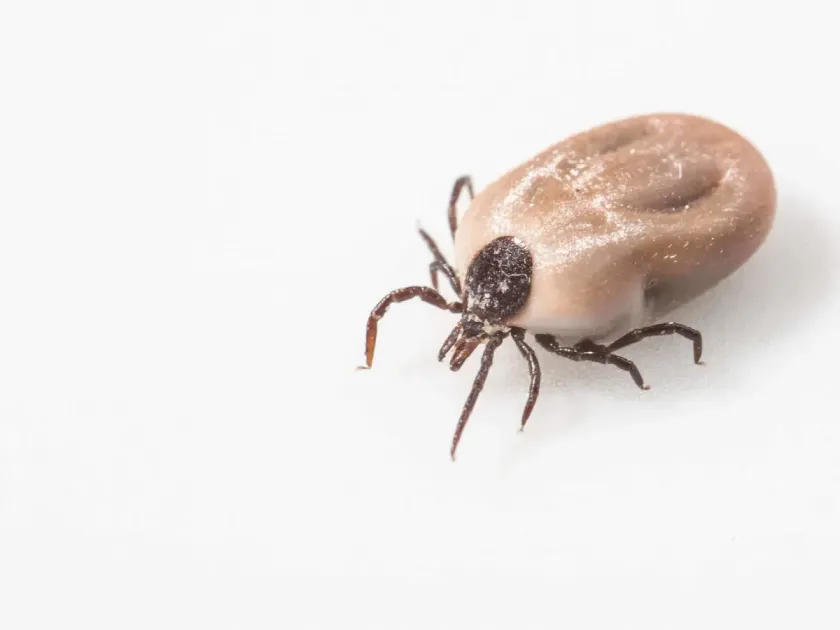
The tropical horse tick (Anocentor nitens) is a member of the Ixodidae family, commonly known as hard ticks. It is a specialized parasite of equines.
Adult ticks possess a dark, shiny, sclerotized body. They are distinct from other common tick species due to their specific habitat preferences and host selection.
The mouthparts are highly specialized, allowing the tick to attach firmly to the host's skin, often within the ears or under the mane, to feed on blood.
Females are significantly larger than males, especially when fully engorged with blood, appearing as dark, rounded structures on the animal's skin.
Morphological identification requires microscopic examination, focusing on the scutum and capitulum characteristics to differentiate it from other tick species.
What it damages
This tick primarily infests horses, mules, and donkeys. It is an obligate parasite, relying entirely on the blood of the host for survival and reproduction.
The damage caused is twofold: local tissue irritation and systemic health risks due to the transmission of blood-borne pathogens.
Localized damage includes severe dermatitis, secondary bacterial infections, and potential scarring or tissue necrosis in sensitive areas like the ear canal.
The most significant veterinary impact is the transmission of Babesia caballi, which causes equine babesiosis, a potentially fatal parasitic disease.
Heavy infestations lead to anemia, lethargy, significant weight loss, and reduced athletic performance, posing a high economic risk to equine owners.
When it appears
In tropical and subtropical regions, these ticks remain active throughout the year, as temperature and humidity levels are generally favorable.
The species follows a one-host life cycle. Larvae, nymphs, and adults all complete their development on the same individual host animal.
After mating, the engorged female drops off the host into the environment to lay thousands of eggs in the soil or pasture debris.
Larval emergence is highly dependent on humidity, with peak populations usually occurring during the rainy seasons when conditions are most suitable.
Survival and developmental rates of the immature stages are highest in shaded, humid environments with moderate ambient temperatures.
Signs of infestation
Owners should look for ticks within the inner surface of the ears, as this is the preferred site for Anocentor nitens attachment.
Equine behavior changes, such as head shaking, rubbing the ears against fences, or sensitivity when the head is touched, are key indicators of infestation.
Physical inspection reveals inflamed skin, small crusts, and the presence of the parasites, which may be clustered in groups.
Systemic signs of anemia, such as pale mucous membranes or a lackluster coat, should prompt an immediate check for external parasites.
- Ticks found in the ears or mane.
- Frequent head shaking and scratching.
- Inflamed or crusty patches on the skin.
- General weakness and weight loss.
Control measures
Effective control requires regular grooming and careful inspection of horses, particularly during high-risk seasons or in endemic areas.
The use of topical acaricides, including sprays, dips, or spot-on treatments, is essential for killing existing ticks and preventing new attachments.
Environmental management involves removing organic debris and manure from stables and paddocks to reduce the survival rate of tick eggs.
Pasture rotation can help break the life cycle by removing the host from contaminated areas, allowing tick larvae to die off naturally.
If babesiosis is suspected, veterinary intervention is critical. Treatment includes anti-protozoal medications to eliminate the pathogen from the bloodstream.
Taxonomy
- Latin name
- Anocentor nitens
- Family
- Ixodidae
- EPPO code
- ANOCNI
Discussion
No discussions yet — be the first.