
Nineteen-spotted lady beetle
Anisosticta novemdecimpunctata
Description
How to identify
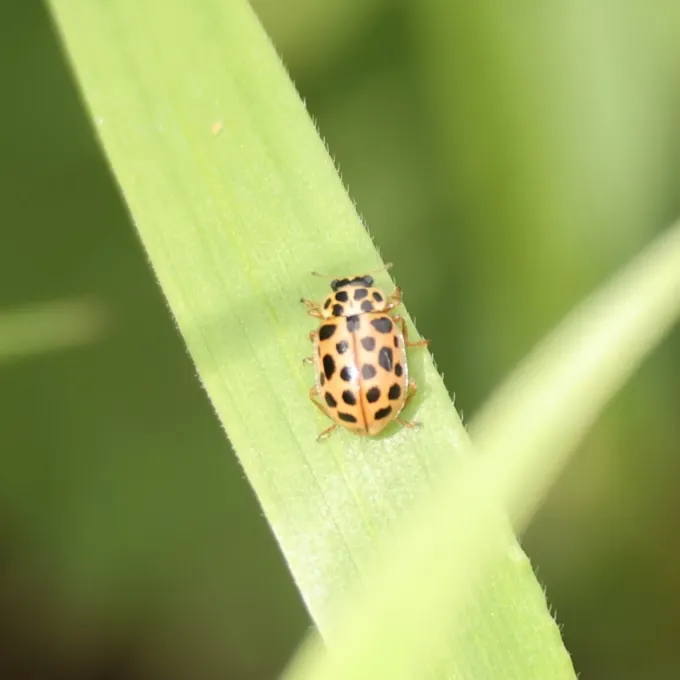
The nineteen-spotted lady beetle (Anisosticta novemdecimpunctata) is a member of the Coccinellidae family. It is a small beetle, typically measuring 3.5–4.5 mm in length, with a yellowish-brown coloration.
The defining characteristic of this species is the presence of 19 black spots on its elytra, which serves as a reliable marker for entomologists and farmers.
Unlike most ladybirds known as beneficial predators, this species is a phytophage, meaning it feeds directly on plant tissues, which can be problematic in some agricultural contexts.
The larvae of this beetle are elongated and exhibit a dark-patterned appearance, which helps them blend into their surroundings while feeding on host plants.
The insect undergoes a complete metamorphosis, with adults hibernating in debris or soil and emerging in early spring to continue their life cycle.
What it damages
This pest is primarily found in wetland areas and meadows, often feeding on reeds, grasses, and occasionally cereals that are planted near moist habitats.
The damage caused by these beetles involves feeding on the leaf epidermis, which disrupts photosynthesis and stunts the plant's growth.
In cases of high infestation, the beetle can cause significant leaf skeletonization, leaving behind only the veins and reducing the plant's overall vitality.
The weakened plants become more susceptible to environmental stressors and secondary diseases, which can lead to a decrease in overall crop yield.
The feeding patterns often create holes or "windows" in the foliage, making the damage easily identifiable upon close inspection of the leaves.
When it appears
Active development typically begins in late spring, continuing through the early summer when larvae are most voracious in their feeding habits.
New adults emerge during mid-summer and continue to feed throughout the season as they prepare for the upcoming dormant period.
The activity of this beetle is highly dependent on environmental moisture; it thrives in humid environments and tends to avoid hot, arid conditions.
By late autumn, the beetles begin seeking shelter for overwintering, typically burrowing into crop residues or the top layer of moist soil.
Early spring monitoring is crucial, as temperature spikes can trigger the emergence of hibernating adults earlier than expected, coinciding with crop planting.
Signs of infestation
The primary visual signs include irregular, patchy feeding damage on the leaves, where the soft tissue is removed leaving the cuticle intact.
Farmers can often locate the pests by checking the undersides of leaves, especially on grasses and reed-like plants located near water sources.
Presence of insect frass (droppings) on the leaf surface is a reliable indicator that the pests are actively feeding in the area.
- Circular or irregular holes in the leaf blades.
- Visible presence of 19-spotted beetles on the foliage.
- Wilting or chlorosis of the damaged leaf segments.
Plants heavily infested will show a mottled appearance, where the damage clusters around the feeding site of the larvae.
Control measures
Cultural control practices, such as clearing weed host plants from field borders, are highly effective in reducing the local beetle population.
Biological control methods using natural pathogens or encouraging native predators can help manage the infestation levels naturally.
If economic thresholds are exceeded, chemical control using targeted, systemic or contact insecticides may be necessary to protect the harvest.
Crop rotation and proper soil management help to break the life cycle of the pest, making fields less attractive to colonizing adults.
Regular scouting using yellow sticky traps is a recommended method for detecting early presence and timing the application of necessary interventions.
Taxonomy
- Latin name
- Anisosticta novemdecimpunctata
- Order
- Coleoptera (beetles)
- Family
- Coccinellidae
- EPPO code
- ANSONO
Discussion
No discussions yet — be the first.