
Anisodactylus binotatus
Anisodactylus binotatus
Description
How to identify
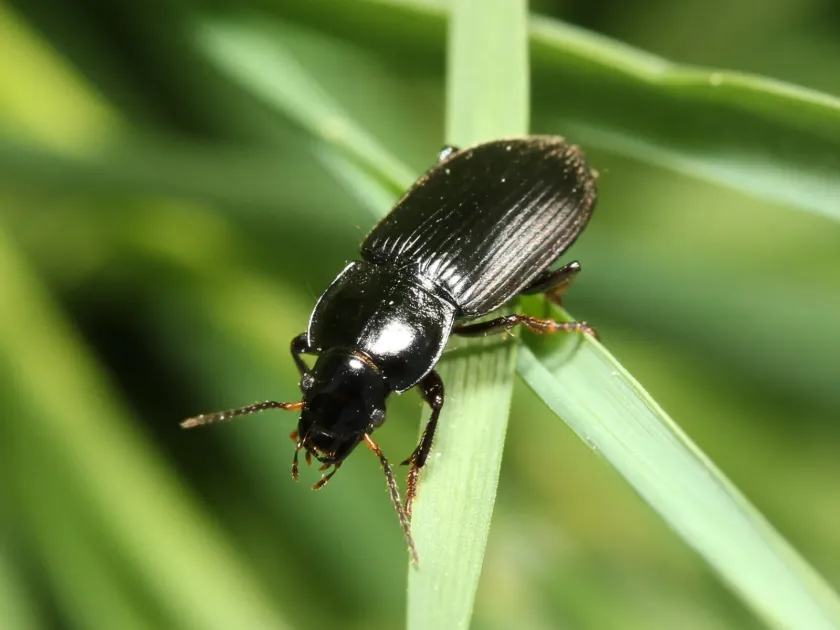
Anisodactylus binotatus is a species of ground beetle belonging to the family Carabidae. These beetles are typically 10 to 14 mm in length. Their bodies are elongated and dark, usually black or dark brown, often showing a metallic sheen under specific lighting conditions.
The primary identification feature is the presence of two yellowish-orange spots located on the pronotum, which gives the species its distinctive appearance. The elytra are covered with fine longitudinal grooves, typical of many carabid beetles.
The larvae possess the classic morphology of ground beetles: elongated, slightly flattened bodies, well-developed thoracic legs, and powerful mandibles. They lead a cryptic life, predominantly inhabiting the topsoil layers or staying beneath organic debris and stones.
Adult beetles have developed wings and are capable of flight, although they are more frequently observed walking on the soil surface. They are primarily nocturnal, preferring moist and shady microhabitats within agricultural fields and meadows.
The species is widely distributed across Europe and parts of Asia. It inhabits various environments, including farmland, field margins, forest edges, and fallow land, where it finds suitable conditions for shelter and foraging.
What it damages
While most carabid beetles are predatory, Anisodactylus binotatus can exhibit phytophagous behavior, causing damage to agricultural crops. They mainly affect cereal crops such as wheat, rye, and barley, particularly during the seed germination and seedling emergence stages.
Adult beetles may feed on sown seeds, consuming the embryo or endosperm. In cases of high population density, this pest can significantly reduce field emergence, leading to sparse plant stands and the necessity for reseeding affected areas.
The larvae of this species are also capable of feeding on the underground parts of plants, including the delicate roots of young seedlings. Such damage stunts plant growth, delays development, and can lead to seedling mortality in severe cases.
The damage is not limited solely to cereal crops. Under conditions of high population pressure, the beetles can also affect vegetable seedlings and the seeds of forage grasses, especially in fields adjacent to unmanaged vegetation or weed-covered areas.
The economic threshold for this pest depends on crop vigor and soil moisture levels. Fields with high beetle density often show reduced yields due to the loss of productive tillers and overall impairment of plant nutrient uptake.
When it appears
The life cycle of Anisodactylus binotatus is closely tied to seasonal climatic patterns. Adults typically hibernate in the soil or under surface litter, emerging once stable spring temperatures are established.
The mating and egg-laying period occurs during spring and early summer. Females deposit eggs directly into the soil near food sources, ensuring that larvae have immediate access to nutrients upon hatching.
Larvae develop actively throughout the summer, progressing through several instars. Pupation occurs within soil chambers, and the new generation of adults typically emerges by late summer or autumn to forage before entering winter dormancy.
Adult activity peaks in May and June, which coincides with the crop emergence phase. This is when the pest poses the greatest threat to cereals, as succulent young seedlings provide a high-quality and easily accessible food source.
As autumn approaches, adult activity decreases as they seek overwintering sites. Soil moisture levels and temperature are critical factors influencing the survival of the population through the winter and its reproductive success in the following season.
Signs of infestation
The main sign of this pest's presence is uneven seedling emergence, often manifesting as localized patches in the field. Soil inspections can reveal damaged kernels exhibiting characteristic chewing marks or hollowed-out interiors.
The presence of adult beetles can be confirmed using pitfall traps or by inspecting the soil surface at night with a flashlight. These beetles are highly mobile and will quickly retreat into soil crevices when disturbed by light or vibrations.
Wilting of young plants in the absence of obvious disease or foliar damage may indicate root damage caused by larvae. Often, the soil around affected plants appears disturbed or loosened.
A high density of ground beetles along field margins is a warning sign. It is crucial to monitor crop conditions in these areas, especially where fields border woodland, permanent pastures, or overgrown areas.
When scouting fields, inspect young leaves for integrity. Jagged edges or small holes in the seedling leaves may indicate nocturnal feeding by adult Anisodactylus beetles.
Control measures
Agrotechnical methods are the first line of defense against this pest. Effective soil management, including deep tillage, is vital as it disrupts the beetles' overwintering and pupation sites.
Timely weed control, particularly of grassy weeds, removes alternative food sources. Managing field margins to reduce weeds significantly decreases the migration of beetles from surrounding habitats into the crop fields.
The use of high-quality insecticidal seed treatments provides reliable protection for seedlings during the early, most vulnerable developmental stages. This is the most effective approach for preventing seed damage and seedling loss.
In cases of high pest pressure during emergence, foliar applications of broad-spectrum insecticides may be necessary. It is essential to monitor populations and apply treatments exclusively at night when the beetles are active on the soil surface.
Following proper crop rotation and selecting optimal sowing dates helps ensure rapid crop development through the vulnerable seedling stage, making the plants less susceptible to beetle feeding.
Taxonomy
- Latin name
- Anisodactylus binotatus
- Order
- Coleoptera (beetles)
- Family
- Carabidae
- EPPO code
- ANSDBI
Discussion
No discussions yet — be the first.