
Anisodactylus
Anisodactylus
Description
How to identify
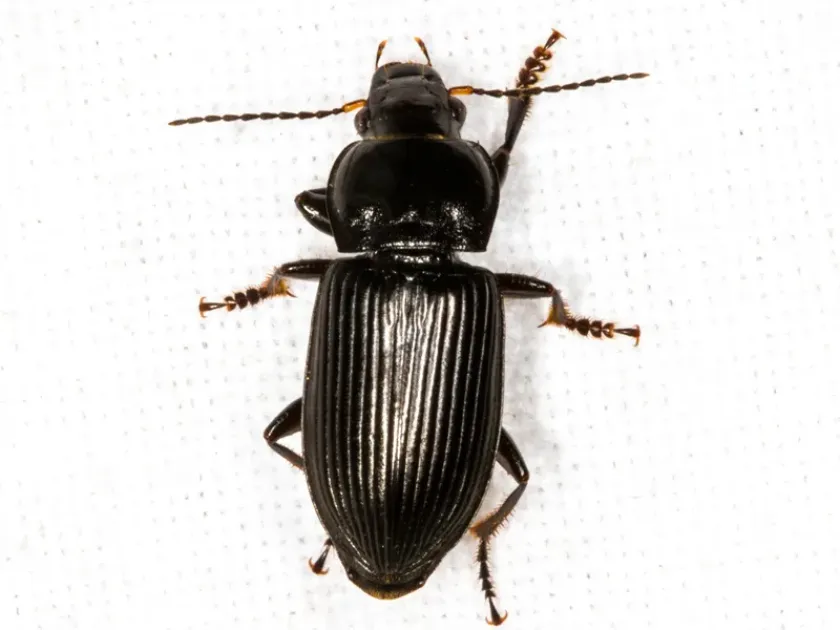
The genus Anisodactylus belongs to the ground beetle family (Carabidae) of the order Coleoptera. These beetles typically have a medium-sized, oval-shaped body and a dark, sometimes metallic-looking exoskeleton.
Their head is relatively broad, featuring strong mouthparts designed for chewing, which allows them to consume seeds and plant tissues, making them a potential threat to emerging crops.
These insects are primarily ground-dwelling, spending most of their life cycle in the soil layer. Most species are fully winged and capable of active flight to migrate between fields in search of food.
They undergo complete metamorphosis consisting of four stages: egg, larva, pupa, and adult. They typically overwinter as adults or mature larvae within the soil profile.
While many carabids are predatory, some species of Anisodactylus exhibit phytophagous behavior, specifically targeting seeds and seedlings of various agricultural crops.
What it damages
The primary targets for Anisodactylus are cereal crops such as wheat, barley, and rye. They can also affect corn and other grass species during the germination and ripening stages.
The most significant damage occurs when adults feed on sown seeds in the soil. They target the germ (embryo) of the grain, which prevents the crop from sprouting entirely.
Beyond seed consumption, the beetles may attack young seedlings by gnawing at the base of the stem, often resulting in the death of the plant and reduced stand density.
Large populations of these beetles can cause substantial yield losses, especially under conditions where germination is slow or the weather is unfavorable for quick crop establishment.
Damage is often patchy, reflecting the localized distribution of the beetles in the soil and their preference for specific environmental conditions within the field.
When it appears
Adult activity begins early in the spring as soon as soil temperatures reach a threshold that stimulates insect emergence, coinciding with the sowing of spring grains.
During the summer months, beetles may feed on various weeds and crop residues, but they tend to congregate in fields where grain is ripening to feed on the filling kernels.
In the autumn, activity increases again as beetles prepare for overwintering, posing a risk to newly sown winter crops by damaging seeds in the soil.
The development cycle is heavily influenced by soil moisture and temperature, as extreme conditions can prolong larval stages or affect survival rates.
Populations are often unevenly distributed throughout the season, as emergence is gradual and depends on the depth at which the insects overwintered.
Signs of infestation
The first sign of an Anisodactylus infestation is a patchy or uneven emergence of crops. Upon inspecting the soil, one may find seeds with the germ missing.
Beetles can be detected at night using pitfall traps or by observing the soil surface near damaged areas, as they are mostly nocturnal and avoid direct sunlight.
Affected seedlings often show signs of wilting or appear cleanly cut at the soil surface, which is a common diagnostic indicator of soil-dwelling pests.
Empty grain husks or fragments left behind in the soil near the seed row are tell-tale signs of feeding activity by ground beetles.
On larger fields, noticeable gaps in rows that expand over several days are clear indicators that the population is actively moving along the crop lines.
Control measures
Effective management requires an integrated approach that combines cultural practices with targeted chemical treatments to minimize crop damage.
- Implement crop rotation to disrupt the life cycle and reduce beetle populations.
- Use insecticidal seed treatments to provide a protective layer around the grain in the soil.
- Practice thorough tillage and deep plowing to disturb overwintering sites.
- Maintain weed control to limit alternative food sources for both adults and larvae.
- Monitor populations with pitfall traps to determine the need for chemical intervention.
Seed treatment remains the most effective prophylactic measure, as it prevents the beetle from consuming the germ before the seedling emerges from the soil.
Regular field scouting and monitoring are essential to identify infestations early and prevent economic thresholds from being exceeded.
Taxonomy
- Latin name
- Anisodactylus
- Order
- Coleoptera (beetles)
- Family
- Carabidae
- EPPO code
- ANSDSP
Discussion
No discussions yet — be the first.