
Anchomenus
Anchomenus
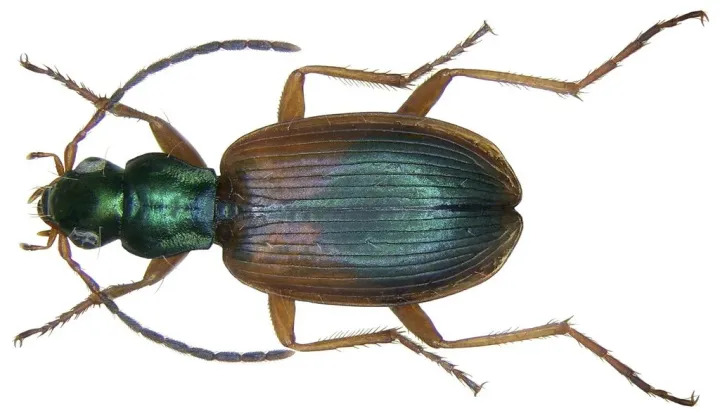
Description
How to identify
Anchomenus is a genus of ground beetles (family Carabidae) known for their flattened, slender bodies that allow them to inhabit crevices, soil cracks, and under-debris environments.
The adults are typically dark-colored, often exhibiting a metallic sheen, ranging from bronze to blackish-green. They possess well-developed mandibles typical of predatory beetles, which can also be used to feed on succulent plant tissues under certain conditions.
The larvae are mobile, elongated, and possess distinct thoracic legs. They predominantly live in the upper soil layers, primarily acting as entomophages, but may display phytophagous tendencies when their primary food source is depleted.
Identification is aided by the structure of the pronotum, which features specific lateral indentations. Their antennae are filiform and of moderate length, facilitating movement through dense vegetation and soil cavities.
These beetles are highly active and fast-moving. They prefer humid, humus-rich environments and are most commonly found in habitats where agricultural debris provides shelter.
What it damages
While historically categorized as predators of small invertebrates, Anchomenus species can occasionally inflict damage on agricultural crops, especially seedlings and young plants.
Susceptible crops include cereals, vegetables, and sugar beets. Damage typically manifests as feeding on the tender stems near the root collar, which can weaken or sever the seedling.
Leaf tissue can also be damaged in early development stages, with irregular holes being a common indicator of their feeding activity. This damage increases the plant's susceptibility to secondary infections.
The severity of the damage is usually localized and dependent on the beetle population density. In periods of extreme drought, the beetles are more likely to seek moisture and nutrients within plant tissues.
Persistent feeding by a large population can lead to significant thinning of stands, particularly in fields with high weed pressure and poor seedbed preparation.
When it appears
Activity commences early in the spring as soil temperatures rise. Beetles emerge from their overwintering sites, often found deep in the soil or under dense surface debris.
The lifecycle encompasses egg, larval, pupal, and adult stages. Overwintering occurs primarily in the adult stage, where they remain dormant until the following spring.
Peak population levels generally occur in late spring and early summer. As temperatures decrease in the autumn, the beetles begin seeking sites for winter dormancy.
Soil moisture levels heavily influence their lifecycle. Excessive dryness may disrupt development, whereas optimal moisture levels support successful larval maturation.
Field management practices, such as tillage and field maintenance, significantly impact the survival rate of the population by disturbing their nesting and hunting grounds.
Signs of infestation
A primary indicator of infestation is irregular thinning of crop stands shortly after germination. Plants may exhibit stunted growth or wilting due to stem damage near the soil surface.
Close inspection of the soil near the base of affected plants in the early morning often reveals the presence of beetles hiding under soil clods or surface debris.
If damage is widespread, the field may display areas of localized chlorosis or collapse. Feeding lesions are typically jagged, distinct from the cleaner cuts made by other pests.
The presence of these beetles on neighboring weed populations often serves as a precursor to their migration into the main crop once the seedlings emerge.
To verify the cause of plant damage, it is recommended to conduct a field survey and use soil traps to accurately identify the presence and density of Anchomenus populations.
Control measures
Effective management focuses on integrated pest management strategies that prioritize cultural practices over chemical interventions.
- Conduct deep fall plowing to disrupt overwintering habitats.
- Maintain clean field borders to reduce alternative food sources and shelter.
- Optimize seeding dates to minimize the overlap between peak beetle activity and vulnerable crop stages.
- Use professional seed treatments to provide early-season protection.
- Apply targeted insecticides only if scouting confirms the population exceeds the economic threshold.
Taxonomy
- Latin name
- Anchomenus
- Order
- Coleoptera (beetles)
- Family
- Carabidae
- EPPO code
- ANCHSP
Discussion
No discussions yet — be the first.