
Anaphes iole
Anaphes iole
Description
How to identify
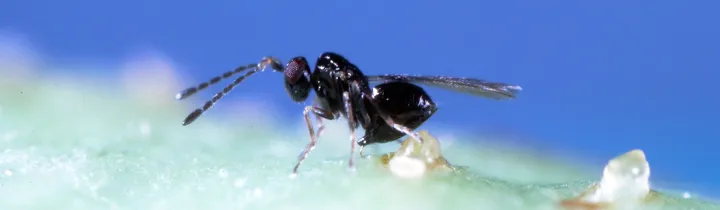
Anaphes iole is a minute parasitic wasp belonging to the family Mymaridae, often referred to as fairyflies. These insects are microscopic, making them difficult to observe without professional entomological equipment.
The adult wasp has a dark body and distinctively fringed wings, which is a classic morphological characteristic of this family of Hymenoptera.
The female wasp is highly specialized and actively hunts for the eggs of plant bugs to serve as hosts for her offspring.
In the field, their presence is often inferred rather than directly observed, unless using yellow sticky cards or examining host eggs under a microscope.
As a key biological control agent, identifying Anaphes iole populations is essential for evaluating the self-regulatory capacity of an agricultural ecosystem.
What it damages
It is critical to note that Anaphes iole does not cause any damage to crops. It is a highly beneficial insect that serves as a natural enemy to several pest species.
The wasp specializes in parasitizing the eggs of plant bugs, particularly those from the genus Lygus, which are major pests in cotton and other agricultural fields.
By consuming the contents of the host egg, the Anaphes iole larva prevents the pest nymph from hatching, effectively eliminating the potential crop damage before it occurs.
This natural predatory behavior significantly lowers the population density of harmful bugs, often reducing the need for synthetic insecticide applications.
The only negative impact to Anaphes iole arises from human activity, specifically the misuse of non-selective chemicals that destroy these beneficial populations.
When it appears
The life cycle of Anaphes iole is tightly synchronized with its hosts, ensuring that the wasps are present whenever plant bug eggs are available for parasitism.
Activity begins in the spring as temperatures rise, signaling the emergence of adults from their overwintering sites to start searching for egg-laying hosts.
Throughout the summer, the wasp can complete multiple generations due to its very rapid developmental cycle, which allows it to track pest outbreaks effectively.
Population levels typically peak in mid-to-late summer, corresponding with the period when host plant bugs are most active and reproducing in the field.
As autumn approaches and temperatures drop, the insect enters a state of diapause, waiting for the return of favorable conditions in the next growing season.
Signs of infestation
The primary sign of Anaphes iole activity is the visual change in host bug eggs found on plant surfaces, which shift color toward a darker or black hue.
Using a magnifying glass or microscope, one can often see tiny circular exit holes on the surface of the parasitized eggs, indicating successful emergence.
Assessing the level of parasitism involves collecting samples of bug eggs from the field and evaluating them for these characteristic physical changes.
A reduction in pest nymphs despite the presence of adult insects is a strong indicator that natural parasitoids are performing their regulatory functions.
Field observation should focus on identifying these subtle changes to determine if natural biological control is sufficient to keep pests below economic thresholds.
Control measures
Conservation and support are the primary strategies for managing Anaphes iole, aiming to maximize their presence within the farm environment.
Farmers should minimize the use of broad-spectrum insecticides that are known to be lethal to beneficial parasitoids, especially during peak activity periods.
Integrated Pest Management (IPM) practices should prioritize selective chemistry that targets specific pests while leaving beneficial insects unharmed.
The establishment of floral margins or wildflower strips provides adult wasps with nectar sources, which significantly increases their longevity and search efficiency.
- Prioritize selective insecticide use.
- Maintain buffer strips for biodiversity.
- Monitor parasitism rates in host eggs.
Taxonomy
- Latin name
- Anaphes iole
- Order
- Hymenoptera
- Family
- Mymaridae
- EPPO code
- ANAHIO
Discussion
No discussions yet — be the first.