
Anagrus urichi
Anagrus urichi
Description
How to identify
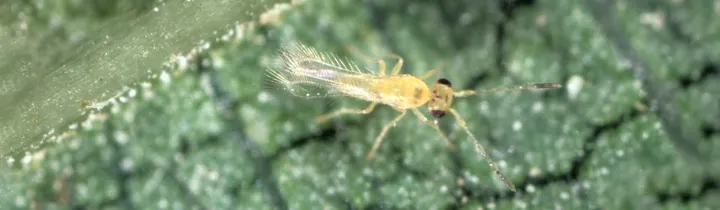
Anagrus urichi is a minute insect species within the Hymenoptera order, specifically belonging to the Mymaridae family. While many members of the Anagrus genus serve as beneficial parasitoids, this particular species is recognized for its impact as a plant pest in specific agricultural settings.
Adult individuals are extremely small, often measuring less than one millimeter in length, making them difficult to detect without specialized equipment or magnifying lenses. They typically possess thin, slender wings with characteristic hair-like fringes.
The life cycle follows a pattern of complete metamorphosis, including egg, larval, pupal, and adult stages. Each developmental stage is highly dependent on environmental factors, particularly temperature and ambient humidity.
The species biology is closely synchronized with the phenology of its host plants. Its reproductive behavior is adapted to exploit specific tissues for egg-laying, ensuring the survival of the subsequent generation.
The ability to produce multiple generations within a single growing season allows populations of Anagrus urichi to expand rapidly under favorable environmental conditions.
What it damages
This pest causes damage to agricultural crops by feeding on internal plant tissues, primarily targeting the leaves and stems of young, developing plants during their most vulnerable growth stages.
Feeding larvae create tunnels within the plant structure, which disrupts the normal translocation of water and nutrients. This physiological stress severely stunts the development of the host plant.
Beyond the direct physical damage, the punctures created during the larval feeding stage serve as entry points for secondary infections, including various bacterial and fungal pathogens.
Heavy infestations lead to leaf chlorosis, premature senescence, and overall yield reduction, impacting both the biomass production and the quality of the harvested produce.
Severe cases of infestation can result in growth retardation and deformation, rendering the crop less resilient to other environmental stresses such as drought or nutritional imbalances.
Signs of infestation
Initial signs of infestation often manifest as localized necrotic spots on the leaf surface, which gradually enlarge as the feeding damage progresses over time.
Close visual inspection may reveal the presence of minute puncture marks on the leaves and stems, indicating sites where the insect has interacted with the plant tissue.
Affected plants often display signs of physiological stress, including stunted growth, leaf curling, and an overall loss of vigor compared to unaffected plants in the same field.
A loss of natural green pigmentation is common in infected areas, as the disruption of internal tissues impairs the plant's ability to conduct photosynthesis efficiently.
Premature leaf drop is a frequent outcome of high-density infestations, which significantly diminishes the plant's photosynthetic capacity and hinders fruit or grain development.
Control measures
Implementing a strict crop rotation schedule is a fundamental agronomic practice that helps to disrupt the life cycle of the pest and minimize local population build-up.
Effective weed management is essential, as many weed species serve as alternative hosts and refugia for the pest during the off-season, enabling survival between crop cycles.
Biological control strategies, such as the augmentation or preservation of natural enemies, can be highly effective in maintaining pest populations below the economic injury level.
Chemical control should be reserved for scenarios where pest pressure exceeds established economic thresholds, prioritizing selective insecticides to protect biodiversity.
Regular field monitoring using sticky traps and visual inspection is crucial for early detection, allowing for targeted and timely interventions to prevent wide-scale damage.
Taxonomy
- Latin name
- Anagrus urichi
- Order
- Hymenoptera
- Family
- Mymaridae
- EPPO code
- ANAGUR
Discussion
No discussions yet — be the first.