
Anagrus perforatus
Anagrus perforatus
Description
How to identify
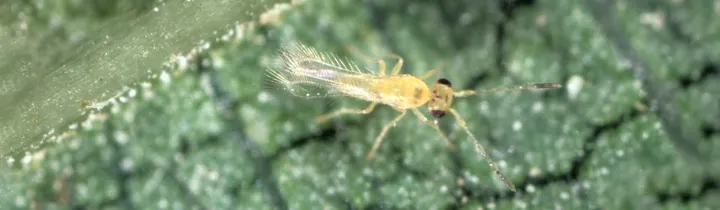
Anagrus perforatus is a minute insect belonging to the Mymaridae family, commonly known as fairyflies, within the order Hymenoptera. These are extremely small parasitic wasps, often less than 1 mm in length.
The morphology of these insects includes a slender body and wings fringed with long hairs, which is a hallmark of the family. Their coloration typically ranges from light yellow to deep brown depending on their life stage and environmental factors.
The primary biological characteristic of this species is its specialization as an egg parasitoid. They are highly efficient at locating eggs laid by host insects, often buried within plant tissues.
Their sensory system is highly developed, allowing them to detect specific chemical cues and odors emitted by host eggs or the plants themselves during the oviposition process.
Accurate field identification of Anagrus perforatus is impossible with the naked eye; laboratory analysis using microscopes is required for species verification and population studies.
What it damages
The host range of Anagrus perforatus primarily includes eggs of various Hemiptera, particularly leafhoppers and planthoppers found on perennial crops.
In citrus orchards, this parasitoid plays a significant role by preying upon the eggs of specific pests, thereby acting as a natural regulator of pest populations.
It does not cause direct damage to plants; instead, it is an indirect beneficial agent that prevents the hatching of larvae that would otherwise damage the foliage or fruits.
The impact of this insect is strictly ecological, as it consumes the contents of the pest egg, effectively preventing the development of the harmful larva.
Because it is a natural enemy, its presence is generally welcomed by agronomists as part of a biological integrated pest management strategy.
When it appears
The seasonal activity of Anagrus perforatus is synchronized with the phenology of its host species, which dictates the availability of suitable eggs.
Adults emerge in early spring, precisely timing their activity with the initiation of host oviposition on the new growth of fruit trees.
During the summer months, the population peaks as warmer temperatures allow for a shorter generation time and increased reproductive rates.
As autumn approaches, the activity level drops, and the insects transition into a overwintering phase, often sheltering in bark crevices or plant debris.
Multiple generations can occur within a single growing season, depending on the climatic conditions and the abundance of host eggs in the environment.
Signs of infestation
Signs of infestation by this parasitoid on host eggs are extremely subtle and require significant effort to detect in a field setting.
The presence of emergence holes, which are tiny, perfectly circular openings in the egg chorion, indicates that the parasitoid has successfully completed its development.
Visible changes in the color of the eggs, such as darkening or cloudiness, may serve as an indicator that a parasitoid larva is developing inside.
An overall reduction in the population of target pests observed in monitoring traps is a strong indicator that Anagrus perforatus is actively working in the orchard.
Using magnification tools or dissecting leaf tissue under a microscope allows for the identification of parasitized eggs within the orchard canopy.
Control measures
Management strategies for this species focus on conservation biological control to maintain and boost their population in agricultural ecosystems.
It is vital to avoid the broad-spectrum use of insecticides, which can significantly reduce the population of these fragile beneficial wasps.
When chemical control is necessary, choosing selective or reduced-risk pesticides is recommended to protect Anagrus species from unintended exposure.
Enhancing the orchard environment by planting nectar-rich cover crops can provide supplemental food sources for adult wasps, increasing their longevity and fecundity.
Integrated Pest Management (IPM) protocols should emphasize monitoring host egg densities before deciding to apply any form of intervention, ensuring minimal disruption to beneficials.
Taxonomy
- Latin name
- Anagrus perforatus
- Order
- Hymenoptera
- Family
- Mymaridae
- EPPO code
- ANAGPE
Discussion
No discussions yet — be the first.