
Anagrus incarnatus
Anagrus incarnatus
Description
How to identify
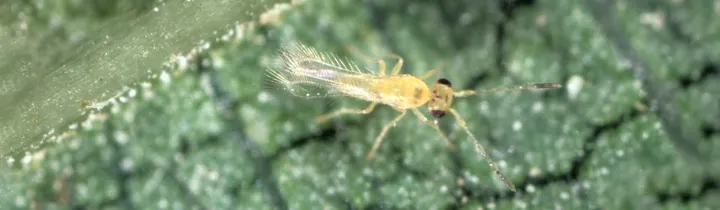
Anagrus incarnatus belongs to the Mymaridae family, commonly known as fairyflies. These are among the smallest insects in the world, with adults typically measuring less than 1 mm in length.
Physically, they are characterized by narrow, feathered wings that allow for agile flight. Their antennae are highly developed, serving as primary sensory organs for detecting the eggs of their host insects.
Although they are technically parasitoids, they are classified as beneficial insects in agriculture because they exclusively target the eggs of harmful leafhoppers and planthoppers.
Identification in the field is nearly impossible without specialized equipment. Entomologists rely on sticky traps or laboratory analysis of plant tissue samples to confirm their presence.
Their appearance is subtle, with dark to yellowish-brown bodies that blend into the environment, making them difficult to spot during routine crop inspections.
What it damages
This species does not cause damage to crops. Instead, it provides a vital ecosystem service by regulating the population of leafhoppers that feed on plant sap.
By parasitizing the eggs of these pests, Anagrus incarnatus prevents the development of the next generation of harmful insects, thereby protecting the plant's structural integrity.
In agricultural systems, this wasp is considered a natural ally. It serves as a biological control agent that limits the spread of viral diseases often vectored by leafhoppers.
The economic value of this species is significant, as it naturally maintains pest levels below the economic threshold, often reducing the need for costly pesticide applications.
The only "damage" in this context is the destruction of pest eggs, which is a desirable outcome for agricultural producers aiming for sustainable yields.
When it appears
The life cycle of Anagrus incarnatus is highly dynamic and depends on temperature and host availability. They emerge in early spring, synchronized with the arrival of their host species.
Multiple generations occur within a single growing season. The speed of development is heavily influenced by the accumulation of heat units, with warmer summers leading to faster population turnover.
Winter survival is typically achieved through diapause, with the insects overwintering inside the eggs of their hosts, often tucked within plant stems or bark.
Peak abundance occurs when host populations are at their highest. The wasps actively search for new batches of eggs to oviposit, ensuring the continuity of the species.
As daylight hours decrease and temperatures drop, the wasps enter a dormant phase, preparing to overwinter and emerge during the following spring cycle.
Signs of infestation
The primary sign of their activity is found through microscopic examination of host egg clusters. Parasitized eggs often display subtle changes, such as darkened shells compared to healthy ones.
Tiny exit holes, visible only under magnification, indicate where the adult wasp has emerged after completing its development inside the host egg.
A reduction in the population of leafhoppers throughout the season is a strong indicator that a healthy population of Anagrus incarnatus is at work in the field.
Lack of leafhopper-related plant damage, such as yellowing or stunting, despite the presence of initial pest migration, is a positive sign of biological regulation.
Professional field monitoring involves collecting plant samples and conducting emergence tests in lab conditions to quantify the rate of parasitism.
Control measures
Control measures for this species focus on conservation rather than eradication. Protecting these beneficial wasps is a cornerstone of effective Integrated Pest Management (IPM).
Minimizing the use of broad-spectrum insecticides is essential, as these chemicals are often lethal to non-target parasitic wasps like Anagrus incarnatus.
Providing nectar-rich hedgerows around fields supports the adult wasps, offering them the necessary energy resources to increase their lifespan and search efficiency.
Adopting selective, target-specific biopesticides allows for effective pest management while preserving the natural enemy complex within the ecosystem.
- Prioritize selective insecticides over broad-spectrum ones.
- Establish floral strips to support beneficial insect populations.
- Implement monitoring to justify chemical use based on economic thresholds.
Taxonomy
- Latin name
- Anagrus incarnatus
- Order
- Hymenoptera
- Family
- Mymaridae
- EPPO code
- ANAGIN
Discussion
No discussions yet — be the first.