

Pest · Lepidoptera (butterflies) · affects Fodder beet, Peach, Alfalfa
Especially harmful
Fall webworm
Hyphantria cunea
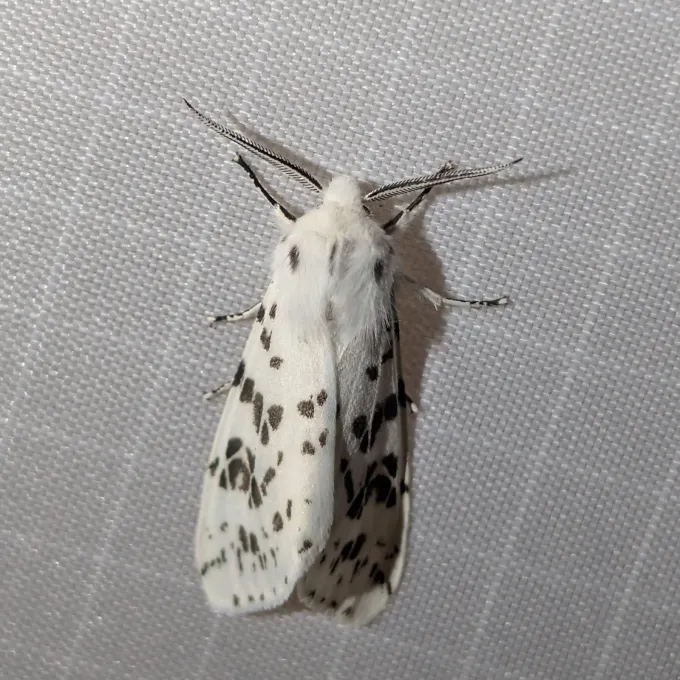
Description
How to identify
The fall webworm (Hyphantria cunea) is a moth species belonging to the Arctiidae family. The adult moth typically has pure white wings, sometimes featuring small black or orange dots, and has a wingspan of approximately 40–50 mm.
The larvae, or caterpillars, are known for their distinctive appearance and communal behavior. They have long, silky hairs arising from black or orange warts, and their body color varies from pale yellow to dark brown as they mature.
Females lay their eggs in large masses on the undersides of leaves, covering them with white hair from their abdomens. These egg clusters are highly protected and can contain hundreds of eggs, ensuring a large population density.
The insect overwinters as a pupa within a thin, silken cocoon. These cocoons are hidden in bark crevices, leaf litter, or under the soil surface, providing a protected environment during the winter months.
The fall webworm is a multivoltine species, meaning it can produce two or more generations per year depending on the climate. This rapid reproductive cycle makes it a persistent threat in many regions.
What it damages
This pest is a highly polyphagous insect that attacks over 250 species of trees and shrubs. It frequently targets fruit trees, including apple, cherry, pear, and plum, as well as landscape trees like maple, walnut, and mulberry.
The damage is caused entirely by the caterpillars, which feed on the leaves within their webbed nests. They consume the leaf tissue, leaving only the veins behind, which results in a skeletal appearance and loss of foliage.
Severe infestations can lead to partial or total defoliation of the tree. This reduces the tree's photosynthetic ability, which can significantly stunt growth, reduce fruit quality, and lead to poor winter survival.
Young trees are particularly vulnerable and may suffer permanent damage or death if they are subjected to repeated defoliation over a single season. The weakened trees also become susceptible to other pests and pathogens.
As a quarantine pest in many parts of the world, the movement of nursery stock and infested fruit is strictly regulated to prevent the spread of the moth into new geographical areas.
When it appears
Adult moths of the first generation emerge in the spring, typically during the flowering period of fruit trees. This emergence is closely synchronized with rising temperatures and the onset of plant growth.
The larvae of the first generation are active from late spring through mid-summer. During this time, they feed aggressively, expanding their web nests as they grow and require more food sources.
A second generation of moths typically emerges in mid-to-late summer, leading to a second wave of caterpillars that feed until the autumn. This generation is often larger and causes the most visible damage to trees.
Temperature is the main driver of the moth's lifecycle. Warmer climates provide an ideal environment for faster development, allowing the caterpillars to maximize their feeding time before the onset of winter.
In the autumn, as temperatures drop, the final larval instars leave the webs to find suitable pupation sites. They then enter diapause and wait for the following spring to emerge as adults.
Signs of infestation
The most recognizable sign of a fall webworm infestation is the presence of large, unsightly silken webs constructed over the tips of tree branches. These nests serve as communal homes for the larvae.
As the caterpillars grow, the size of the web nest increases significantly. These webs can eventually cover several feet of foliage, making them very easy to detect even from a distance during the mid-summer season.
The accumulation of larval frass (excrement) within and below the webbing is a clear indication of active feeding. You may also observe the caterpillars themselves, which are often found congregating on the edges of the webs.
Premature browning or loss of leaves on specific branches is a strong indicator of an infestation. If you see tree branches that look "hollowed out" or stripped bare, check for the presence of silk webs nearby.
During the dormant season, inspect the trunks and major limbs for the presence of overwintering cocoons in bark crevices. These may appear as small, greyish silken patches tucked away in the wood.
Control measures
Mechanical control is often the most effective method for small-scale infestations. This involves pruning out the infested branches containing the web nests and destroying the caterpillars by burning or burying them.
To reduce the overwintering population, remove debris and leaf litter from under trees. Scraping loose bark from tree trunks in the fall can also help eliminate hidden pupation sites before winter arrives.
Biological control methods, such as the use of Bacillus thuringiensis (Bt), are highly effective against young larvae. These products are safe for the environment and do not harm beneficial pollinators or predators.
For more severe outbreaks, contact insecticides can be used. It is best to apply these treatments when the caterpillars are in their early stages of development and the nests are still small and easy to penetrate.
Encouraging natural predators, such as birds and beneficial insects, can help keep fall webworm populations in check. Monitor your garden regularly and take action before the caterpillars grow too large for easy management.
Content graph
Connections · Fall webworm
Most often together:
Marketplace
Products · 1
Biology
Taxonomy
- Latin name
- Hyphantria cunea
- Order
- Lepidoptera (butterflies)
- Family
- Erebidae
- EPPO code
- HYPHCU
Community
Discussion
No discussions yet — be the first.