
Variegated tick
Amblyomma variegatum
Description
How to identify
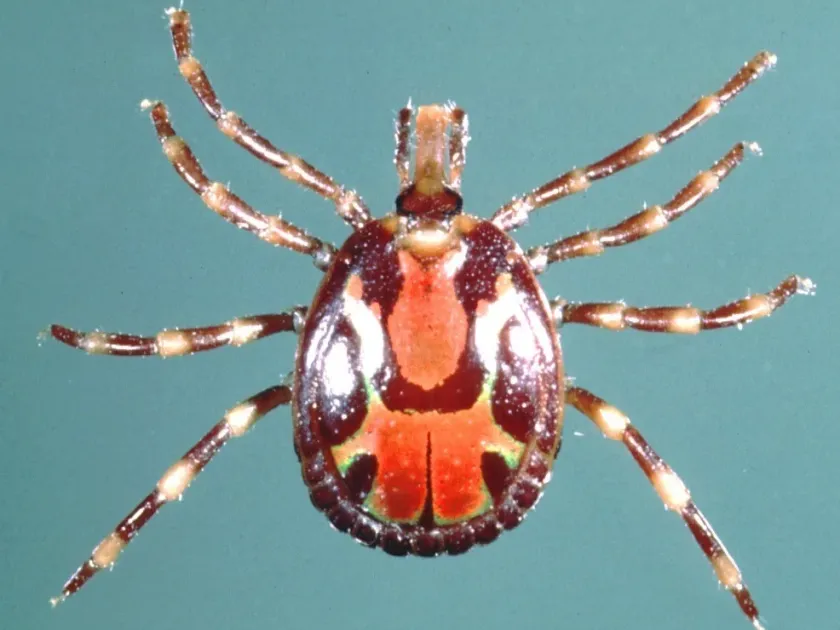
The variegated tick (Amblyomma variegatum) is a member of the Ixodidae family. It is easily identified by the distinct ornate, variegated pattern on the scutum, consisting of pale markings against a dark, metallic background.
The species exhibits sexual dimorphism. Males are characterized by a rigid, brightly patterned shield, while females are capable of massive engorgement during blood-feeding, significantly changing their appearance and size.
This species follows a three-host life cycle. Larvae, nymphs, and adults each require a different individual host to complete their blood meal and progress to the next developmental stage.
They thrive in humid, tropical, and subtropical climates. High levels of soil moisture and moderate temperatures are essential for their survival and successful development from egg to adult.
In the field, these ticks are highly resilient, often waiting on vegetation for passing mammals, displaying aggressive questing behavior to attach to a suitable host.
What it damages
The variegated tick is primarily a serious veterinary pest that affects livestock, including cattle, goats, and sheep. While not a direct plant pest, its presence drastically hinders sustainable agricultural operations.
It is a significant vector for diseases such as heartwater (Ehrlichia ruminantium). These pathogens cause high mortality rates in livestock, posing a severe threat to food security and agricultural economic stability.
Heavy infestations lead to severe anemia, weight loss, and reduced milk production. The continuous blood-sucking drains the animal's energy and nutrient resources significantly.
The ticks cause localized skin damage, including abscesses, severe dermatitis, and necrosis at the site of attachment, which invites secondary bacterial infections and screw-worm strikes.
Ultimately, the economic impact includes the loss of animal life, reduced productivity, and the high costs associated with veterinary treatment and the implementation of tick-control programs.
When it appears
The activity of the variegated tick is closely tied to seasonal patterns of rainfall and temperature. Adults are generally most active at the onset of the rainy season when humidity is optimal.
Developmental stages can be extended or shortened depending on ambient conditions. In dry, unfavorable seasons, the tick can enter a diapause phase, surviving in soil crevices or leaf litter.
Population surges often coincide with grazing periods, as the availability of hosts triggers the emergence of questing nymphs and adults from the soil environment.
Monitoring seasonal peaks is crucial for pest management. Farmers must adjust their grazing management strategies based on these activity cycles to minimize the risk of host exposure.
Soil moisture levels are the most critical factor for larval survival; therefore, sudden shifts in precipitation patterns can lead to unpredictable outbreaks of the pest population.
Signs of infestation
The primary sign of infestation is abnormal behavior in the herd. Animals often exhibit constant rubbing against fences or trees in an attempt to alleviate the intense itching caused by tick bites.
Visual inspection reveals the ticks attached to regions with thin skin, such as the axilla, udder, perineum, and the inner surfaces of the thighs, where skin is most accessible.
Lesions appear as inflamed, swollen areas or necrotic patches. These wounds are often accompanied by exudate or pus, which are indicative of secondary infections following the bites.
Affected livestock display signs of systemic illness, including lethargy, loss of appetite, and pale mucous membranes, which are direct consequences of chronic blood loss.
An overall decline in herd productivity, characterized by stunted growth in young animals and decreased reproductive performance, serves as a major indicator of a persistent infestation.
Control measures
Effective control relies on the regular application of acaricides to livestock. Dipping or spraying programs must be strictly maintained to break the tick's life cycle successfully.
Pasture management, such as rotational grazing, is essential to starve the tick population by preventing access to hosts for an extended period, thus reducing infestation pressure.
Biological control agents, such as entomopathogenic fungi, are being explored as sustainable alternatives or supplements to chemical acaricides in high-infestation regions.
Environmental sanitation, including the clearing of bush and tall grass, is recommended to destroy the tick's microhabitat and reduce the likelihood of larvae survival.
- Regular application of approved acaricidal treatments.
- Quarantine and inspection of new animals entering the herd.
- Manual removal or grooming of infested livestock.
- Strategic grazing to disrupt the tick's three-host life cycle.
Taxonomy
- Latin name
- Amblyomma variegatum
- Family
- Ixodidae
- EPPO code
- AMBYVA
Discussion
No discussions yet — be the first.