
Amblyomma triguttatum
Amblyomma triguttatum
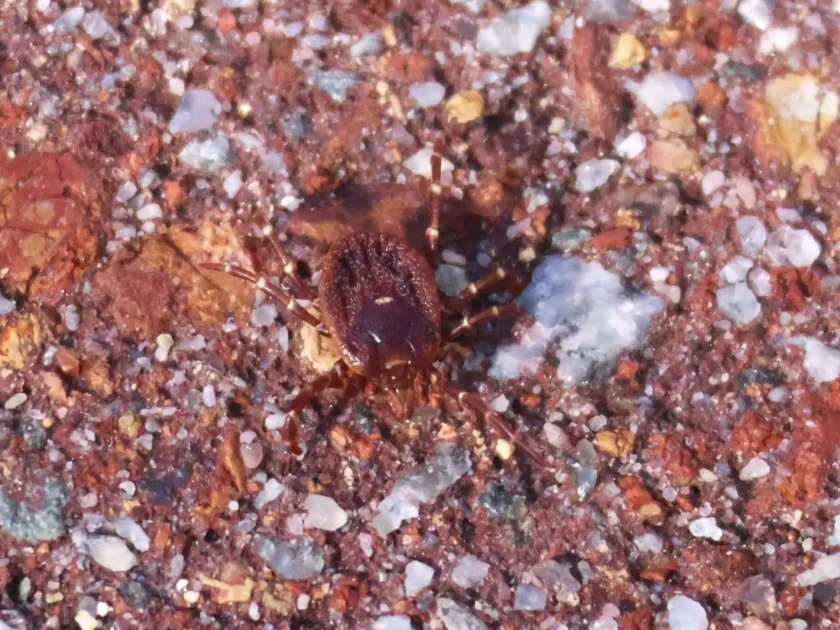
Description
How to identify
Amblyomma triguttatum is a species of hard tick belonging to the family Ixodidae. It is recognized by the distinct, pale-colored spots on its dorsal scutum, which are highly visible in adult females.
These ticks are relatively large compared to other common species and have a robust body structure adapted for attaching to the skin of mammalian hosts.
The tick undergoes a complex life cycle consisting of egg, larva, nymph, and adult stages, each requiring a blood meal to progress to the next phase of development.
Sensory organs on their forelegs, known as Haller's organ, allow them to detect vibrations, body heat, and carbon dioxide emitted by potential hosts.
Females are prolific egg-layers, capable of depositing large clutches in soil or leaf litter, which ensures the survival and spread of the population across vast areas.
What it damages
Amblyomma triguttatum does not feed on crops, but it acts as a significant pest in the livestock industry, causing substantial economic losses through its parasitic nature.
Feeding ticks cause intense irritation, inflammation, and skin lesions on livestock, which can lead to bacterial infections if the wounds are left untreated.
Heavy infestations lead to anemia, poor weight gain, and reduced milk production in cattle, affecting the overall health and productivity of the herd.
The damage caused to the skin and hides of livestock reduces the quality and value of these materials, leading to lower profits for farmers and producers.
Furthermore, these ticks can serve as vectors for various diseases, posing a continuous health risk to farm animals and complicating herd management practices.
When it appears
The seasonal activity of Amblyomma triguttatum is largely influenced by temperature and humidity levels, as they are primarily found in regions with warm climates.
Adult ticks are most active during the warmer, wetter months when conditions are optimal for them to climb vegetation and wait for a passing host.
During colder or excessively dry seasons, these ticks may enter a period of reduced activity or diapause, sheltering deep within the soil or ground cover.
The activity patterns are closely synchronized with the presence of their preferred hosts, ensuring that ticks are active when cattle and wildlife are grazing.
Monitoring programs are typically intensified during the peak seasons to manage the risk of mass infestations on pastures before they impact herd health.
Signs of infestation
Livestock infested with ticks often exhibit signs of extreme agitation, including rubbing against fence posts, trees, or other structures to relieve itching.
Close inspection of the animals often reveals the presence of ticks attached to areas with thinner skin, such as the groin, ears, and under the tail.
Localized swellings, scabs, and signs of secondary infections on the skin are common indicators of long-term parasitic activity requiring veterinary attention.
General weakness, lethargy, and pale mucosal membranes in young animals are critical signs of severe blood loss due to massive tick populations.
Environmental checks using the flagging method involve dragging a light-colored cloth over pasture vegetation to identify the presence of ticks in the area.
Control measures
Effective control strategies rely on the regular application of acaricides to livestock to kill attached ticks and repel those seeking to attach.
Dipping or spraying programs using approved chemical agents are essential for maintaining low parasite loads within a herd throughout the active season.
Pasture management practices, including the regular mowing of tall grass and brush, help to reduce the environmental harborages favored by these ticks.
Maintaining proper stocking densities helps prevent overgrazing, which creates a more uniform and less favorable environment for tick populations.
- Use of systemic pour-on treatments
- Strategic pasture rotation
- Regular inspection and manual removal
- Biological control through natural predators
Taxonomy
- Latin name
- Amblyomma triguttatum
- Family
- Ixodidae
- EPPO code
- AMBYTR
Discussion
No discussions yet — be the first.