
Amara similata
Amara similata
Description
How to identify
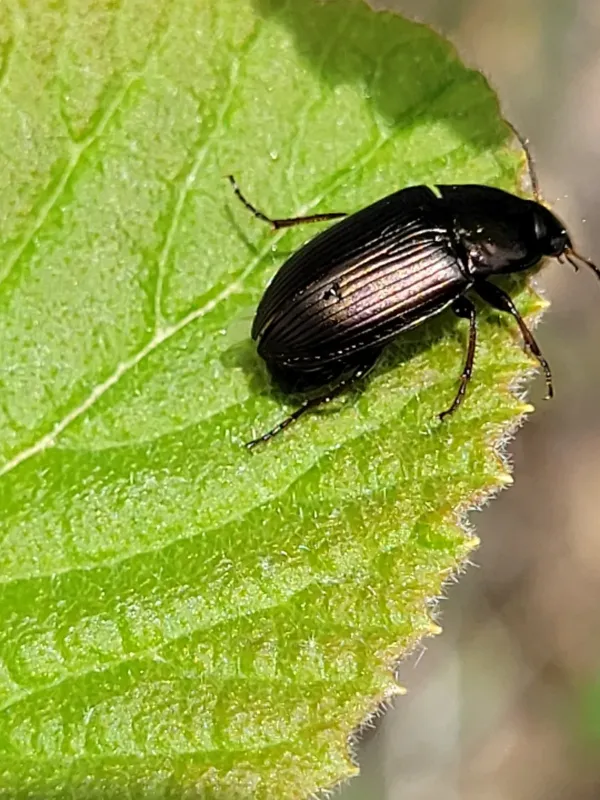
Amara similata is a species of ground beetle belonging to the family Carabidae within the order Coleoptera. Adult beetles typically measure between 8 and 10 mm in length.
Their bodies are oval in shape and exhibit a dark, pitch-black or brownish-black coloration, often featuring a distinct metallic sheen. The elytra (wing covers) display clearly defined longitudinal grooves.
The larvae of this species have elongated, lightly sclerotized bodies, typically grayish or off-white. They are primarily soil-dwelling, preferring the upper layers where organic matter is abundant.
Due to the vast diversity within the Amara genus, identifying this specific species requires careful morphological examination. Field entomologists often utilize pitfall traps to monitor their populations accurately.
Unlike strictly predatory ground beetles, Amara similata exhibits mixophagous behavior, meaning it can feed on both plant material and small invertebrates, making it a potential pest in agricultural settings.
What it damages
Amara similata primarily targets cereal crops, including winter and spring wheat, barley, and rye. Adult beetles cause significant damage by feeding on maturing grain in the milk or dough stages.
This feeding behavior results in grain loss, reduced seed quality, and poor germination rates. Furthermore, damaged kernels are highly susceptible to secondary fungal infections.
Larvae are known to feed on the roots and underground stems of young cereal plants. This damage can lead to thinning stands, stunted growth, and even plant death if infestation levels are high.
Infestations are often linked to fields with poor residue management. Excessive surface trash provides both food and shelter for the larvae to thrive during the early stages of development.
In years with favorable weather conditions, this beetle can become a major economic pest, particularly in fields where crop rotation practices have been neglected.
When it appears
The life cycle of Amara similata is heavily influenced by seasonal temperature changes. Adults typically overwinter by burrowing into the soil or hiding under protective ground cover.
Activity begins in early spring as soil temperatures rise above 8–10 degrees Celsius. Adults emerge to forage and begin the mating process shortly thereafter.
Eggs are laid in the soil in clusters. The larval stage lasts several weeks, during which the insects pass through three distinct instars before pupating in underground chambers.
The new generation of adults usually emerges in late summer. These beetles actively feed before entering a period of diapause to survive the winter months.
Peak pest pressure typically coincides with the grain-filling period of cereals, necessitating close monitoring during late spring and early summer months.
Signs of infestation
The most visible sign of infestation is damaged grain within the heads. Unlike some other pests, these beetles leave rough, ragged edges on the kernels while the head structure remains intact.
Field patches may show signs of yellowing or thinning, which often points to larval feeding on the root systems. Digging around the base of affected plants can reveal the presence of larvae.
Adult beetles can often be spotted on the soil surface at dusk or found under debris during the day. Their presence in pitfall traps provides a clear indicator of population density.
- Ragged, eaten grain kernels within the ear.
- Stunted, chlorotic seedlings in the field.
- Presence of adults in soil traps or under crop residues.
- Localized patches of crop failure or reduced density.
Regular scouting is essential to identify the onset of infestation before it reaches levels that cause significant economic loss.
Control measures
Effective management begins with deep tillage (plowing) in the fall, which disrupts the soil-dwelling stages of the beetle and exposes larvae to predators and environmental stress.
Crop rotation is a critical preventive measure. Moving away from continuous cereal cropping prevents the buildup of Amara similata populations in the soil.
Chemical control involving insecticides may be required if population thresholds are exceeded. Applications should be timed to target adult activity during the grain-filling stage.
Good weed control is vital, as wild grasses act as secondary hosts and breeding grounds for the beetles. Removing these reduces the overall pest pressure on the primary crop.
Using high-quality, treated seed is recommended to protect emerging seedlings from early-season larval feeding, ensuring a uniform and healthy crop stand.
Taxonomy
- Latin name
- Amara similata
- Order
- Coleoptera (beetles)
- Family
- Carabidae
- EPPO code
- AMARSI
Discussion
No discussions yet — be the first.