
Amara plebeia
Amara plebeia
Description
How to identify
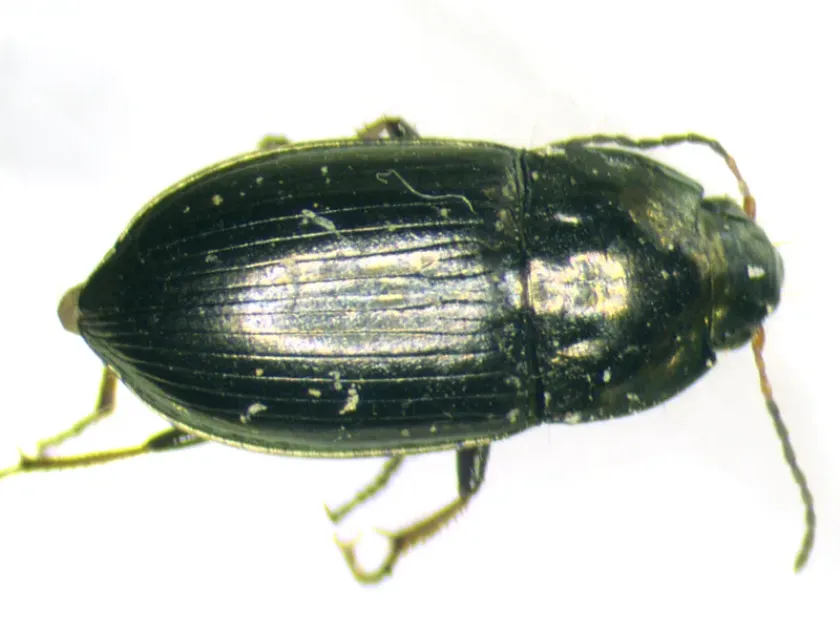
Amara plebeia is a species of ground beetle belonging to the Carabidae family and the Coleoptera order. Adult beetles are small, typically measuring between 7 and 9 millimeters in length.
The body shape of the insect is oval and slightly convex, which is a common characteristic for many species within this diverse family of ground beetles.
The coloration of the adult beetle ranges from dark brown to coal black, often exhibiting a distinctive metallic shine or a slight greenish-bronze reflection under direct light.
The pronotum is broad with rounded corners, a feature often used by entomologists to distinguish this species from other similar beetles in the field.
As ground beetles, they are agile and have legs adapted for running, which allows them to move quickly across the soil surface or hide beneath debris when disturbed.
What it damages
While many ground beetles are primarily beneficial predators, Amara plebeia is known for its mixophagous behavior, meaning it consumes both animal and plant matter.
The primary concern for farmers is the damage these beetles cause to cereal crops like wheat, barley, and rye during the grain filling stages.
Adult beetles feed on developing seeds in the milk and dough stages, chewing into the grains and causing significant loss of both quality and quantity of the yield.
Besides direct consumption of the grain, the damage caused by the beetle's mouthparts can create entry points for secondary fungal infections, further reducing the overall harvest quality.
Economic damage is most significant during peak population years, particularly on the edges of fields where the beetles migrate from surrounding wild habitats.
When it appears
The life cycle of Amara plebeia is heavily influenced by soil temperatures, as the beetles rely on subterranean conditions for development and overwintering.
Adults overwinter deep in the soil, emerging in the spring once the ground warms up sufficiently, typically between April and May depending on the local climate.
The breeding season is extended, ensuring that a portion of the population survives even if early spring conditions are unfavorable for development.
Larvae develop within the soil, feeding on organic matter, small invertebrates, and occasionally plant roots, transitioning through several instars before pupating.
New adults emerge in late summer and early autumn, engaging in active feeding to build up energy reserves before seeking out suitable overwintering sites in the soil.
Signs of infestation
The most visible sign of an infestation is the presence of hollowed-out or partially chewed grains within the wheat or barley heads at harvest time.
Nighttime field scouting using flashlights is the most effective way to detect the presence of the beetles, as they are nocturnal and become active on the surface after dark.
Finding insect frass or debris near the base of the crop stalks can also serve as an indicator of localized beetle activity within the field.
Patchy damage or "thin" spots in the crop at the edges of the field are classic indicators of where the population density is likely the highest.
Reduced weight of harvested grain samples in specific field zones is a late-stage indicator that suggests significant feeding damage occurred during the grain filling process.
Control measures
Effective soil management, particularly deep plowing, is a primary cultural control method that disrupts the overwintering sites and destroys the beetle population.
Crop rotation practices should be utilized to break the pest's life cycle, as consistent planting of the same cereals provides an ideal habitat for population growth.
Harvesting the crop as soon as it reaches optimal maturity can significantly reduce the window of opportunity for the beetles to feed on the maturing grain.
Chemical control, if necessary, involves the use of approved contact insecticides, which are most effective when applied in the evening hours when beetles are active.
Encouraging natural predators such as birds and beneficial insects through habitat management can help keep Amara plebeia populations below economic thresholds.
Taxonomy
- Latin name
- Amara plebeia
- Order
- Coleoptera (beetles)
- Family
- Carabidae
- EPPO code
- AMARPL
Discussion
No discussions yet — be the first.