
Amara ovata
Amara ovata
Description
How to identify
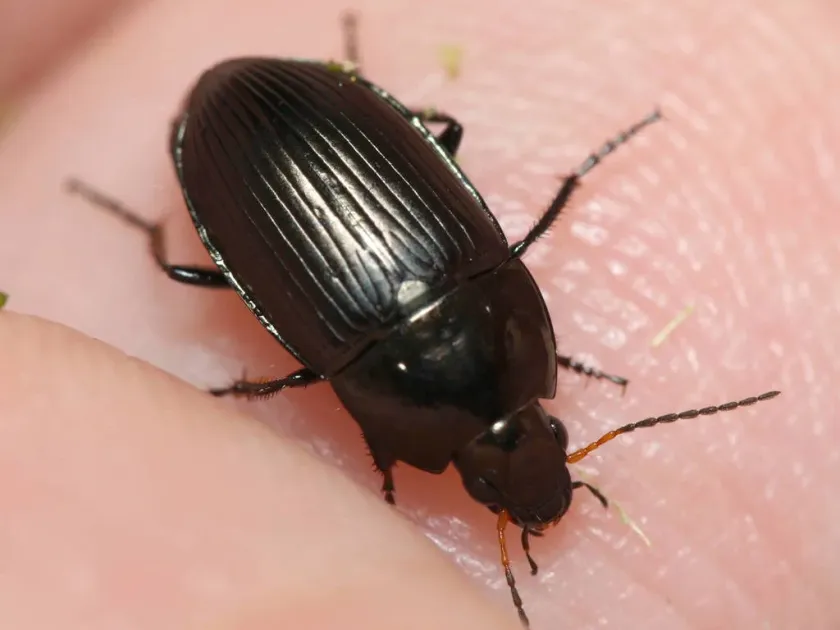
Amara ovata is a species of ground beetle belonging to the family Carabidae (order Coleoptera). Adult beetles typically have an oval-shaped, moderately convex body with a metallic or dark shine, common to many species in the genus Amara.
The coloration of adults ranges from pitch-black to bronze, providing camouflage against the soil surface. They possess well-developed cursorial legs, allowing them to move quickly across fields, especially during the night when they are most active.
The larvae of this species have elongated bodies with distinct mandibles and a segmented abdomen. As holometabolous insects, their life cycle consists of egg, larva, pupa, and adult stages, each requiring specific environmental conditions for survival.
These beetles are frequently found in agricultural fields, orchards, and abandoned lands, showing a high capacity to adapt to different soil types and moisture levels.
While many carabids are predatory, Amara ovata is known for its opportunistic feeding behavior, which includes the consumption of seeds, making it a potential threat to emerging crops.
What it damages
The primary economic damage caused by Amara ovata occurs during the germination stage of crops. Adult beetles feed on seeds in the soil, often targeting the embryo, which prevents the crop from sprouting and leads to thin stands.
Cereal crops are particularly susceptible to this type of feeding. If the beetle population is high, the loss of germinating seeds can result in significant yield reductions, requiring farmers to replant affected areas.
In addition to cereals, these beetles can damage the seeds of vegetables and sugar beets. Occasionally, adults also feed on the soft, succulent tissues of young seedling sprouts, further weakening the plants.
The damage is most severe in the spring when sowing coincides with the reactivation of adult beetles from their wintering sites, creating a high demand for food sources in the fields.
Because the beetles are primarily active at night and often work beneath the soil surface, the damage often remains unnoticed until a significant portion of the crop has failed to emerge.
When it appears
Adult beetles typically overwinter in the soil or beneath dense plant debris. As temperatures rise in the spring, they emerge from their hiding spots to resume feeding and initiate their reproductive cycle.
The peak period for egg-laying and larval development occurs during late spring and early summer. The larvae develop within the top layers of the soil, feeding on organic matter or available seed reserves.
The new generation of adults usually emerges in mid-summer. These beetles are highly active and focus on building up energy reserves before the onset of the colder months, when they seek shelter for the winter.
Seasonal dynamics are heavily influenced by local weather patterns. Moist springs often favor the survival of larvae, while extreme heat or drought may limit the population growth in a given season.
Understanding these timing patterns is essential for growers to implement preventative measures effectively before the peak period of seed consumption begins.
Signs of infestation
The most noticeable sign of an Amara ovata infestation is the presence of bare patches in fields where seedlings have failed to emerge. Inspection of the soil often reveals destroyed or hollowed-out seeds.
- Empty seed coats found at the seeding depth during site investigations.
- Mechanical damage on the base of young sprouts showing distinct bite marks.
- Observation of dark, oval-shaped beetles on the soil surface during night inspections.
- Uneven stand density throughout the field that cannot be attributed to planting depth or seed quality.
- Signs of beetles congregating near debris or under weed cover near the crop rows.
Control measures
Effective management begins with proper tillage practices. Deep plowing helps disrupt the overwintering sites of the beetles and buries them, significantly reducing their ability to return to the surface in the spring.
Seed treatment with systemic insecticides is the most effective preventative measure. This provides a chemical barrier around the seed, protecting it during the critical germination period against beetle feeding.
Crop rotation serves as a powerful tool to interrupt the pest cycle. By alternating crops that are less preferred as food sources, farmers can effectively reduce the buildup of beetle populations over several years.
Weed control is equally vital, as weeds on field borders provide essential shelter and alternative food sources for the beetles when the main crop is not available.
In severe infestations, foliar application of insecticides during the evening hours may be required to target the beetles when they are most active on the surface of the soil.
Taxonomy
- Latin name
- Amara ovata
- Order
- Coleoptera (beetles)
- Family
- Carabidae
- EPPO code
- AMAROV
Discussion
No discussions yet — be the first.