
Amara chalcites
Amara chalcites
Description
How to identify
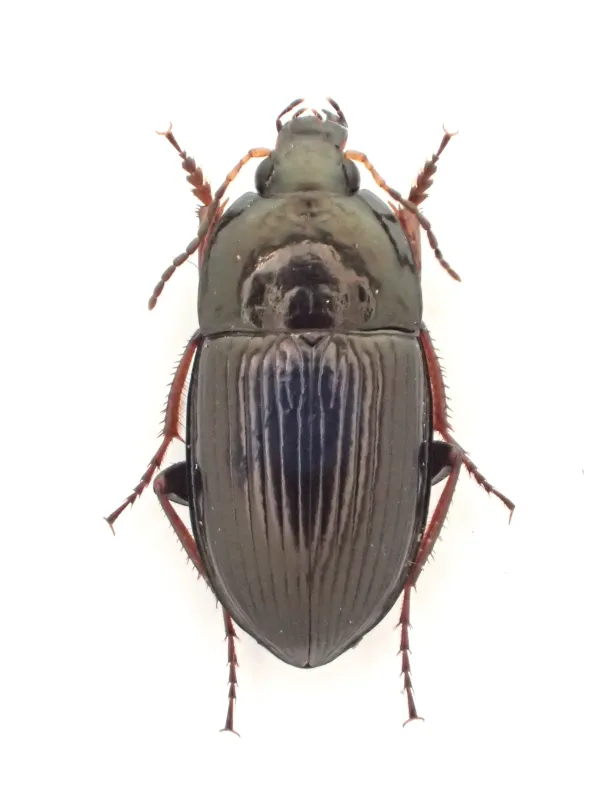
Amara chalcites is a species of ground beetle belonging to the family Carabidae within the order Coleoptera. Adult beetles typically measure between 8 and 11 mm in length and possess a distinct metallic luster.
The elytra of the beetle often display a copper-bronze or greenish sheen, making them stand out from other dark-colored ground beetles common in agricultural fields.
The head and pronotum of this species are darker than the elytra, and the legs are generally a reddish-brown or dark color, which serves as a key identifying morphological feature.
The larvae of this species are campodeiform and highly mobile, equipped with strong legs and mandibles that are well-adapted for feeding on vegetable tissues in the soil.
As strong fliers, these beetles can disperse rapidly across fields, seeking suitable habitats and food sources during the warmer months of the year.
What it damages
Unlike many other carabids that are predatory, Amara chalcites is a phytophagous species known to damage cereal crops including wheat, barley, rye, and oats.
The primary damage occurs when adult beetles feed on the developing grain during the milk and dough stages, leaving the kernels partially or completely hollowed out.
This feeding behavior results in significant yield loss and reduced grain quality, as the beetles selectively target the nutrient-rich interior of the developing kernels.
In addition to direct yield loss, heavy infestations can lead to decreased germination rates if the seed itself is damaged during the maturation process in the field.
While the focus of the damage is typically on cereals, the beetles can also utilize various wild grass species as alternative food sources, supporting population growth throughout the season.
When it appears
The species overwinters as adults (imago) in the soil, hidden under plant debris, in the upper layers of turf, or in soil crevices where they are protected from winter temperatures.
Activity resumes in early spring once soil temperatures begin to rise, prompting the beetles to emerge and search for early-season vegetation or crop seedlings.
The peak of their activity and damage potential usually aligns with the reproductive phases of cereal crops, particularly when the grains start to fill.
The life cycle involves complete metamorphosis, and the larval development is highly dependent on local moisture levels and the availability of preferred food sources in the soil profile.
Young beetles typically emerge later in the season after the pupal stage, feeding briefly before entering diapause or hibernation to survive the following winter.
Signs of infestation
Visual identification of an infestation involves spotting damaged ears of grain, where kernels show clear signs of chewing or empty husks where the grain content has been consumed.
Adult beetles can often be observed during dusk or dawn, hiding at the base of plants or moving across the soil surface within the crop canopy.
Focal points of damage are often found near field margins, adjacent to perennial grasses or wooded areas, where the pest population density tends to be higher.
Secondary signs include reduced grain weight and a higher percentage of damaged kernels in the harvested yield, which can be verified during crop monitoring.
Using pitfall traps buried flush with the soil surface is a highly effective method for sampling populations and determining the necessity of control interventions.
Control measures
Cultural control measures, such as deep autumn plowing (tillage), are essential as they disrupt the beetle's overwintering sites and expose them to harsh weather conditions.
Weed management is critical, particularly the removal of wild grasses along field borders, which removes refuge and alternative food sources for the pests.
Crop rotation helps prevent the buildup of Amara chalcites populations by breaking the life cycle and removing the specific hosts required for their development.
If economic thresholds are reached, the application of insecticides targeting the adult stage may be necessary, strictly following local guidelines and safety regulations.
Integrated Pest Management (IPM) practices, including regular field monitoring and the use of ecological buffers, can significantly reduce the need for chemical interventions.
Taxonomy
- Latin name
- Amara chalcites
- Order
- Coleoptera (beetles)
- Family
- Carabidae
- EPPO code
- AMARCH
Discussion
No discussions yet — be the first.