
Amara avida
Amara avida
Description
How to identify
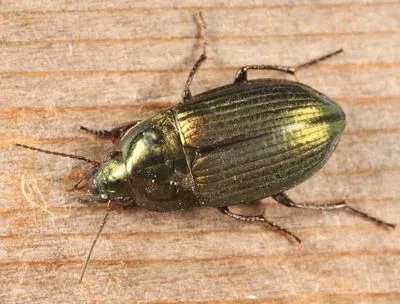
Amara avida is a species of ground beetle belonging to the Carabidae family, which is widely distributed across temperate regions. These beetles are known for their dark, often metallic coloration and robust, oval-shaped bodies.
Adult beetles typically measure between 8 and 11 mm in length. They possess well-developed legs designed for running and rapid movement on the soil surface, especially during nighttime hunting.
The larvae are campodeiform, meaning they are active and move quickly through the soil layers. They have strong mandibles suited for feeding on both plant materials and small soil organisms.
The life cycle undergoes complete metamorphosis, consisting of egg, larval, pupal, and adult stages. Climate conditions significantly influence the speed of development and survival rates of each stage.
While many carabids are predatory, Amara avida is recognized for its potential to damage crops, particularly when its natural food sources are scarce or its population density spikes.
##damage##This beetle is primarily a pest of cereal crops, including wheat, barley, and rye. It targets seeds and seedlings, posing a threat to crop establishment during the initial growth phases.
Larvae consume the endosperm of germinating seeds in the soil, often resulting in patchy or thin stands that fail to mature properly, directly reducing the total crop yield.
Adult beetles may feed on developing grain kernels during the milk stage, chewing into the ears and causing mechanical damage that lowers the overall quality and market value of the grain.
Damage is typically more severe in fields with high levels of crop residue, which provides the necessary cover for the beetles to overwinter and thrive throughout the season.
Even though the pest is generally considered sporadic, mass outbreaks can cause substantial economic losses in regions where conservation tillage is widely practiced.
When it appears
Activity starts in early spring as soon as soil temperatures reach favorable levels for adult beetle emergence from overwintering sites located deep in the soil.
The highest levels of adult activity and feeding coincide with the tillering phase of winter cereals, making this a critical window for crop inspection and potential treatment.
During the summer months, adults may seek shelter to avoid extreme heat, while larvae continue to develop in the soil, utilizing available organic matter and plant tissues.
A second, smaller peak of activity often occurs in autumn as the new generation of adults emerges, seeking nutrition before transitioning into dormancy for the winter months.
Environmental factors, specifically soil moisture and temperature fluctuations, dictate the timing and duration of the pest’s activity cycles across different farming landscapes.
Signs of infestation
The most noticeable sign of an Amara avida infestation is the presence of uneven plant density in the field, with areas of poor germination or dead seedlings.
Closer examination of the soil around affected areas often reveals seeds with jagged, irregular holes, consistent with the feeding behavior of ground beetle larvae.
Damaged grain ears show partial consumption of kernels, which might be mistaken for other pests, but the presence of beetles in the vicinity confirms the diagnosis.
Using soil traps at night is an effective way to confirm the presence of the beetle, as they are nocturnal and become highly active once the sun goes down.
Soil disturbance or shallow excavations around the base of the plants can reveal the presence of larvae, indicating an active population that needs monitoring.
Control measures
Deep plowing remains a primary agronomic method to control Amara avida, as it disrupts the soil habitat and exposes larvae to predators and unfavorable environmental conditions.
Effective weed management is essential, as dense vegetation within and around the field provides both shelter and alternative food sources for the beetle population.
Seed treatments with systemic insecticides are recommended as a preventive measure in areas with a history of ground beetle outbreaks to protect the germinating crop.
Foliar insecticide applications should be used only as a last resort, triggered by economic threshold counts obtained through consistent field monitoring and trapping.
Promoting a healthy crop rotation and optimizing sowing dates can help ensure that the most vulnerable growth stages do not overlap with the peak activity periods of the pest.
Taxonomy
- Latin name
- Amara avida
- Order
- Coleoptera (beetles)
- Family
- Carabidae
- EPPO code
- AMARAV
Discussion
No discussions yet — be the first.