
Agonum marginatum
Agonum marginatum
Description
How to identify
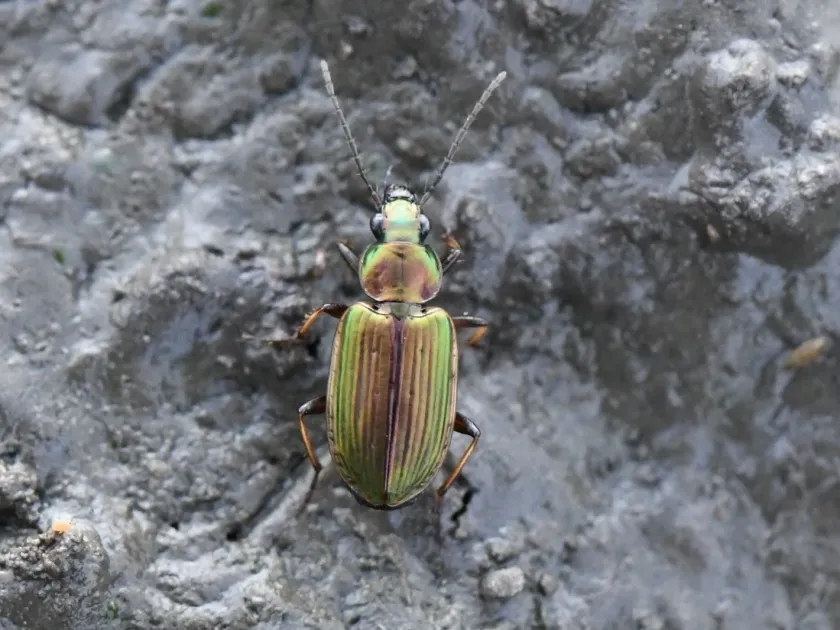
Agonum marginatum is a species of ground beetle belonging to the family Carabidae. This insect is recognized by its medium size, metallic sheen on the elytra, and a distinct pale margin running along the edges of the wing cases.
The body is dorso-ventrally flattened, an adaptation that allows the beetle to navigate efficiently through soil crevices and dense vegetation. It possesses well-developed legs designed for rapid movement and predation.
Larvae are typically found in the topsoil. They are elongated with functional thoracic legs and strong mandibles. Similar to adults, they are often predatory, but they may consume plant materials if preferred prey is unavailable.
These beetles are strongly associated with moist environments. In agricultural landscapes, they are frequently encountered in damp soil conditions, near water bodies, or in fields with poor drainage systems.
Identification often relies on the specific morphology of the pronotum and the punctuation patterns found on the elytra. Careful microscopic examination is usually required to confirm the species during field scouting.
What it damages
While many carabid beetles are beneficial natural enemies of other pests, Agonum marginatum can occasionally behave as a nuisance in crops. This occurs primarily when environmental conditions limit their natural food sources.
Damage is most severe during the seedling stage of various crops, including cereals and vegetables. The beetles may feed on germinating seeds in the soil or gnaw at the tender stems of emerging young plants.
Crops such as wheat, barley, and maize are particularly susceptible during early developmental phases. Severe infestations can result in reduced plant stands and uneven crop emergence, impacting total yield potential.
The damage caused by this species is typically localized but can spread under favorable environmental conditions. High soil moisture tends to increase the beetle's activity, leading to more concentrated feeding areas.
Besides direct physical damage, these beetles can introduce pathogens to the plant tissues. By creating wounds on seeds and roots, they facilitate the entry of soil-borne fungi and bacteria that can cause systemic infections.
When it appears
The life cycle begins with adult activity in early spring as soon as soil temperatures reach a threshold for beetle movement. This period coincides with sowing operations, making young seedlings vulnerable to predation.
Peak activity is observed during April and May, as the adults emerge from hibernation and begin their feeding cycle. Monitoring the beetle population during this time is critical for early detection of potential outbreaks.
During the summer months, adult activity often decreases as alternative food sources, such as other small invertebrates, become abundant in the fields. This reduces the pressure on crops during late spring and summer.
As autumn approaches, the beetles prepare for the winter months. They seek shelter in undisturbed soil, crop residues, or forest litter to survive the cold, which is why soil management is crucial for population control.
The species has a single generation per year. However, larvae may show different stages of development throughout the season depending on the climate, requiring professional monitoring and consistent field surveillance.
Control measures
Effective management begins with proper tillage practices. Deep autumn plowing is a recommended cultural control method, as it disrupts the overwintering sites of the beetles and significantly reduces the following year's population.
Crop rotation is essential to break the life cycle of soil-dwelling pests. Avoiding the planting of susceptible crops in fields known for high soil moisture or previous heavy infestations can help maintain pest populations below the threshold.
Seed treatment with systemic insecticides provides a highly effective chemical defense. Coating seeds protects the germinating plant from the very beginning, preventing the beetles from feeding on the seeds and young roots.
Field scouting using pitfall traps is the standard method for determining the beetle's presence and density. Decisions on applying chemical interventions should be based on threshold levels to minimize environmental impact.
Maintaining soil fertility and ensuring optimal drainage in fields can also play a role in limiting the damage. A healthy, rapidly growing plant is less likely to suffer significant yield loss from minor beetle feeding compared to a stressed crop.
Taxonomy
- Latin name
- Agonum marginatum
- Order
- Coleoptera (beetles)
- Family
- Carabidae
- EPPO code
- AGOUMG
Discussion
No discussions yet — be the first.