
Agonoderus comma
Agonoderus comma
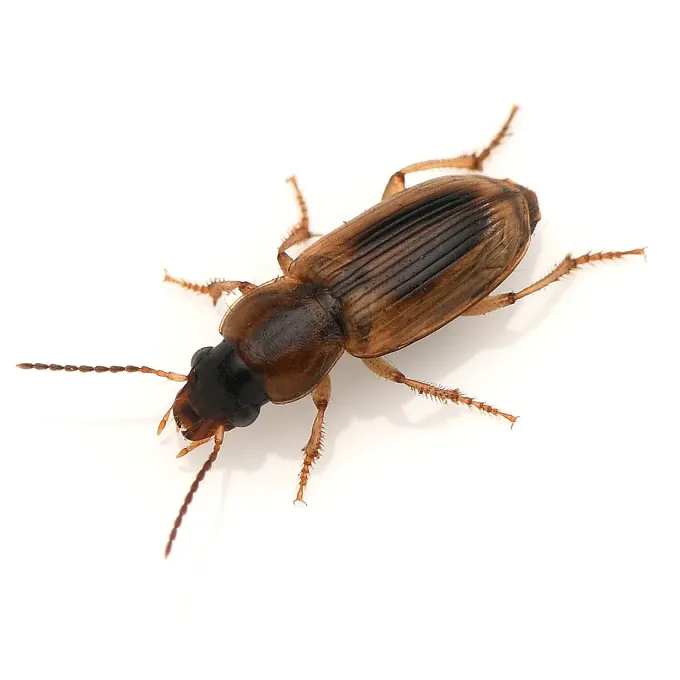
Description
How to identify
Agonoderus comma is a species of ground beetle that stands out from most other predatory members of the Carabidae family due to its occasional phytophagous behavior. Adults are characterized by a yellowish-brown color and a distinct dark spot on the pronotum shaped like a comma.
The adult beetle typically measures between 6 and 8 mm in length. Its body is elongated and possesses a slight sheen, which is a common trait among ground beetles that live in various soil conditions.
The life cycle includes egg, larval, pupal, and adult stages. The larvae reside in the soil, appearing pale with well-developed chewing mouthparts that are adapted for feeding on plant roots and subterranean structures.
The insect overwinters primarily in the adult stage, seeking shelter in the upper layers of the soil or beneath plant debris to withstand colder temperatures during the dormant season.
Activity resumes in early spring when environmental conditions allow. Once the ground warms up, the adults emerge from hibernation to feed, mate, and eventually deposit eggs near suitable host plants.
What it damages
This beetle is known to impact several agricultural crops, with corn being particularly susceptible during its early growth stages. It can cause significant economic losses if the population density is high.
Larval stages are the most destructive, as they feed on the roots and underground parts of young seedlings. This feeding behavior often causes the plants to weaken, wilt, and die prematurely.
Adult beetles can also contribute to crop injury by feeding on the grain of corn during the milk stage, especially in fields with high humidity that favors the insect's activity and survival.
The damage caused to the root system and plant tissues creates entry points for various soil-borne pathogens, leading to secondary fungal or bacterial infections that further degrade plant health.
Overall damage is most evident in uneven seedling emergence and patchy crop stands, which makes it difficult to achieve optimal plant population density and uniform growth across the field.
Signs of infestation
The most common sign of an infestation is the appearance of wilting or stunted seedlings in parts of the field. These affected plants often lack a healthy root system when inspected.
If you remove a stressed seedling from the ground, the roots may show clear evidence of being gnawed or completely severed, which is a hallmark of larval activity near the root zone.
Visual monitoring during the night or early morning may reveal adult beetles active on the soil surface, especially near the base of the stems, where they aggregate to feed or seek shelter.
In fields where corn has reached the grain-filling stage, one might observe superficial feeding damage on the kernels within the ears, indicating the presence of adults during the reproductive stage.
Weedy fields or areas with heavy crop residue are often more attractive to these beetles, providing an ideal microenvironment that sustains their population and leads to increased infestation levels.
Control measures
Cultural control practices, such as proper crop rotation, are essential for disrupting the life cycle of Agonoderus comma and preventing the build-up of resident populations in the soil.
Deep fall plowing is a highly recommended practice as it exposes overwintering adults to adverse weather conditions and natural predators, significantly reducing the survival rate for the next season.
Seed treatment with systemic insecticides is a standard and effective approach for protecting emerging seedlings from soil-dwelling insects during the most critical early growth phase.
If necessary, insecticide applications during the growing season should be timed according to economic thresholds and integrated pest management (IPM) guidelines to maximize efficacy.
Maintaining strong plant vigor through appropriate fertilization and timely weed control helps the crop compensate for minor damage, ensuring that the plant can withstand moderate insect pressure.
Taxonomy
- Latin name
- Agonoderus comma
- Order
- Coleoptera (beetles)
- Family
- Carabidae
- EPPO code
- AGNOCO
Discussion
No discussions yet — be the first.