
Fir adelgid
Adelges todomatsui
Description
How to identify
The fir adelgid Adelges todomatsui is a hemipteran insect belonging to the family Adelgidae. It is a specialized pest that thrives on various species of fir trees, causing significant damage through its feeding habits.
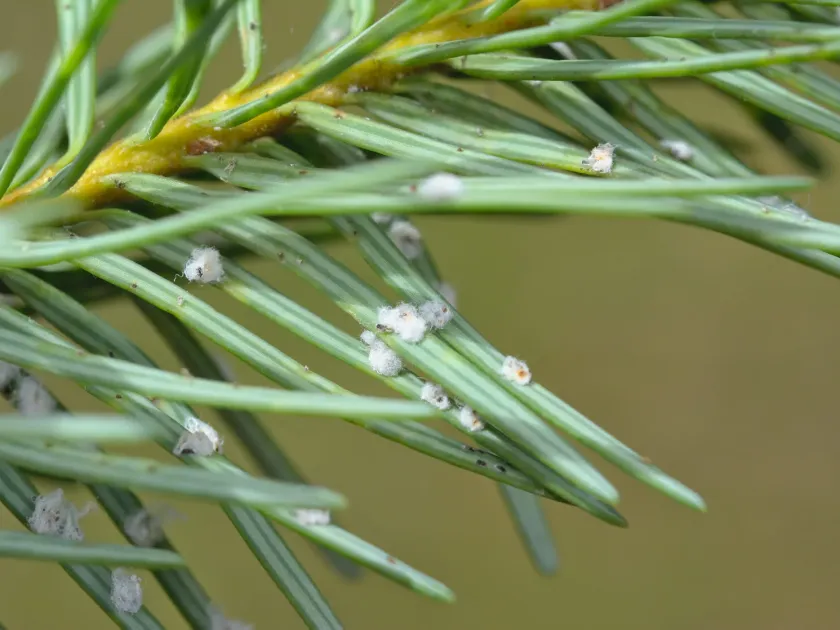
These insects are characterized by their small size and the production of a white, waxy, wool-like secretion. This substance serves as a protective layer for the colonies, making them look like small patches of snow on the bark.
The life cycle of the fir adelgid is complex, involving multiple generations that may alternate between wingless forms on the bark and winged forms capable of flight to disperse to other hosts.
Reproduction can occur both sexually and through parthenogenesis. During the peak of the season, a single female can lay numerous eggs beneath her waxy cover, ensuring a high survival rate for the offspring.
Larvae, known as crawlers, are the primary stage responsible for spreading the infestation. They actively move across the plant surfaces to find the ideal spot for feeding before becoming sessile and starting their own wax production.
What it damages
Fir trees are the primary host for this pest. The adelgids pierce the plant tissues and suck sap from the bark and needles, which directly interferes with the tree's physiological functions and nutrient transport.
Chronic infestation leads to yellowing of the needles and overall weakening of the tree. The growth rate of the shoots is significantly reduced, and the tree becomes less vibrant and less decorative over time.
If left untreated, the cumulative stress from the adelgid feeding can cause branches to die back. Severe cases may result in the death of the entire tree, especially when other environmental stressors are present.
The damaged bark and needles are susceptible to secondary infections and infestations by wood-boring insects. This makes the tree's recovery much more difficult and can eventually lead to its total loss.
In forest nurseries and urban landscapes, the fir adelgid is considered a highly destructive pest that degrades the market value of the trees and necessitates costly remediation efforts.
When it appears
Early spring is a critical time for monitoring, as overwintering nymphs wake up and begin to feed. This is the moment when the population starts to grow rapidly as the temperatures climb.
Summer is the period of peak activity and reproduction. New generations emerge and colonize the bark and the undersides of the needles, which is why the visual signs of infestation become most pronounced during these months.
As autumn approaches, the nymphs prepare for winter by moving into protected crevices or near buds. They remain dormant throughout the winter, surviving freezing temperatures until the next spring.
Signs of infestation
The most unmistakable sign of an infestation is the presence of white, cottony, or woolly masses on the bark or needles. This waxy substance is the hallmark of adelgid presence.
Needle discoloration is another clear indicator. The needles may turn pale green, yellow, or brown and appear curled or deformed due to the toxic saliva injected by the insect during feeding.
A general lack of vigor and dieback of the inner branches often signal that the infestation has been present for a long time. These symptoms indicate that the tree is struggling to maintain its hydraulic balance.
Control measures
Systemic insecticides are the most reliable way to combat the fir adelgid. These chemicals move through the tree's vascular system, ensuring that the pest is neutralized regardless of where it is hiding on the bark.
Dormant oil treatments applied in early spring are highly effective. These oils coat the nymphs and the waxy masses, depriving the insects of oxygen and killing them before they can start their spring feeding cycle.
- Monitor trees frequently for any signs of white waxy deposits.
- Prune and destroy heavily infested branches to reduce the pest population.
- Encourage natural predators like lady beetles and lacewings in your garden.
- Provide proper irrigation and fertilization to maintain tree resilience.
- Use professional-grade surfactants with insecticides to ensure better bark penetration.
Biological control methods are increasingly popular as they help balance the ecosystem and manage adelgid numbers naturally. Attracting predatory insects is a sustainable long-term strategy for any managed landscape.
Maintaining high standards of horticultural practice is the best preventive measure. A healthy, stress-free tree is far more capable of resisting a minor infestation compared to one weakened by drought or poor nutrition.
Taxonomy
- Latin name
- Adelges todomatsui
- Order
- Hemiptera (bugs, aphids, leafhoppers)
- Family
- Adelgidae
- EPPO code
- ADLGTO
Discussion
No discussions yet — be the first.