
Silver fir woolly adelgid
Adelges pectinatae
Description
How to identify
The silver fir woolly adelgid (Adelges pectinatae) is a small insect belonging to the family Adelgidae, which is closely related to aphids. This pest is highly specialized, specifically targeting silver firs.
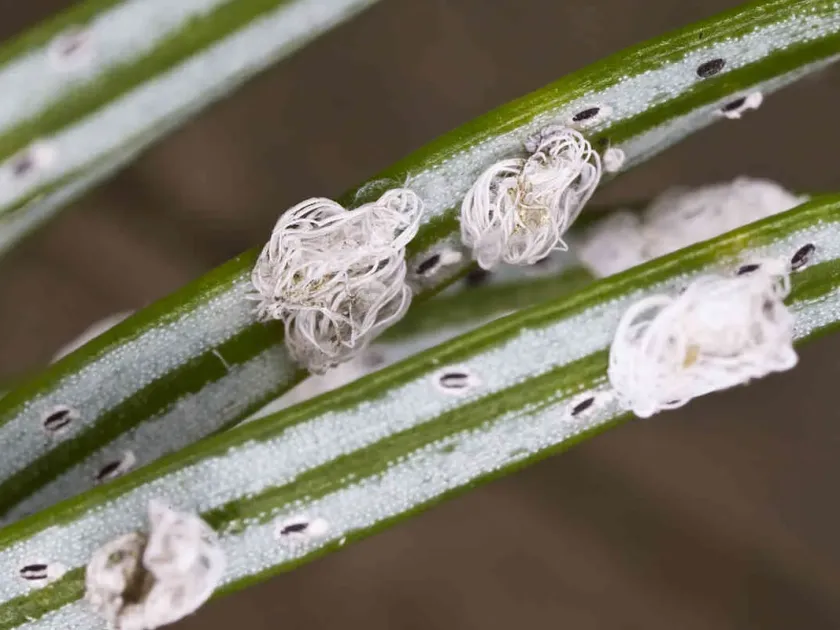
Adult females and their nymphs are typically recognized by the presence of white, cotton-like wax secretions that cover their bodies. This waxy coating serves as a defense against dehydration and external environmental stressors.
These insects exhibit a complex life cycle involving different generations that may or may not be winged. They reproduce both sexually and through parthenogenesis, enabling rapid population growth.
Because they are sedentary for most of their lives, their presence is often localized. They feed by inserting their mouthparts into the phloem of the needles or twigs to extract sap.
Taxonomically, they are strictly tied to specific conifer hosts, making them a significant concern for both forest health and ornamental garden maintenance.
What it damages
The primary host for Adelges pectinatae is the silver fir (Abies alba) and other related fir species. They are frequently found on nursery stock and mature trees in landscape settings.
Feeding activity involves the injection of toxic saliva into the tree tissues, which causes the needles to turn yellow, dry out, and eventually drop prematurely.
Chronic infestation leads to significant growth reduction. Trees may exhibit distorted twigs and a sparse, thinning canopy, which drastically lowers their aesthetic and economic value.
Repeated stress from adelgid feeding weakens the tree's natural defense systems, making it highly susceptible to opportunistic diseases and secondary pests like bark beetles.
In forest environments, severe outbreaks can lead to top-dieback and, in extreme cases, the mortality of younger trees that cannot withstand the loss of nutrients.
When it appears
The life cycle is closely synchronized with the phenology of the host plant. Overwintering nymphs resume activity early in the spring as soon as temperatures rise.
During the spring and early summer, populations peak as nymphs migrate to new growth and settle to feed and develop into adults.
Several generations may occur throughout the growing season, with the winged forms facilitating the spread of the infestation to adjacent trees or distant forest patches.
By late autumn, the final generation of nymphs seeks protected areas such as bark crevices or needle bases to enter dormancy for the winter months.
Mild winter temperatures significantly increase the survival rate of these nymphs, often resulting in larger, more destructive populations in the following growing season.
Signs of infestation
The most distinctive sign of an infestation is the appearance of white, fluffy, wax-like masses found on the undersides of the fir needles and along the twig stems.
Needles may show signs of yellowing or chlorosis, followed by needle cast. A heavily infested tree often appears sickly, with a noticeable thinning of the canopy.
Honeydew, a sticky substance excreted by the insects, often coats the foliage and branches. This serves as a substrate for the development of sooty mold, which appears as a black dusty layer.
Distorted or stunted growth of new shoots is another indicator that the tree is being drained of its vital sap reserves by the adelgid colony.
- White woolly wax clusters on needles.
- Yellowing and premature needle drop.
- Sticky honeydew and sooty mold buildup.
- Stunted or deformed shoot development.
Control measures
Effective management of the silver fir woolly adelgid requires an integrated approach that combines cultural, biological, and chemical control strategies.
Horticultural oils applied during the dormant season or early spring can be highly effective by suffocating the overwintering nymphs on the bark.
Systemic insecticides, particularly those containing neonicotinoids or similar compounds, can be applied to provide long-term protection by making the tree sap toxic to the feeding pests.
Encouraging natural predators, such as ladybird beetles, lacewing larvae, and syrphid flies, can help keep localized populations under natural regulation.
Good silvicultural practices, including maintaining proper tree vigor through watering and avoiding overcrowding, are essential to minimize the impact of this pest on fir populations.
Taxonomy
- Latin name
- Adelges pectinatae
- Order
- Hemiptera (bugs, aphids, leafhoppers)
- Family
- Adelgidae
- EPPO code
- ADLGPE
Discussion
No discussions yet — be the first.